
Larry Ramer has been a business news writer for nearly 20 years. He has been employed by The Fly, The Jerusalem Post, and Israel's largest business newspaper, Globes, and is currently a freelance editor and columnist for InvestorPlace.
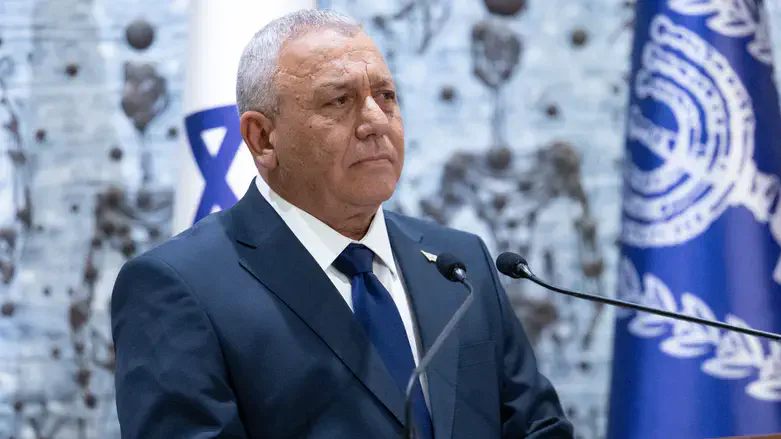
Gadi Eisenkot is trying to become prime minister with the support of one or both of the haredi parties.
At this point, in order to secure the backing of the haredi parties for Eisenkot, the Left appears to be quite willing to rather quickly and easily abandon its oft-repeated promise to voters to draft all eligible haredi young men into the IDF.
Coming after the opposition and the mainstream media for years labelled attempts by the Right to avoid drafting all haredim as support for draft “evasion" and a near-traitorous betrayal of reserve soldiers and national security, the Left’s quick shift shows that its ultra-heated rhetoric about the issue was always entirely political and had nothing to do with "sharing the burden" and Zionism.
Likewise, the justice system’s arrest of many draft evaders and its imposition of harsh economic measures against haredim in recent years were also completely political.
Ready and Willing to Quickly Give Up on the Universal Draft in Exchange for Haredi Support
Naftali Bennett and Yair Lapid, the two leaders of the Zionist Left’s second-largest party, B’Ychad, railed for many months before the election against the Netanyahu government’s failure to launch a universal draft of haredim. Moreover, Bennett and Lapid very frequently promised that they would institute such a draft upon taking office. Perhaps tellingly, Eisenkot was much less vocal about the issue, but he occasionally made similar commitments.
Now Bennett, Lapid, and Eizenkot all look poised to give up on their pledge before even taking office.
Gil Hoffman, a mainstream, veteran Israeli political commentator and the author of The Blood Libel Machine, does not rule out the possibility of Eisenkot’s government dropping the idea of a universal haredi draft like a hot potato.
In exchange for UTJ enabling Eisenkot to become prime minister without Arab support, the new government may “reach compromises" on the draft, Hoffman stated. These compromises may incorporate elements of a plan, developed in the year 2000, that allowed young haredi men to avoid serving in the IDF if they took vocational courses or performed “civilian national service," he said.
Had Netanyahu’s government made any such proposal, it would surely have been loudly decried as near-traitorous draft “evasion" by Bennett, Lapid, Eisenkot, Liberman and their allies in the media.
Meanwhile, Israeli media has reported in recent days that Eisenkot is prepared to be quite lenient on the draft issue in exchange for haredi support.
Supporting the idea that the Left is intensely courting the haredim, Israel Hayom reported that the bloc would rather form a government with the haredi parties than rely on Arab support. Netanyahu has already given up on the idea of getting support from UTJ, the newspaper claimed.
The Golan Giveaway and the Real Motivations Behind the Left’s Anti-Haredi Crusade
Even before the election, Democrats leader Yair Golan tacitly admitted that the demand for a universal draft was political.
"There is no issue that has fallen victim to cheap populism like the conscription of haredim," the far-left leader stated back in August. "It is impossible to draft all the haredim tomorrow morning, even if there were an amazing law," he added.
Politics and sociology explain why the Left, instead of working with the right-wing Zionist parties to pass a reasonable draft law that would not tear the country apart, embarked on a campaign of total demonization of haredim, refusing to budge one inch from their demand for a universal draft.
Sociologists report that groups tend to become more united and effective if the people within the groups have common enemies. We can see this principle at work when nations unify behind their leaders during wars.
For the Left, the demonization of haredim and anyone who opposed a universal draft united and motivated their base.
And not a few Religious Zionists, who paid a high price for their participation in the war, voted for the parties that promised a universal draft, angry at the Likud and the Religious Zionist party for putting the coalition's survival above drafting the haredim.
Now that the election is over and there is less need to unite and motivate the base, the universal draft has simply been discarded in favor of pursuing the more pressing goal of forming a government.
The Arrests and Harsh Economic Policies Were Used to Pressure the Haredi Parties
If a universal draft of haredim was not critical or even possible, why did the Left’s allies in the judiciary system seek to arrest as many haredi draft evaders as possible and impose tough economic penalties on all draft evaders?
The answer is that these tactics were used primarily as a means of pressuring the haredi political parties to help Eisenkot form a government after the election.
After all, by striking down the Right’s law that would have paused arrests of haredi yeshiva students for about 4.5 months, the Supreme Court showed that a Netanyahu-led Knesset did not have the power to prevent the young men from being jailed.
Similarly, due to the super-legislative powers that the court has assumed, the government had no power to combat the economic sanctions imposed by the judges and carried out by the attorney general.
So only by “playing ball" with Eisenkot (and having him renege on all his promises to the Israeli public) can the haredim hope to lessen the measures imposed by the Left’s allies in the judiciary. Indeed, Israel Hayom hinted that this is the main reason why the haredim are looking to abandon Netanyahu and empower Eisenkot.
“The haredim are considering separating from the right-wing bloc in order to meet the needs of their supporters who feel (persecuted) by the arrests of yeshiva students," the newspaper asserted.
Some would likely say that the Left’s tactic of using arrests and economic measures to pressure the haredim to support Eisenkot is tantamount to blackmail.