

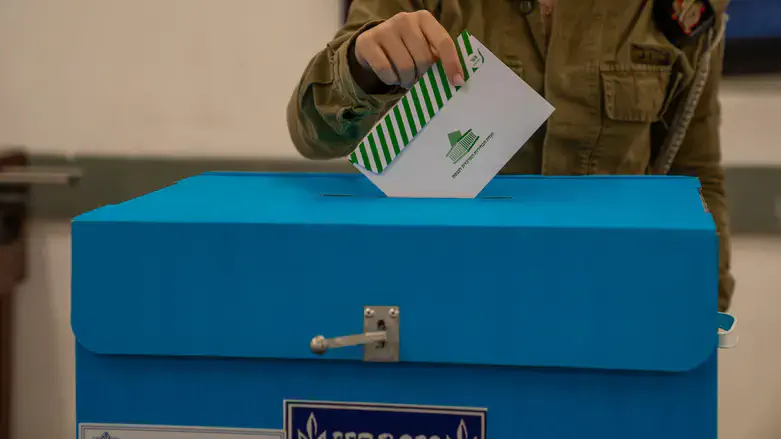
Where did nearly 200,000 double envelopes go in the Knesset elections? A significant gap between the Central Elections Committee's early projections and the actual number of votes counted raised questions. It has now emerged that changes to voting arrangements in the IDF and overly high initial estimates explain the discrepancy.
On the eve of Election Day, the Central Elections Committee estimated that around 650,000 voters would cast their ballots using double envelopes. However, the forecast was sharply revised on Election Day itself, dropping to between 430,000 and 480,000 voters.
When the count was completed, the number of double envelopes stood at approximately 451,000, in line with the revised estimate but nearly 199,000 below the original projection.
The gap was particularly striking given figures that appeared to point to an increase in double-envelope voting. The voter registry had grown by 8%, the number of IDF recruits had increased due to natural population growth, and the military had even imposed a leave freeze ahead of the elections.
These figures raised questions about why the actual number of double-envelope votes was so much lower than initially projected.
An Arutz Sheva-Israel National News investigation found that the main explanation was a last-minute IDF decision that changed voting arrangements for reserve soldiers.
While active-duty soldiers remained under the leave freeze and were required to vote within military frameworks, most reservists were released so they could cast their ballots at regular civilian polling stations.
As a result, many soldiers initially included in the projections as potential double-envelope voters ultimately voted at regular polling stations and were therefore not included in the double-envelope count.
Alongside the change in military voting arrangements, officials at the Central Elections Committee pointed to another factor: an overestimation of the number of evacuees expected to vote using double envelopes.
According to the officials, the actual number of evacuees who used this option was significantly lower than initially projected, also contributing to the decline in double-envelope votes.