
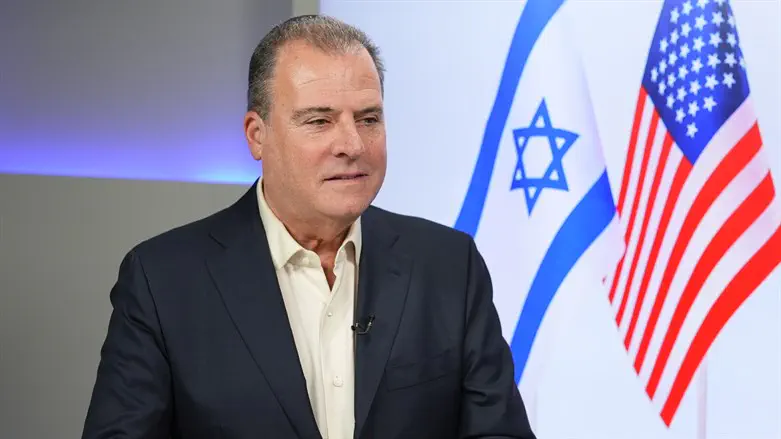
Bobby Rechnitz is a Los-Angeles based philanthropist and real-estate developer who serves as chairman of the Abraham Accords Roundtable and Golda Meir Commemorative Coin Committee in Washington DC.
On Tuesday, Americans will exercise a right that previous generations crossed oceans to obtain.
As we approach these midterm elections, we should remember what that privilege meant to our parents and grandparents and consider how easily familiarity can turn gratitude into complacency.
Watching unrest in Paris and elsewhere in Europe, I believe Americans should ask a question: Are we doing enough to protect the freedoms we inherited?
Many of us American Jews come from immigrant families, whether our relatives arrived one generation ago or several. We grew up hearing about their sacrifices, watching their hard work and understanding their appreciation for the opportunities America offered.
They did not believe this country was perfect, but they knew the difference between a society where people could build a future and one where their futures were determined for them.
Whether they became Democrats or Republicans, they understood that democracy was precious because many had experienced its absence. Freedom of religion, freedom of speech and the opportunity to succeed were realities they could finally enjoy.
Their gratitude came with responsibility: to contribute, obey the law, raise their families and help preserve the country that had welcomed them.
America’s melting pot never required people to abandon their faith, erase their heritage or forget their ancestors. It required a shared commitment to the American constitutional order. People could bring different languages, customs and traditions while recognizing that their common future depended on loyalty to the country and respect for the rights of their fellow citizens.
That bargain remains essential.
The current unrest in Europe should prompt reflection, although we must distinguish peaceful demonstrators with legitimate grievances from those who use demonstrations to intimidate, destroy or advance extremist causes.
A student protesting education policy is exercising a democratic right. Someone threatening Jews, glorifying terrorism or using violence to silence opponents is attacking the conditions that make democratic rights possible.
We must also retain the courage to name Islamic fundamentalism when it appears. An ideology that seeks to impose religious rule, deny equal citizenship or punish dissent is incompatible with American constitutional freedoms.
Recognizing that danger does not mean treating Muslims as enemies. Muslim Americans who cherish religious liberty and equal rights have the same stake in defeating extremism as every other citizen.
Nor should we assume that everyone marching beneath a particular banner understands every cause represented around them. But ignorance cannot excuse indifference to hateful slogans or terrorist symbols. When movements tolerate those who celebrate violence, their leaders and supporters must answer for that tolerance. Political alliances do not absolve anyone of the responsibility to recognize what they are helping legitimize.
Europe offers Americans a warning we should be grateful to receive before our own divisions deepen further. Its difficulties do not make America’s decline inevitable, and European democracies retain the means to address their problems.
However, we would be foolish to imagine that geographical distance protects us from ideological extremism, social fragmentation or the erosion of confidence in democratic institutions.
Our response should begin at the ballot box.
We should elect candidates who defend constitutional government, religious freedom, public safety and equal treatment under the law. We should reject communism, even with seemingly more palatable packaging, and every authoritarian project that places an ideology above individual liberty.
No candidate who refuses to condemn terrorist organizations, justifies the atrocities of 9/11, accuses Israel of genocide, or excuses political violence should receive our support under any circumstances.
Party loyalty, shared causes and appeals to intersectionality cannot excuse crossing these fundamental red lines. If a party’s representatives in any state refuse to uphold these standards, that party has forfeited its claim to our support.
Candidates invoking socialism should explain precisely what they mean, how much power they would give government and what safeguards would protect citizens from its abuse.
This election also requires us to look beyond personal animosity. Donald Trump is not your enemy simply because you dislike him. Moderate Democrats are not your enemies because they belong to another party.
Political disagreement is part of democracy. The danger comes from those who justify violence, deny other Americans their rights or regard constitutional limits as obstacles to be swept aside.
No party deserves unconditional loyalty, and no candidate should be exempt from scrutiny.
Ask who will confront antisemitism without qualification, protect peaceful worship, uphold lawful protest and hold violent offenders accountable. Ask who can defend America’s interests while respecting the constitutional rights of all its citizens. These standards should matter more than partisan habit or the appeal of a campaign slogan.
We are blessed to have a peaceful means of changing our country’s direction. Earlier generations knew the costs of persecution, upheaval and war; we should honor their experience by taking seriously the opportunity they helped secure for us. Casting a ballot is a modest act, but the responsibility behind it is profound.
So, to my fellow American Jews, I say vote with gratitude for what America has given us and resolve about what we owe the next generation. Our pride, integrity and shared values endure when citizens choose leaders prepared to defend them and remain engaged after the votes are counted.
Freedom survives through the choices we make together.