


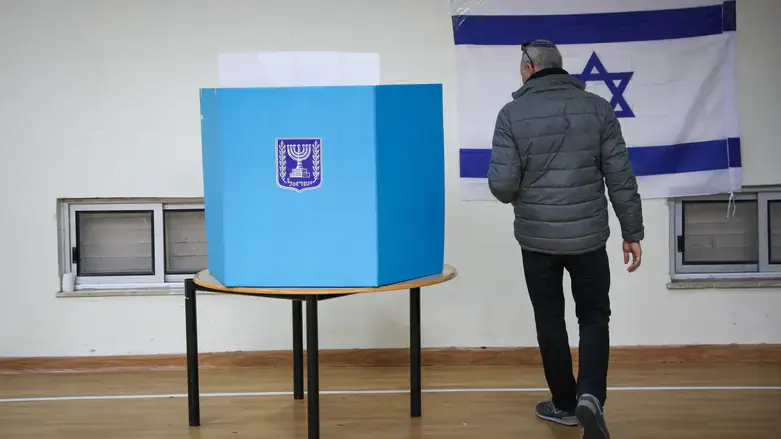
Amid suspicions of foreign interference in the election, which are being examined by the Shin Bet following a request by Central Elections Committee Chairman Justice Noam Sohlberg, questions have arisen over what the law stipulates if votes are found to have been obtained illegally or the election results were affected by fraud.
The answer lies in Section 86 of the Knesset Elections Law, which allows appeals against election results and empowers the court to cancel elections, order a revote or change the distribution of Knesset seats.
However, the law sets a key condition: discovering an offense is not enough in itself. The appellant must demonstrate that the alleged irregularity affected the election results.
Section 86 establishes three main grounds for appealing election results: if the election as a whole or at a particular polling station was not conducted lawfully; if the allocation of votes or seats was unlawful; or if votes cast for a candidate list were obtained through illegal means.
In other words, the law does not deal solely with vote-counting errors. It also allows appeals when votes are alleged to have been obtained through criminal offenses, including election bribery, provided their impact on the results is established.
The law grants the right to appeal to a range of parties, including members of the Central Elections Committee and regional election committees, factions in the newly elected Knesset, Knesset members, candidate lists that participated in the election, candidates on those lists and the attorney general.
An appeal must be filed with the Jerusalem District Court sitting as a Court for Administrative Affairs within 14 days of the publication of the election results.
In exceptional circumstances and for reasons that must be recorded, the court may extend the deadline. The appeal itself will be heard by a panel of three judges.
This also explains the importance of the timetable surrounding Sohlberg’s request to Shin Bet chief David Zini. The Central Elections Committee chairman asked to receive any findings within a week, if any are uncovered, to allow the allegations to be examined within the statutory period for filing election appeals.
If the court accepts an appeal against the election results, Section 86 grants it three significant powers. The most far-reaching option is to annul the entire election and order a new vote on a date set by the court.
Another option is to annul the vote at a particular polling station and order a revote there, without canceling the election nationwide.
The third option is to correct the results without holding another vote. The court may recalculate the distribution of votes among the lists, adjust the allocation of Knesset seats accordingly, and even rule that someone declared elected to the Knesset was not elected and that another candidate was elected in their place.
One of the officials explicitly named in the appeals process is the interior minister.
Section 86(c) stipulates that the respondents in an appeal must include the chairman of the Central Elections Committee, the interior minister, and representatives of the factions and Knesset members affected by the appeal.
However, the position of interior minister is currently vacant, with the ministry’s powers held by Prime Minister Benjamin Netanyahu.
This situation could create unusual circumstances if an appeal against the election results is filed, since Netanyahu also heads the Likud, one of the major parties in the election.
A ruling by the Court for Administrative Affairs may be appealed to the Supreme Court on a question of law, provided the Supreme Court president grants permission. The appeal must be filed within 30 days of the ruling.
However, if the court orders the cancellation of the nationwide election, the law provides a broader right of appeal that does not require prior permission. In that case, the Supreme Court will hear the appeal in a panel of at least five judges, or a larger odd-numbered panel, as determined by the Supreme Court president.
If a revote is ordered, the Central Elections Committee will be responsible for making the necessary arrangements and announcing the voting date. The voter registry used will be the same one used in the original election, minus voters who have died since then.
Even if an appeal against the election results is filed, the Knesset is not required to suspend its activities. The law explicitly states that filing an appeal will not delay the Knesset’s work and that the outcome of the appeal will not affect the validity of decisions it has made before the case is resolved.
The legal options take on particular significance following Sohlberg’s request to Shin Bet chief David Zini, prompted by suspicions of foreign funding intended to improperly influence the election.
According to published reports, the Shin Bet has been examining money transfers from foreign sources in recent weeks, including entities in Qatar and Turkey, to organizations involved in encouraging voter turnout in Arab communities. According to the suspicions, some of the money-transfer routes resemble those previously used to transfer funds for terrorism.
At the same time, police have said they have no investigative or intelligence evidence supporting Likud’s claims of widespread ballot fraud at polling stations in Arab communities. These allegations are separate from the suspicions of foreign funding that are the focus of Sohlberg’s request.