
The Torah is nothing if not thorough.
We have a set procedure for waking up in the morning, and one for going to sleep at night. We have rules governing how we go to the bathroom. There's even a prescribed way to tie our shoes.
So, one would think that the Torah would cover something as basic as politics. Yet within the entire Tanach, in both of the Talmuds and throughout the vast majority of early Rabbinical writings, the subject is never even touched, let alone fleshed out.
True, a monarchy is mentioned during the time of ancient Israel. But it’s clear from the Prophet Shmuel's rebuke to the people that this was a bad idea. Samuel was displeased, viewing the request as a rejection of God’s direct leadership. God instructed Samuel to warn them about the heavy rights and burdens of a human king, the "Mishpat HaMelech". And the Torah does give strict rules for that rulershiip.
We see, in fact, that the monarchy brought a long list of troubles to the early Jewish people, to the point that it became so corrupt that, like an infected limb, it eventually needed to be removed.
We wait, of course, for Melech HaMoshiach, but it's clear that at that point, it will be Hashem who is the Ruler.
So, it comes out that there is no divinely ordained system of government. Not monarchies, not Communism, not even democracy. It's unlikely the Torah would make such a glaring oversight as to neglect to give the people a perfect, comprehensive system by which to govern themselves. That can only mean one thing. That such a system can never exist.
There can be no perfect political system. Some might be better than others. But all are created by the human mind and subject to human limitations and mistakes. To date, no political system has worked flawlessly, and certainly none can justify boasting that they were divinely inspired.
If this is true of political systems as a whole, it's even more true of political parties. Nowhere is it brought down that "Hashem spoke unto Moshe and said, "Say unto the people that in the elections to come they support Party X, lest they face my wrath." Just as there is no perfect system, so too there are no perfect parties. Some might be better than others, or closer to the truth, but none were handed down at Mt. Sinai.
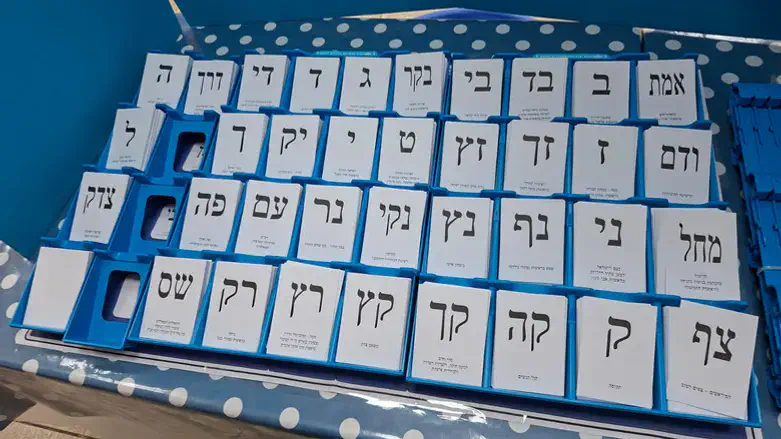
This is essential to keep in mind on election day. Elections bring out a good deal of hyperbole, and this one is no different. There have been comments for leading figures, both political and religious, claiming that it is a religious injunction to vote a certain way. Or that voting for a certain party is not only wrong, but an actual biblical sin.
That's why it's important to remember that there really is no party in the upcoming elections that was actually established by Hashem. This is true even of the religious parties. (And really, if the parties were all established 100% in line with the Torah to a prophetic level, why would there be so many of them? They would all, after all, be saying the same thing.) All parties, including the religious ones, were founded by human beings just like yourself. That means that they are subject to the same human biases and cognitive dissonance that any other party is.
Looking through the Torah as a whole, it's clear that not one single party is 100% in tandem with everything written. Different groups may focus on different issues addressed in the Torah to a greater or lesser degree. Some, like the religious parties, focus on religious issues like building mikvahs and funding yeshivas. Others focus on different areas, such as helping the poor, defending the land, or social issues. All of these dovetail with the Torah's teachings, some more than others, it's true, but not a single one lines up completely.
The Torah has its agenda, and political parties have theirs. When the two can meet, it's wonderful. More often than not, the Torah will support one party in some things, and another party in others. As such, too strong a commitment to any one party could very well lead to a rejection of part of the Torah. When this happens, and it happens all too often, politics becomes the voter's true religion.
Therefore, remember that whoever you vote for isn't a divine injunction. Hopefully this will take a lot of the pressure off. Hashem will not judge you based on what you do at the ballot box. You're making the best choice you can based on the options available, nothing more. No matter how great you think your candidate is, they are still only human. They will make mistakes. They will vote in ways you don't like, in which case you are under no obligation to continue supporting them or defend their actions.
More importantly, it means that who your friends and neighbors vote for shouldn't really matter that much to you. I've seen lifelong friendships end because of political disagreements. The closest relationships are torn apart because of how someone voted. The offended party will say that it's not just a vote their former friend cast. It's a betrayal of everything they should stand for. To many, who a person votes for reflects who they themselves are as people. But except in certain extreme cases, one has nothing to do with the other.
Because at the end of the day, most people vote for who they think is best, without investing their whole sense of self into their decision. It's just as well, since, there might be a better choice, but there will never be a perfect choice. If it were meant to be a moral litmus test, no one would be able to pass. Breaking up a lifelong relationship because the other person voted against the way you did simply means that, faced with two imperfect choices, they did the best they could, just like you did.
True, maybe your party or candidate was the better option overall. But they couldn't have been the perfect choice because no party or candidate can ever be perfect. There's something wrong with your pick, just like there's something wrong with theirs. Attacking them while defending your own choice and refusing to see its flaws does nothing to expand discussion. And it's just that- a discussion. It's not a Talmudic debate meant to reveal an ultimate truth. Because there is nothing divine in politics. Acknowledging that neither side can ever be completely right is the necessary step before mutual understanding can occur.
In the end, you will vote for who you think is best and they will vote for who they think is best. And Hashem will have stayed out of it.
So this election, when you see your close friend or your relative voting for someone you can't stand, someone that you're sure is going to tear the country in two, keep it in perspective. It's a vote, not a test of faith. Hashem doesn't consider their votes a sin, so there's no reason to go after them as though they were sinners.
I once heard something directly from the Piacezne Rebbe, HaRav Kalman Menachem Shapira, Shlita. That year, politics were getting especially heated about the local mayoral race. One candidate claimed that it was a Torah mitzvah to vote for him. Those who agreed therefore felt that their fellow congregants who were voting differently were committing a grave sin. Arguments in the shul soon grew increasingly hostile, and there was a fear that a serious fight would break out that would tear apart the shul.
They finally asked the Rebbe what the proper way to vote would be. He answered, "Research the candidates. Vote for the one you think is best. Then stop talking about it."
If there was ever a divinely ordained way to look at politics, this would be it.
Ilan Goodman is a professor of art history and a museum curator. He also serves as a rabbi and educator. He made Aliyah to Israel in 2011 and lives with his wife and children in Beit Shemesh.
...