

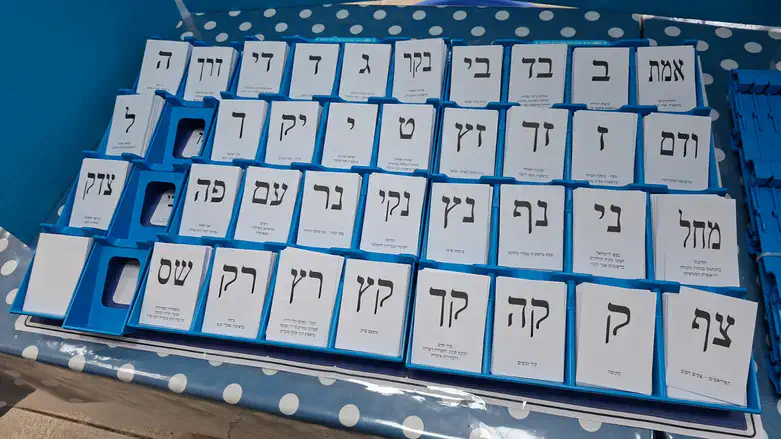
The elections for the 26th Knesset began on Tuesday morning, with 7,331,981 voters eligible to participate. 12,018 polling stations will be set up across the country, where voters can choose between 36 lists running to fill the 120 seats in Israel's legislature.
Election day will kick off at 7:00 a.m., when most polling stations open, and end at 10:00 p.m. with the closure of polls. At certain polling stations, including small communities and special institutions, voting hours will be limited.
In preparation for the opening of the polls, we have compiled the important details to help you exercise your right to vote, along with information on vote counting and the publication of election results.
The majority of polling stations will operate on Tuesday between 7:00 a.m. and 10:00 p.m. In small localities and at polling stations in hospitals, jails, and old age homes, voting will end at 8:00 p.m.
Those who do not know where they are registered to vote can find their designated polling station using the Interior Ministry's polling station locator service by entering the required identification details.
Information regarding the locations and hours of polling stations may be found on the Central Elections Committee website.
What to bring to the polling station? There is no need to bring the voter notification that was sent by mail, but it may help in locating the polling station details and speed up the process.
However, voters are required to provide an appropriate identification document. Voters may use the following documents: an ID card (Teudat Zehut), a valid driver's license, a valid Israeli passport, or valid personal military documentation. Police officers may also use their officers' ID.
How do soldiers, police officers, and people in hospitals vote? Alongside regular polling stations, special voting arrangements exist for those who are unable to vote at their registered station.
IDF service members can vote at a military polling station at the base where they serve or at their registered station. Police officers may vote at any polling station in the country, even if they are not registered to vote there, upon presenting a police ID card and the voting arrangements that apply to them.
A total of 250 polling stations will be set up in hospitals with at least 50 inpatient beds, allowing hospitalized patients to exercise their right to vote.
Dedicated polling stations will also operate in nursing homes with more than 50 residents. Residents with limited mobility who live in facilities without a polling station will be able to vote at specially accessible polling stations.
What about residents who are still displaced due to the war? Israeli citizens who were displaced from their homes due to the war and have yet to return may vote at the polling station to which they are assigned in their original place of residence, or as part of designated voting arrangements.
The Central Elections Committee will establish special polling stations for communities evacuated from Be'eri, Kfar Aza, Nir Oz, and Holit. Evacuees who are eligible to vote at specially accessible polling stations will also be able to use that option.
Voters with limited mobility: 6,208 of the polling stations will be accessible, of which 3,620 will be designated as specially accessible polling stations.
Voters with limited mobility will be able to vote at these polling stations even if they are not registered there, using an outer envelope that will allow their vote to be included in the overall vote count.
In a case where the disability is not visible, the voter will be asked to sign a declaration before the Polling Station Secretary. A false declaration is a criminal offense.
The locations of accessible polling stations can be found on the polling station map on the Central Elections Committee website. A purple mark on the map indicates a complex where there is at least one specially accessible polling station.
How to ensure your vote is valid: After the identification process, the voter will receive a ballot envelope. They will then go behind a cardboard divider, where they will have to choose the ballot note with the letter or letters representing the party for which they wish to vote and place it into the envelope, which they will then place in the ballot box.
To prevent invalidation of votes, it is recommended to use the official ballots available at the polling station and to insert only one ballot into the envelope, without writing or markings.
A ballot that does not meet Central Elections Committee size, color, or print requirements is liable to be invalidated. Therefore, one should not use ballots that were printed independently and do not follow the requirements.
If two or three of the same ballots were found in an envelope, they will be counted as one vote and will not be disqualified.
Which public transportation services will be free? Ahead of the elections, a free public transportation arrangement will be introduced on certain services. The arrangement will apply to Israel Railways trains and intercity bus routes exceeding 15 kilometers.
Free travel will be available from 8:00 p.m. tonight (Monday) until the end of public transportation services on Election Day.
Urban bus routes will continue to operate at regular fares.
According to the forecast for Election Day, temperatures are expected to drop to seasonal averages. Local rainfall is forecast mainly in southern and eastern Israel. From the afternoon, rainfall is expected to intensify in these areas, accompanied by thunderstorms, gusty winds, and hail.
There is a risk of significant flash flooding in the streams of the southern Negev, the Arava, the Judean Desert, and the Dead Sea region. Those planning to travel in these areas are advised to monitor weather alerts and follow instructions issued by the authorities.
When will the election results begin to be published?
Vote counting will begin when polling stations close at 10:00 p.m. At each polling station, election committee members will count the ballots and prepare an official tally report.
The reports and election materials will then be transferred to regional election committees. Following the required verification procedures, the results will be entered into the Central Elections Committee's systems.
Partial results are expected to be published throughout the night and updated gradually as counting progresses. However, the distribution of Knesset seats could change even after the regular ballots have been counted, following the counting of double-envelope ballots.
The Central Elections Committee estimates that vote counting could be completed by Thursday afternoon. Under the law, the deadline for publishing the official results is November 4, 2026.
What are double-envelope ballots, and why are they important?
Double-envelope ballots are used by voters casting their ballots outside their designated polling stations, including soldiers, police officers, prison guards, hospitalized patients, and other groups eligible for special voting arrangements.
The purpose of the outer envelope is to allow election officials to verify that a voter has not voted more than once, without compromising the secrecy of the ballot.
According to Central Elections Committee estimates, between 600,000 and 650,000 people are expected to vote using this method in the current elections, a record number equivalent in numerical terms to approximately 15 Knesset seats.
This does not mean that 15 seats will necessarily change hands after election night, but rather that a substantial number of votes will not be included in the initial results.
In previous elections, the counting of double-envelope ballots has led to changes in the distribution of Knesset seats, sometimes affecting one or two seats.
Because IDF personnel account for a significant proportion of double-envelope voters, the voting patterns of this group differ from those of the general population. In previous elections, counting these ballots has tended to improve the relative standing of Zionist parties, while sometimes reducing the relative strength of Haredi and Arab parties.
Therefore, even if election night results indicate a clear lead for one of the political blocs, the final distribution of Knesset seats will only become clear once all votes have been counted.