

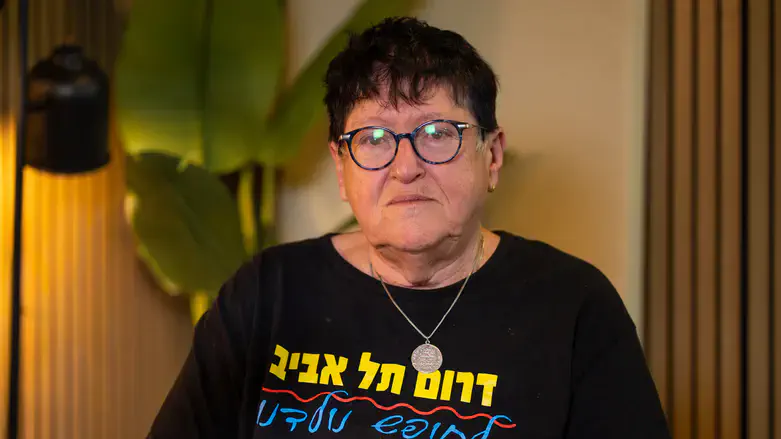
Sheffi Paz, a prominent activist who led the struggle on behalf of South Tel Aviv residents and against illegal immigration, died Monday morning at the age of 74.
Paz, whose parents were Holocaust survivors, immigrated to Israel from Poland as a child. A translator and language editor by profession, she devoted many years to campaigning for the future of South Tel Aviv's neighborhoods and their residents.
Since 2013, Paz had been at the forefront of public protests, confronting successive governments, ministers, municipal leaders, the courts and human rights organizations. Her activism made her a prominent and often controversial figure in Israel's public debate over illegal immigration and its impact on South Tel Aviv.
Her campaign came at a significant personal cost. Paz was arrested several times and served prison time, but continued to advocate for residents whom she believed had been abandoned by the authorities.
Amalia Ozer, deputy director of the Surrounding the Central Bus Station association, and the organization's spokesman, Yaakov Sela, paid tribute to Paz following her death.
"We have lost a courageous leader, a dear friend, and a woman who became a symbol of determination, dedication and love of the Land of Israel," they said. "Sheffi was a brave fighter, a woman of truth who was not afraid to confront the most powerful centers of authority in the country and give voice to those who felt their voices had been silenced for years."
They described Paz as a tireless advocate for South Tel Aviv's residents and those who felt overlooked by the state.
"She demanded justice for the neighborhood residents and refused to remain silent in the face of injustice," they said, adding that the organization would continue her campaign against illegal immigration and in support of South Tel Aviv's communities.
Paz also spoke publicly about the personal consequences of her activism. In an interview with Israel National News last year, she said she was troubled by the toll her public activities had taken on her family.
"When you are an activist, carry out controversial actions, deal with difficult issues and have people who hate you, your family pays a price," she said. "Even if your family strongly supports you, it still affects them. There is an enormous gap between Sheffi within the family and the public figure."
She explained that her family worried about her safety, noting that she had no bodyguard or security detail and that her son wanted the family to leave the neighborhood.
"My son would very much like us to move," she said. "He knows that I would die, or something close to it, if I left South Tel Aviv. That is a very strong sense of mission."