

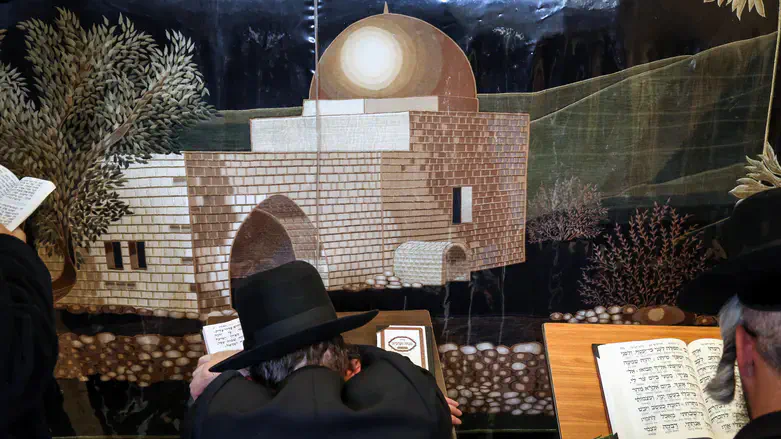
Cheshvan 11, which falls on Octobr 22 this year, is the yahrzeit of Rachel Imenu, Rachel the Matriarch, or as she is called in Yiddish, Mameh Rochel. One that day, many thousands visit her tomb in Bethlehem while shiurim and musical events for women take place in her memory.
Why do so many people, especially women, find comfort in visitng Rachel Imenu's tomb?
Why does Rachel Imenu have such a unique place in the Jewish People’s collective consciousness?
Why do so many women come to pray, weep, and perform the mitzva of 'taking' challah at her grave?
Why was the wedding gown of Nava Applebaum HY"D, murdered by terrorists the night before her wedding, hung there?
Perhaps it is because women feel that Rachel Imenu mirrors the essence of a woman's life. Rachel's life was filled with the sacrifices and sorrows that women understand: Jacob fell in love with her, yet she gave up her beloved for her sister Leah's sake and made sure that Leah was not humiliated, she was chiildless and then died in childbirth so that she did not raise the two sons for whose birth she prayed and begged. She was buried at the wayside and not in Hebron as the other Matriarchs were.
And that is why the midrash says that G-d listened only to her when she prayed to Him at the time of the Temple's destruction. Mameh Rachel, the Midrash says, reminded Him of her sacrifices.
…רָחֵל מְבַכָּה עַל בָּנֶיהָ מֵאֲנָה לְהִנָּחֵם עַל בָּנֶיהָ כִּי אֵינֶנּוּ
"…Rachel weeps for her children. She refuses to be comforted over her children, who are gone." (Jeremiah 19)
Her suffering, her willingness to sacrifice, her selfless love are the reasons she alone among the Matriarchs and Patriarchs succeeds in pleading with God to restore the Jewish People to the Land of Israel and have her prayers responded to.
וְיֵשׁ תִּקְוָה לְאַחֲרִיתֵךְ נְאֻם ה’ וְשָׁבוּ בָנִים לִגְבוּלָם
"And there is hope for your future -declares Hashem:
And your children shall return to their country."
Those who long to visit Mame Rochel's tomb but cannot, can light a candle in her memory on the night of her yahrzeit and pray for their children, families, the wellbeing and success of our soldiers and of the Jewish people wherever they may be.
Mameh Rochel was promised that her sons would return.
May that promise, fulfilled when the Jews returned to build the Second Temple and once again, when they returned to establish a state, be fulfilled once more when we see our soldiers return from battle safe and sound, and watch Diaspora Jewry make aliyah to the Eretz Yisrael, with G-d's help.
Light a candle for Mameh Rochel's yahrzeit and pray for her children.
---------------
Many songs have been written about Rachel, her weeping for her people, and the promise she was given. One of them, written after the Six Day War when Bethlehem returned to the Jewish people, tells her that we have returned, and will never leave her again.
It was written in Hebrew by Shmuel Rosen and is translated here.
We Will Not Leave Again
See the road dust rising from the City of Shalem
And the iron chariots charging in front of your city
And the whole nation, looking at you as if dreaming
Steel wings circling, circling above your tomb.
Behold Rachel, behold,
Behold, Ruler of the World,
Behold Rachel, behold,
They have returned to their borders.
See the winds of Iyar bearing columns of steel,
Benjamin is with us here, and Joseph as well,
The star over Beth Lekhem tremblingly gleams,
Both the vanguard is with us and the rear.
Restrain your voice, Rachel, hold back your voice from crying,
All of us are here, Rachel, with our backpack on our shoulders.
We won’t leave you again, Rachel, and you will not leave us again,
We won’t leave again, Rachel, from the fields of Beth Lekhem
Arik Lavie's rendering of the song is the classic one here. (There is an English recording,but it is not him singing)