
Rachel Avraham is the CEO of the Dona Gracia Center for Diplomacy and an Israel-based journalist. She is the author of “Women and Jihad: Debating Palestinian Female Suicide Bombings in the American, Israeli and Arab media."
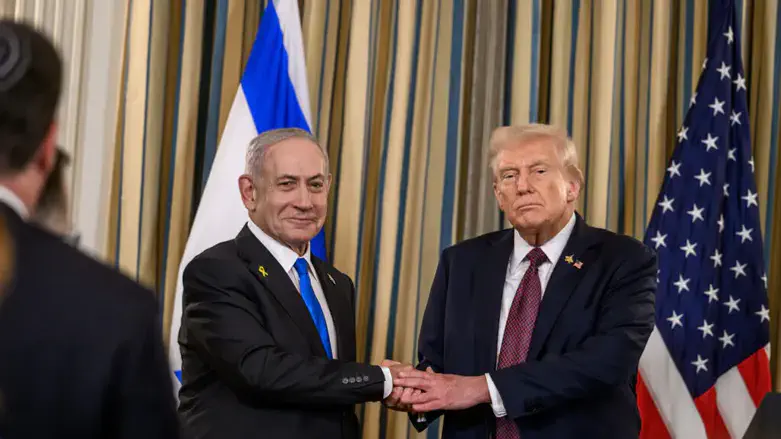
Nine days before Israel’s election, Donald Trump made Benjamin Netanyahu’s political future part of his confrontation with Iran. His October 18 endorsement praised Netanyahu as a “Great Warrior Prime Minister," but its most revealing passage concerned what America might have to do without him.
“If Israel has the wrong Leader, which would be anyone other than Bibi," Trump wrote, “America will have to do this work ourselves, and I am not inclined to do so."
The statement put an unusual proposition before Israeli voters: retaining Netanyahu might help keep the burden of confronting Iran on Israel rather than American forces. It was also an unmistakable intervention in an ally’s election. Yet Trump's preference for Netanyahu does not establish that Washington has ordered an Israeli strike, or even decided that another strike should occur.
The timing gives his words particular weight. Israelis vote on October 27, followed by American midterm elections on November 3. Trump said on October 8 that U.S. forces would not attack Iran before the midterms. Meanwhile, American and Israeli officials have discussed the possibility of renewed military action, and the Pentagon has instructed Central Command to prepare options without announcing a date or final decision.
There is a useful precedent in political theory. In The Tragedy of Great Power Politics, John Mearsheimer describes “buck-passing," whereby a powerful state seeks to have another country shoulder the immediate burden of containing a rival. His framework helps explain the appeal of Trump’s formulation. America wants Iran constrained; Israel has both the capability and its own reasons to act. The analogy becomes misleading, however, if it suggests Israel is merely following orders. Tehran’s nuclear activities and military network are Israeli security concerns regardless of who occupies the White House.
Reporting on the conversations between Trump and Netanyahu points to a less settled picture than the idea of an American assignment. Axios reported that the leaders discussed a possible major operation before the elections, including the prospect of joint U.S.-Israeli action. A White House official disputed that account, while another U.S. official described Trump as encouraging preparations without making a commitment. The reporting establishes serious discussion, not agreement over who would attack or when.
That uncertainty matters to both leaders. Israeli military officials have warned that renewed fighting could provoke Iranian missile attacks and potentially disrupt Israel’s vote. An operation before November 3 could also unsettle oil markets and put Trump’s own party under pressure. Even if Israel acted without American bombers, Washington could face demands for intelligence, air defense and other support, along with responsibility for managing a regional escalation.
Claims about American tankers over Iraq and Israeli preparations for penetrating Iranian air defenses deserve the same caution. Aircraft activity can indicate readiness, but it cannot by itself prove that a particular attack has been approved or that American crews have been assigned to refuel Israeli fighters during one. Preparation and authorization are different stages of military decision-making.
The surrounding region further complicates the calculation. A confrontation with Iran could draw in armed groups in Iraq or Hezbollah in Lebanon, exposing countries that have no desire to become battlefields. Washington’s efforts to discourage Lebanese involvement, and Israel’s warnings about the consequences of Hezbollah entering a war, show how quickly a limited operation could acquire a wider political cost.
Turkey is another constraint on Israeli freedom of action. Ankara’s growing presence in Syria worries Israeli security planners, while Washington sees a NATO ally whose cooperation remains valuable. Earlier analysis by Dor Moriah argued that Israel’s strike on the Abu al-Duhur air base reflected concern about the operational reach of Turkish radar and air-defense systems, potentially affecting routes toward Iran. That is an analytical interpretation of the strike, not an established account of the Israeli command’s intentions.
Netanyahu has lately spoken more cautiously about Turkey. On October 18, he acknowledged differences with Trump over Ankara while expressing hope of avoiding a direct confrontation. Such restraint need not mean Israel has revised its assessment of Turkish ambitions. It may simply reflect the difficulty of confronting Iran while opening another dispute with a country important to Washington.
Public opinion offers some context. A Dor Moriah survey conducted in May and June among 1,007 respondents found that 34.4% viewed Turkey as a serious strategic threat and 28.5% considered it unfriendly but not a direct security threat. The research also found substantial support for restraint and managed competition rather than escalation. Those findings cannot tell us why Netanyahu chose his words, but they challenge the assumption that concern about Turkey necessarily creates a demand for confrontation.
The immediate decision, however, remains focused on Iran. One possible window falls after Israel’s election but before the American vote; another opens after November 3. Both are speculative. A third outcome is continued pressure without another strike, using military readiness to strengthen Washington’s negotiating position. Trump’s public commitment not to attack before the midterms is a statement of intent, not a guarantee about every possible contingency or about Israeli decisions.
Netanyahu thanked Trump for their joint work and promised to complete their mission together. The language was warmer than Trump’s warning about having to do the work himself. That contrast captures a genuine difference in emphasis: Netanyahu wants to present the confrontation with Iran as a partnership, while Trump has made his preference for a particular Israeli leader part of the question of who carries the burden.
Israel is not America’s contractor, and its prime minister cannot simply outsource responsibility for a war to Washington. Nor can Trump assume that Israeli action would leave the United States untouched. His endorsement has made those competing expectations visible, but it has not resolved them. Israeli voters will choose their government; any decision to strike Iran will still require political leaders on both sides to confront the costs that follow.