

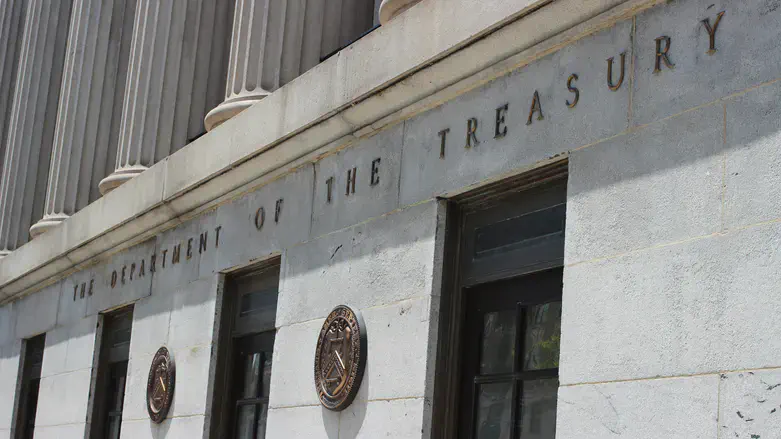
The US Department of the Treasury announced a new round of sanctions targeting an international law firm, maritime companies, and shipping vessels involved in facilitating Iranian trade, as part of its ongoing Operation Economic Outcast campaign against the Iranian regime.
Among those sanctioned is Karnakis and Karnakis, a law firm operating in Panama and Greece that the Treasury says has spent years helping establish corporate structures used by shipping companies transporting Iranian oil, petrochemicals, and steel worth hundreds of millions of dollars.
"Whether you are conducting illegal oil transfers at sea or sitting in the corner office of a law firm, if you are supporting the Iranian regime, we will find you and sanction you," Treasury Secretary Scott Bessent declared.
"Iran's facilitators must make a choice: Either you are with us or against us. We know who you are, we know what you're doing, and we will continue to take action."
According to Treasury, Karnakis and Karnakis registered companies that served as owners of vessels operating in Iran's shadow fleet, helping conceal the identities of those ultimately controlling the ships.
The firm was responsible for establishing several previously sanctioned shipping companies, including Skyros Maritime and Trading, Corfu Maritime and Trading, and Elias Shipping and Trading Group.
One of those companies, Elias Shipping, owned the vessel RAMONA 1 and operated as a front for the Syrian Al-Qatirji Company, which Treasury identified as a major financial conduit for Iran's Islamic Revolutionary Guard Corps-Quds Force (IRGC-QF). The company facilitated sales of millions of barrels of Iranian oil that benefited the IRGC-QF and the Houthis.
Treasury also identified Karnakis and Karnakis as an important corporate services provider for Iranian liquefied petroleum gas magnate Seyed Asadoollah Emamjomeh, whose shipping operations have transported Iranian energy products valued at hundreds of millions of dollars.
The sanctions extend to the firm's owners, Sofianos Karnakis Kosmas and Konstantinos Karnakis Kosmas, as well as Pedro Ortega Jones, Roberto Ortega Jones, and Ioanis Karnakis Kosmas. Treasury says firm personnel held official positions in registered shipping companies to disguise their actual beneficial ownership.
The latest designations also include Roxette Maritime Shipping and Trading, a Panama- and Greece-based company operating cargo vessels involved in transporting Iranian-origin goods. Seven ships associated with Roxette, including ANEMOS, GLORIS, PRIDE, DESTINY, FLAMINGO 1, HARMONY, and PRINCE, were identified as blocked property.
Separately, Treasury sanctioned Singapore-based Amigoz Singapore PTE. Ltd. and Dubai-based Whales Shipping Line LLC for their involvement in Iranian maritime operations.
Amigoz allegedly provided services to vessels and businesses associated with Iran's sanctions-evasion networks, including shipping interests linked to Mohammad Hossein Shamkhani. Whales, meanwhile, acted as an agent for a previously sanctioned company involved in purchasing Iranian petrochemicals worth tens of millions of dollars. Two vessels owned by Whales, WHALES DIAMOND and WHALES PEARL, were also designated as blocked property.
In a related financial investigation, Treasury's Financial Crimes Enforcement Network (FinCEN) is working with European authorities, including in Greece, to examine a Greek bank's possible connections to Iran and its proxies. The agency has issued its first administrative subpoena under a provision of the Bank Secrecy Act and requested information concerning banks' dealings with sanctioned Iranian financial institutions.
Operation Economic Outcast, launched by Bessent in August, seeks to dismantle the financial networks allowing Tehran to sell sanctioned commodities and move the proceeds internationally. The operation involves coordination with the European Union, the United Kingdom, Gulf partners, and other governments.
Under the newly announced measures, US-based assets belonging to the designated parties are frozen, while Americans and entities operating within US jurisdiction are generally prohibited from conducting transactions involving their blocked property unless authorized or exempt.
Treasury also warned that foreign financial institutions conducting significant transactions on behalf of sanctioned parties could face secondary sanctions, including restrictions on their access to the US banking system.