
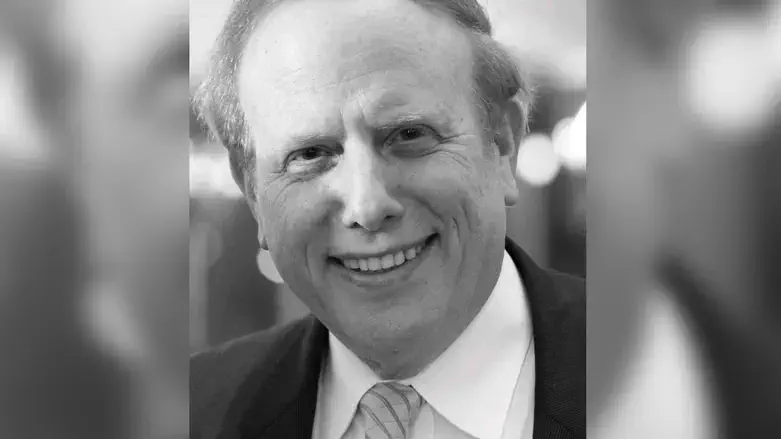
Itzhak David Goldberg, MD, FACR is a Professor Emeritus at Albert Einstein College of Medicine
There is something deeply reassuring about a light shining from the window of a house at the end of a long journey. It suggests that someone is waiting, that our arrival has been anticipated, and that beyond the darkness there is a place where we belong.
For decades, the American hotel chain Motel 6 concluded its advertisements with Tom Bodett's memorable assurance, “We'll leave the light on for you." The slogan resonated because it conveyed something more meaningful than the availability of inexpensive lodging: the comforting sense that the traveler was expected.
This familiar expression offers an unexpected perspective on an ancient Midrash concerning Abraham's discovery of God. In Bereishit Rabbah (39:1), Abraham is compared to a traveler who encounters a birah doleket, a palace that may be understood as illuminated or burning:
משל לאחד שהיה עובר ממקום למקום, וראה בירה אחת דולקת. אמר: תאמר שהבירה זו בלא מנהיג? הציץ עליו בעל הבירה, אמר לו: אני הוא בעל הבירה.
The traveler asks whether such a palace could exist without a manhig, someone who governs or directs it. The response, however, comes from the ba'al habirah, its owner, who declares, “I am the owner of the palace." The Midrash compares this encounter to Abraham's recognition of God as Master of the world.
The distinction between manhig and ba'al is suggestive. The traveler asks about governance, but the answer establishes ownership. Although the Midrash's immediate purpose is to affirm divine sovereignty, the difference in terminology permits a further interpretive possibility: God's ownership of creation need not imply that humanity has no role in its governance. Divine authority may instead provide the foundation for human responsibility.
This is the language of partnership. The Talmud teaches that a judge who rules truthfully becomes a partner (shutaf) with the Holy One in the work of creation (Shabbat 119b), and the Rav's vision of man as co-creator belongs to the same tradition.
The ambiguity of doleket reinforces this possibility. If the palace is illuminated, Abraham encounters a world whose beauty and order suggest an invitation to enter. Creation becomes not merely evidence of divine existence, but a dwelling prepared for human participation, as though God were greeting Abraham with the familiar assurance, “We leave the lights on for you."
If, however, the palace is burning, Abraham confronts the disturbing coexistence of beauty and suffering. God's revelation establishes His presence without explaining the flames, leaving open the question of what responsibility now falls upon the human observer. The two readings thus present creation as both gift and obligation, a world into which humanity is welcomed and for which it must assume responsibility.
The Burning Palace and the Incompleteness of Creation
The image of the burning palace has received significant attention in modern Jewish thought. Rabbi Jonathan Sacks, in A Letter in the Scroll, interpreted the burning palace as a world endangered by human wickedness. For Sacks, the flames represent violence, injustice, and moral failure. The central question is not why God allows the palace to burn, but what responsibility human beings bear for a world whose destruction they have helped bring about. The Midrash thus becomes a summons to moral action.
Rabbi Joseph B. Soloveitchik may offer a different, though not incompatible, philosophical perspective. In Halakhic Man, the Rav describes creation as containing deficiencies that humanity is called upon to address. He writes:
“The Creator, as it were, impaired reality in order that mortal man could repair its flaws and perfect it."
In the accompanying discussion, Soloveitchik develops the idea that human creativity participates in the transformation of chaos into order. The significance of this formulation is that the deficiencies of creation are not necessarily attributable to human wrongdoing. Rather, the natural world itself contains vulnerabilities and unrealized possibilities that provide the setting for human creative responsibility.
The distinction is therefore between disorder caused by humanity and disorder encountered by humanity.
In Sacks's interpretation, the burning palace represents a moral crisis arising from human conduct; in the Soloveitchikian framework, the world also presents a creative challenge arising from the conditions of existence itself.
This reading of the birah doleket brings these two perspectives together. The palace may be burning both because human beings have contributed to its destruction and because the created world contains inherent elements of chaos independent of human conduct. God's revelation identifies Him as the ba'al habirah, the owner of the palace, but divine ownership does not preclude human responsibility for the world's care.
Homo Creator: The Creative Human Personality
Soloveitchik's philosophy gives this responsibility a distinctive anthropological foundation. Alongside familiar descriptions of humanity as homo sapiens, the knowing person; homo ludens, the playful and imaginative person; and homo religiosus, the person oriented toward the sacred, we may identify the creative dimension of the human personality as homo creator.
In The Lonely Man of Faith, Adam the First embodies the majestic personality who seeks to understand and transform nature through intelligence and technological achievement. Yet Soloveitchik balances this aspiration with Adam the Second, whose covenantal existence is grounded in relationship, humility, and moral responsibility. Human creativity is therefore not an unrestricted assertion of mastery but an activity whose legitimacy depends upon the purposes it serves.
In Halakhic Man, the creative imperative acquires a distinctly religious character. The individual does not merely contemplate transcendent ideals but seeks to realize them within concrete existence. Knowledge becomes meaningful through application, and religious life demands active participation rather than passive observation.
Human dignity thus lies not only in the capacity to understand the world but also in the responsibility to transform it, always recognizing that creativity must remain accountable to ethical and spiritual values.
A Personal Recollection of the Rav
For years, every Shabbat afternoon before Mincha in Brookline, Massachusetts, I studied Mishnayot with my friend Nissan at his home near the intersection of Tappan Street and Sumner Road. We knew it was time to conclude our learning when we saw the Rav passing by on his way to Mincha at the Maimonides School.
The Rav was aware of our studies, but his interest was not primarily in which Mishnayot we studied. Rather, he wanted to know what chiddush, what original insight, had emerged from our learning.
Only later did I fully appreciate the philosophical significance of that question. The Rav regarded Torah study not merely as the transmission of inherited knowledge but as an intellectual activity requiring originality within the discipline of tradition. He expected the student to engage actively with the text and contribute something through independent thought.
That question has remained with me because it expresses, in a remarkably personal way, his conviction that knowledge carries an obligation to become creative.
The same principle extends to the individual personality. In Soloveitchik's understanding of teshuvah, repentance becomes an act of moral self-creation through which a person assumes responsibility for the future rather than remaining imprisoned by the past. Similarly, his distinction between fate and destiny (in Kol Dodi Dofek) affirms that although circumstances may be imposed upon us, our response remains a matter of responsibility.
The Physician and the Burning Palace
Medicine offers a particularly compelling expression of this creative responsibility. Disease exposes the inherent vulnerability of biological existence, and the physician is called upon to respond through scientific knowledge, clinical judgment, and compassion.
Yet medical intervention introduces an additional ethical challenge:
How does one extinguish the fire without destroying the palace?
Aggressive treatments may control disease while imposing substantial physical, cosmetic, functional, and emotional burdens. The physician's responsibility is therefore not limited to achieving therapeutic success but includes minimizing the harm associated with its pursuit.
One of the most significant expressions of medical creativity is the investigation of more conservative and less invasive treatments that may reduce morbidity without compromising disease control or survival. Such innovation requires both imagination and restraint. The anticipated benefits of a less aggressive treatment cannot establish its safety or equivalence; these must be evaluated through carefully designed clinical trials, appropriate patient selection, informed consent, and rigorous assessment of patient-reported outcomes.
.
From Consumption to Creation
The Rav's emphasis on creativity also presents a challenge to younger generations growing up amid unprecedented access to information and digital entertainment. Social media and modern technology offer extraordinary opportunities for education, collaboration, and innovation, yet they can also encourage passive consumption at the expense of independent thought and creative achievement.
The problem is not technology itself, but the possibility that observing the accomplishments of others may become a substitute for developing one's own capacities. The Rav's question to us on that Shabbat afternoon therefore remains relevant: How have you moved beyond the acquisition of knowledge to the creation of new understanding?
Our responsibility as parents and educators is not merely to transmit information but to cultivate intellectual independence, imagination, and moral commitment through which knowledge becomes constructive action.
The Existential Responsibility of Man
The two interpretations of the birah doleket ultimately express complementary dimensions of religious existence. The illuminated palace signifies the gift of creation and the assurance that humanity has a place within it, while the burning palace confronts us with disorder that demands a response.
Soloveitchik's philosophy suggests that human greatness lies not merely in recognizing the divine source of existence but in exercising the creative capacities through which we may participate in its continuing development. The distinction between ownership and governance in the Midrash becomes especially telling: recognition of God's sovereignty does not render human initiative unnecessary but may instead provide its deepest justification.
Perhaps this is the deepest meaning of the divine invitation implicit in the Midrash: the lights have been left on because our arrival was anticipated, and the owner who looked out to greet us has also left the palace in our care. Our presence carries an obligation to make a difference.