

Israel’s escalating security crisis in Judea and Samaria exposes the consequences of a political strategy built on ambiguity, temporary arrangements, and the persistent illusion that a conflict can be managed indefinitely without confronting its underlying political realities. Successive Israeli governments have preferred containment to resolution, leaving fundamental questions of sovereignty, security, and governance unanswered due to many reasons, among them international pressure.
The result is a dangerous strategic vacuum in which hostile organizations can expand their capabilities, Israeli communities remain vulnerable, and the state’s long-term objectives are unclear.
This is not simply another temporary escalation. It is a warning that a policy of postponement carries its own costs-and that the price may ultimately be paid in Israeli lives.
A Strategic Vacuum Filled by Iran
For decades, Israeli governments have attempted to reconcile competing objectives: maintaining security control, preserving diplomatic flexibility, and sustaining the framework established by the Oslo Accords. Yet this approach has failed to produce a durable political settlement or eliminate the terrorist threat. Instead, it has entrenched an unstable arrangement in which Israel bears primary responsibility for security while the corrupt Palestinian Authority retains political and administrative power over substantial areas of Palestinian Arab life.
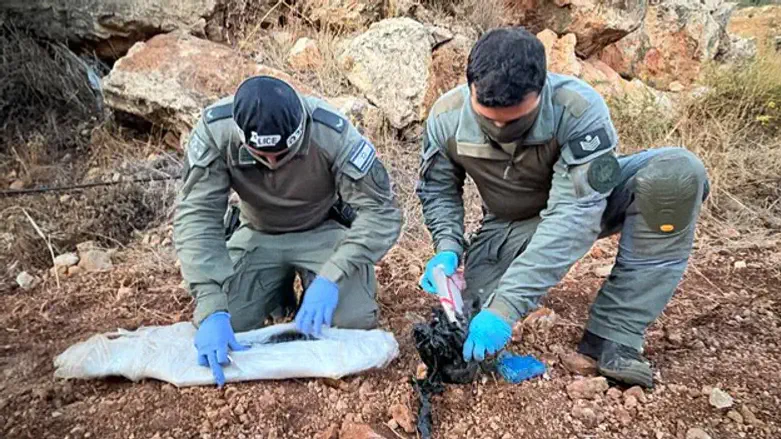
Meanwhile, Iran has pursued a deliberate strategy of opening additional fronts against Israel. Its efforts to arm and support terrorist networks in Judea and Samaria are part of a broader campaign to encircle the Jewish state with hostile forces. Israeli security authorities have reported intercepting advanced weapons intended for terrorist operatives in the region, including explosives, rockets, and anti-tank weapons. These seizures demonstrate that the threat of Iranian-backed weapons proliferation is not merely theoretical.
The danger is compounded by the activities of Hamas, Palestinian Islamic Jihad, and other armed groups seeking to establish operational footholds close to Israeli population centers. Rock-throwing, shootings, stabbings, arson, and attacks against Israeli civilians and soldiers contribute to an environment of insecurity. A successful attack, a weapons shipment that escapes interception, and any terrorist network allowed to consolidate its position increases the risk of a broader confrontation.
Israel cannot afford to treat these developments as disconnected incidents. They must be understood within the context of a sustained campaign to weaken Israeli security and exploit the vulnerabilities created by political indecision.
The Palestinian Authority: Security Partner or Strategic Liability?
One of the most consequential questions facing Israel concerns the future of the Palestinian Authority and its security apparatus.
The PA was established under the Oslo framework with defined responsibilities and limitations. Yet concerns have grown over the size, capabilities, armaments, and long-term strategic implications of its security forces. Critics argue that an increasingly sophisticated PA security apparatus could present a serious threat should its weapons and training ever be directed against Israel rather than used for internal security.
The geographical implications are particularly significant. Major Israeli population centers and vital transportation routes lie within close proximity to parts of Judea and Samaria. A deterioration in security, or a breakdown in the relationship between Israeli forces and PA security personnel, could therefore have consequences extending far beyond the immediate area.
These concerns warrant rigorous scrutiny, transparent intelligence assessments, and clear contingency planning. Israel must establish precisely what capabilities the PA possesses, how those capabilities are being used, and what safeguards are necessary to prevent weapons or training from being turned against Israeli civilians and soldiers (known in Hebrew as hipuch hakaneh, turning the gun barrels in our direction.)
The central strategic question is no longer whether the existing arrangements should remain untouched. It is whether they provide a reliable foundation for Israel’s long-term security.
If the Palestinian Authority cannot prevent terrorism, if elements within its institutions encourage hostility toward Israel, or if its security apparatus becomes a potential source of danger, the Israeli government must be prepared to reconsider the arrangements on which its policy has rested. No security framework should be maintained simply because its political dismantling would be difficult.
The International Dimension: Diplomacy Without Accountability
Israel’s security challenges are also shaped by the activities of foreign governments and diplomatic representatives operating in Jerusalem and Judea and Samaria.
The Israeli government has legitimate grounds to insist that foreign diplomatic activity respect the country's laws, sovereignty claims, and established security coordination procedures. Where foreign representatives engage in political activity that Israel considers improper, the government should address the matter through formal diplomatic channels and clearly defined legal standards.
The status and conduct of European diplomatic missions must therefore be examined with precision. Israel should determine whether particular offices are operating within their authorized functions, whether their activities are consistent with applicable diplomatic arrangements, and whether any conduct warrants formal protest or other lawful measures.
If a foreign mission is functioning in practice as an unauthorized representative office for the Palestinian Authority, Israel should not ignore the issue. It should seek clarification, demand compliance with applicable rules, and consider proportionate diplomatic action where warranted.
However, the distinction between legitimate diplomatic engagement and improper political interference must be established through evidence rather than assumption. A credible Israeli position requires clear documentation and consistent standards, not simply the attribution of every external criticism to hostility toward the Jewish state.
The same principle applies to international media coverage. Reporting that isolates individual incidents from their broader security context can distort public understanding. Conversely, allegations of violence by Jewish residents must be investigated on their individual merits. Israel's case is strengthened by accurate evidence, consistent law enforcement, and the refusal to excuse unlawful conduct by any party.
A state confident in its sovereignty does not need to abandon scrutiny. It needs to apply its standards consistently and defend its interests with clarity.
The Cost of Leaving Israeli Communities Exposed
The consequences of strategic ambiguity are felt most directly by the residents of Israeli communities in Judea and Samaria, as well as by the soldiers tasked with protecting them.
For these communities, security is not an abstract diplomatic question. It concerns the safety of families, the reliability of roads, the protection of homes, and the ability to conduct ordinary life without fear of attack.
The government must recognize that public confidence depends on more than statements of solidarity. It requires effective intelligence, rapid responses to threats, protection of vulnerable communities, and sustained action against those planning or carrying out terrorist attacks.
The Israel Defense Forces and other security agencies must have the resources and operational freedom necessary to disrupt terrorist networks, intercept weapons shipments, dismantle attack infrastructure, and prevent violence before it reaches Israeli communities. Operations must be guided by reliable intelligence, clear objectives, and the distinction between armed threats and civilians.
At the same time, unlawful violence against civilians cannot be tolerated simply because those responsible are Jewish or because their communities face genuine security threats. Such conduct undermines public order, weakens Israel's international standing, and distracts from the primary task of protecting human life.
The government's responsibility is not to choose between protecting Jewish residents and upholding the law. It must do both.
Oslo’s Unresolved Legacy
The Oslo Accords were intended to establish an interim framework that would lead toward a negotiated settlement. Decades later, the central disputes remain unresolved, while the interim arrangements have become a permanent feature of Israel's political and security landscape.
This prolonged provisional status has created a strategic contradiction. Israel retains substantial security responsibilities but has not established a final political framework for the territory. Governments continue to defer decisions over sovereignty, borders, governance, and the future role of the Palestinian Authority, even as the security environment changes.
That contradiction cannot be sustained indefinitely.
The government should undertake a comprehensive review of the Oslo framework, identify which arrangements remain compatible with Israel's security requirements, and determine which have failed or become counterproductive. Where existing agreements no longer serve Israel's interests, the government should pursue a clearly articulated policy for replacing them, taking account of applicable legal obligations and the practical consequences for security, governance, and civilian life.
From Containment to a Coherent National Strategy
Israel requires a fundamental shift from the management of recurring crises toward a durable framework for security and governance. That shift should rest on several clear priorities.
First, declare an end to the assumption that the Oslo framework can continue indefinitely without fundamental reassessment.
The government should formally review the agreements and establish a timetable for determining their future, including the legal and security consequences of termination or replacement.
Second, confront the threat posed by Iranian-backed terrorist networks. Intelligence cooperation, border security, weapons interdiction, financial disruption, and targeted counterterrorism operations must be coordinated into a sustained campaign designed to prevent these organizations from establishing entrenched positions near Israeli communities.
Third, reassess the Palestinian Authority's security apparatus. Israel should establish a verified picture of its personnel, weapons, training, and operational capabilities; strengthen safeguards against the diversion of weapons; and develop contingency plans for any breakdown in security cooperation. If the existing arrangements prove incompatible with Israeli security, the government should prepare a credible alternative rather than rely on assumptions of continued cooperation.
Fourth, review the status and conduct of foreign diplomatic missions. Where there is evidence of unauthorized political activity or violations of applicable rules, Israel should respond through formal diplomatic and legal channels, including restrictions or closure where lawfully justified.
Fifth, restore public confidence through even more consistent protection and enforcement.The government must prioritize the safety of Israeli civilians and IDF personnel, dismantle terrorist infrastructure, protect roads and vulnerable communities, and ensure that violence against civilians is investigated and prosecuted regardless of the perpetrator's identity.
Finally, resolve the question of sovereignty. Israel's government should determine whether and how to extend Israeli sovereignty over Judea and Samaria, explain the legal and administrative framework such a decision would entail, and confront its security, demographic, diplomatic, and civilian implications openly. If sovereignty is the government's objective, it must be advanced as a defined national policy rather than invoked rhetorically while the existing uncertainty persists.
Sovereignty Requires Decisions, Not Slogans
The case for a decisive Israeli policy is not an argument for indiscriminate force or for treating entire communities as enemies. It is an argument that a state cannot protect its citizens indefinitely through temporary arrangements whose strategic assumptions have repeatedly come under question.
Security requires the capacity to act against those who organize and execute attacks. Effective governance requires clarity about authority and responsibility. Sovereignty, if pursued, requires a defined legal and political framework, not merely declarations of intent.
The government's present challenge is to connect these elements into a coherent national strategy. Counterterrorism operations alone cannot resolve the political uncertainty that has persisted for decades. Nor can diplomatic ambiguity substitute for an assessment of the threats facing Israeli communities.
The status quo is not neutral. It carries risks of its own, and those risks must be confronted honestly.
Israel must decide what political and security arrangements it believes can protect its citizens over the long term-and then summon the political resolve to implement them. That means reassessing Oslo, confronting Iranian efforts to expand the terrorist threat, demanding accountability from institutions that exercise power in the territory, protecting Israeli communities, and addressing sovereignty directly.
The era of postponing fundamental decisions must end. Israel's security cannot rest on the hope that today's unresolved problems will somehow become more manageable tomorrow.
Strategic ambiguity has a price. The responsibility of government is to ensure that Israeli citizens are not left to pay it without a clear national plan.