

Twenty-one years after the Israeli government decided to establish a university in Kiryat Shmona and the Galilee, the vision is becoming a reality.
Tel Hai University will open the 2026-2027 academic year tomorrow as Israel’s 11th research university, marking a new chapter for the country’s northernmost institution.
After navigating the challenges of the war and a complex security situation, the university has returned to prewar enrollment levels and is planning significant expansion in the coming years.
Nearly 5,000 students are expected to begin the academic year across the university’s four faculties, an increase of approximately 7% from the previous year, when enrollment stood at around 4,700. During the first year of the war, when classes were held online, the number of students fell to approximately 4,400.
More than 70% of Tel Hai’s students come from outside the Galilee, underscoring the institution’s ability to attract young people from across Israel to the north.
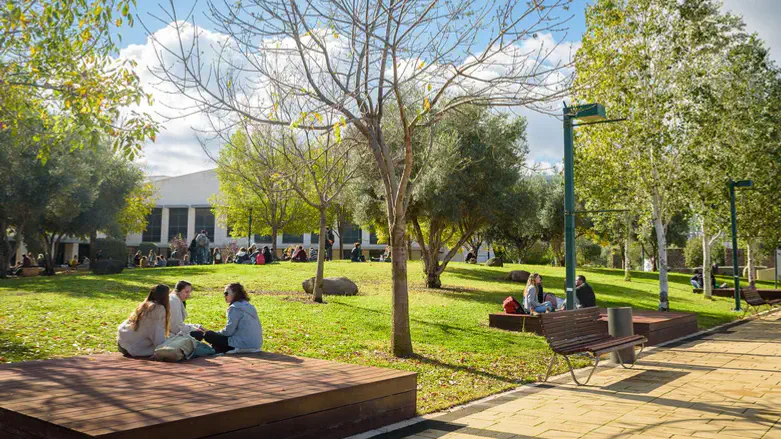
The university operates three campuses: the Rodberg Campus in Kiryat Shmona, the West Campus in the Upper Galilee Regional Council area, and the Katzrin Campus in the Golan Heights.
The war continues to affect student life. Approximately 20% of Tel-Hai students served in the reserves during the conflict, and many remain on active reserve duty as the academic year begins.
The transition from an academic college to a research university marks a major milestone in Tel-Hai’s development. Having begun its journey toward university status 21 years after the government’s 2005 decision, the institution aims to strengthen its role in higher education while advancing research and industry in northern Israel.
University President Prof. Eliezer Shalev said the institution would become “a center of knowledge and excellence for the high-tech industry in the north and throughout Israel."
The university is also setting ambitious enrollment targets. CEO Eli Cohen estimates that Tel Hai will grow to 8,000 students over the next five years, an increase of approximately 3,000 students, or 60%, from the current academic year.
As classes begin on Tuesday, Tel Hai enters a new era, opening as a research university with nearly 5,000 students and plans to expand to 8,000 within five years.