

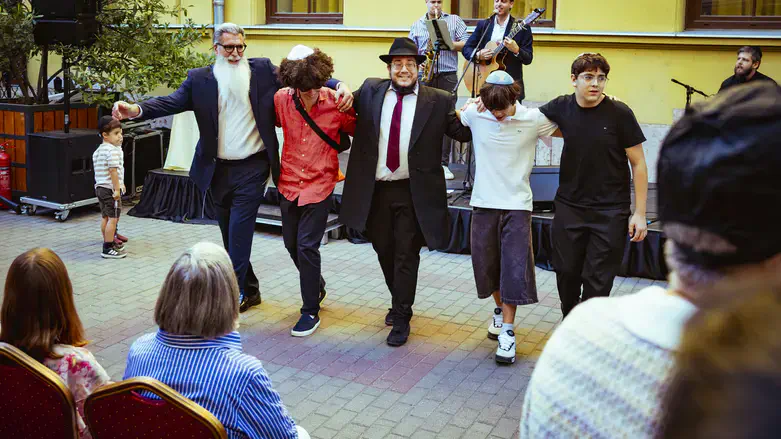
A 150-year-old synagogue in the Hungarian capital has reopened after being closed for more than a decade following the deaths of its longtime worshippers, who had worked to preserve the building and its community since the early 1990s.
Located on Dessewffy Street, the synagogue now serves the youth community of the C-teen movement. Its oldest regular worshipper is Chabad emissary Rabbi Tzvi Bassman, who is in his early 30s.
Rabbi Bassman, what do you mean by a “synagogue for young people"?
“This is a groundbreaking community and educational initiative. Our goal is not simply to establish another minyan or a place of worship for young people under 18, but to create a place that is entirely led and run by them. The officeholders, community leaders and organizers of daily activities are the teenagers themselves.
“We want every young person who walks through the door to feel that this is their home, that they are not merely passive participants but take full responsibility for shaping their own Jewish lives and those of their friends."
What is the history of the synagogue?
“The community here was founded in 1870 in a building that had previously served as a stable. Jewish porters and coachmen from the ‘red hat’ neighborhood used to pray here. Over the years, the site housed a cheder (traditional Jewish elementary school) and youth programs. For decades, the flame of Orthodox Jewish life was kept alive thanks to the dedication of the late Laszlo Herzog, who brought young people in the area closer to the community.
“Sadly, following his death and the community's decline, religious life here came to a halt more than 10 years ago. The synagogue, which belongs to the longstanding Orthodox community, was effectively locked up.
“The revival of this place is like ‘the resurrection of the dry bones.’ As the mayor said at the reopening ceremony, this is not a break with the past, but its natural continuation."
The reopening of the Dessewffy Street synagogue is part of a broader trend in Hungary to reclaim historic synagogues.
“Absolutely. This is part of an extensive and moving effort to revive synagogues that were abandoned, confiscated or repurposed during the Holocaust and the Communist era.
“The Association of United Hungarian Jewish Congregations (EMIH), led by Hungary’s Chief Rabbi, Chabad emissary Rabbi Shlomo Koves, has been working for years to return these buildings to Jewish hands and restore the sounds of Torah study and prayer within their walls.
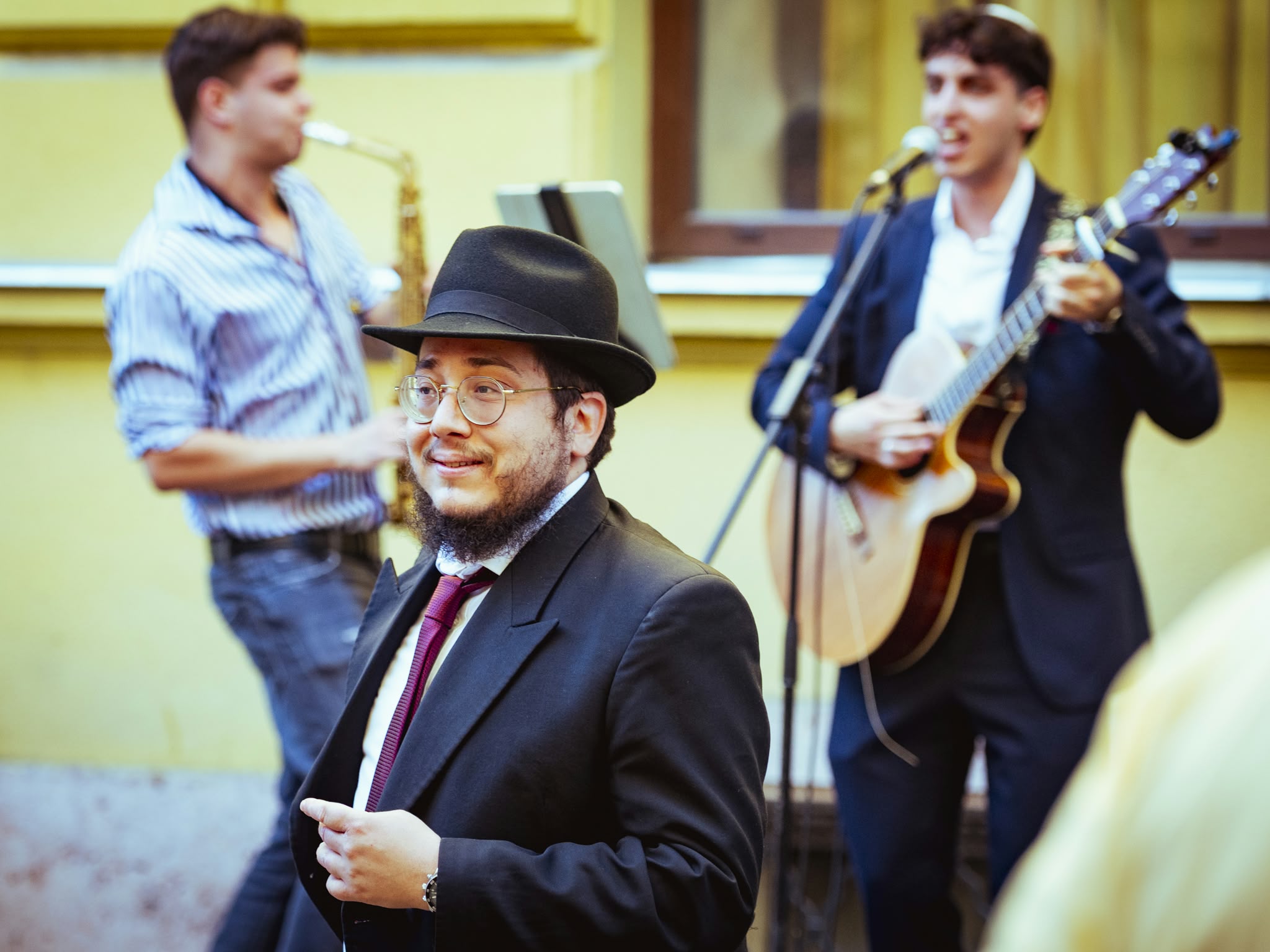
“Most recently, on the eve of Yom Kippur, the historic synagogue in Budapest’s Rakospalota district was rededicated.
“The building was originally established by the late Rabbi Michael-Yitzhak Dushinsky. It was confiscated during the Holocaust and subsequently served for decades as a storage facility for books and newspapers belonging to the Hungarian National Library.
“After four years of effort and extensive renovations, it was returned to the community and reopened to worshippers.
“The Dessewffy Street synagogue is the sixth historic synagogue to resume religious services as part of this major initiative, joining other historic sites, including the ancient synagogue in Óbuda, built approximately 250 years ago and returned to the community.
“Wherever there was darkness and silence, we are bringing back light and life."
How have local Jews and non-Jews responded to the synagogue’s reopening?
“There is tremendous excitement. Hungary is one of the few places in the world where Jews and Israelis can walk around without fear.
“The message conveyed by the synagogue’s reopening, particularly to young people, is that Judaism is not something passive that we inherited from the past, but a living, vibrant experience of which we can be proud.
“Our clear goal is to fill the synagogue with Torah study and prayer. We want every young man and woman who steps inside to know that they have a community, a place to pray and study, and that a life of Torah and mitzvot is their greatest source of pride."