
October 7 has just passed. We spent the day remembering the massacre. Almost all the media spoke about Gaza. But the massacre took place in the Negev, and almost no one in the world named it.
Gaza was where Hamas planned and launched the attack, and where it took the hostages. In Gaza, hostages were murdered and tortured; horrific sexual abuse was also committed against hostages, as the UN itself reported.
The victims of October 7 were families from the Negev.
Hamas fueled the massacre of their own people with a twofold aim: to protect and promote themselves. They used their people as human shields; the lives of their own people were worth less than the publicity their deaths could bring to the cause of the “oppressed." Yahya Sinwar, Hamas’s leader in Gaza, made this clear in messages published by The Wall Street Journal in June 2024: civilian deaths were “necessary sacrifices."
That night, I could not sleep. I asked myself what distinguishes a human being from a wild animal. Although it was still dark, I turned on the television and watched several YouTube videos.
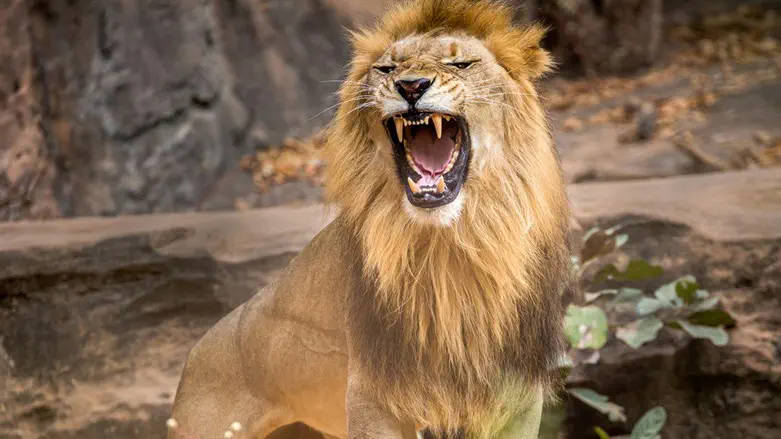
I watched a lion hunt to feed itself and its cubs. It usually grips its prey by the throat and holds it down until it stops breathing. I watched a falcon dive on its prey with deadly precision. I watched a jaguar bring it down with the force of its jaws.
None knows compassion, because none can choose between good and evil. They are neither cruel nor noble: they obey their nature. Human beings, by contrast, could learn something by watching them.
The spotted hyena hunts in a clan. When it catches its prey, it may begin eating before the animal is dead: tearing it apart while it is still breathing, still struggling, still trying to escape. The victim’s blood and agitation seem to trigger a frenzy in the clan that, to a human observer, looks like excitement. The scene is brutal. But it is not evil: the hyena cannot choose. It acts on instinct and, in general, hunts for food.
In Gaza, Hamas turned that brutality into a strategy: it exposed its own population to death and turned the suffering of its own civilians into propaganda. The hyena tears apart its prey because that is how it hunts; Hamas’s leaders chose to sacrifice their people to hold on to power and gain an advantage in the eyes of the world.
Human beings can choose. That is our greatness and our condemnation.
On October 7, 2023, under Hamas’s green flag, the terrorists who crossed the border were not obeying an instinct. They had planned for years. They knew who they were looking for. They chose people who were asleep, the elderly, women, and babies in their cribs. The attack was driven by hatred of Jews, although some of its victims were not Jewish, including foreign workers and Bedouin citizens.
They filmed themselves, too. They wore cameras on their chests so that nothing would be missed. One of them called his parents from the phone of a woman he had just murdered and, elated, told them he had killed ten people with his own hands. His parents congratulated him. His mother told him, “I wish I were with you."
The hyena devours because it is hungry. They killed, raped, mutilated, and burned so the world would see.
In Genesis, Noah, the father of all humanity, received the prohibition against eating meat taken from a living animal. Jewish tradition included this commandment among the Seven Laws binding on all human beings. The first moral boundary imposed on humanity was not to behave like a hyena, even toward an animal.
On October 7, the terrorists crossed more than Israel’s border: they crossed the boundary of humanity. They could choose. They chose.
I think of those around the world who could have called the massacre by its name but chose to look away. I think, too, of those who reversed the roles until the tortured were presented as torturers: leaders, media outlets, and international organizations. This was not an innocuous silence.
France, the United Kingdom, Spain, and other governments recognized a Palestinian Arab state after October 7; Hamas celebrated those recognitions as “one of the fruits of October 7." When the perpetrators of a massacre can present its consequences as a triumph, something grave has failed in the conscience of the world.
When the victims are hidden and responsibility is turned upside down, this is not a dispute over vocabulary. It is a moral illness. The first step toward recovery is an honest diagnosis: call terror by its name, identify those who perpetrate it, and also point to those who cover it up or turn it to their advantage.
But the savannah holds another lesson, and it is the most important one.
When hyenas corner a buffalo calf, its mother may turn against the clan, alone if necessary. Sometimes other members of the herd return as well, with their horns lowered, putting themselves at risk to defend a single calf. Just look at what they do: they do not abandon their own.
On October 7, while the green hyena advanced, there were men who did the same. Retired General Noam Tibon got into his car in Tel Aviv and drove toward the hell of Nahal Oz to bring his son, daughter-in-law, and granddaughters out alive. There were many other Israelis who rushed down south to try to save people. Some of them were killed, such as the two Slotki brothers from Beer Sheva who bravely defended Kibbutz Alumim. Eight months later, Arnon Zamora fell in Nuseirat during the operation that rescued four hostages.
Maimonides wrote eight centuries ago: “There is no greater mitzvah than redeeming captives." That is the boundary that matters. Not strength, not numbers, not ferocity. The choice to risk one’s own life to save another.
The lion kills without guilt. The hyena devours without guilt. But a human being can decide whether to abandon their own or go back for them. That is where nobility begins.
And when Israel went back for its own, as a buffalo returns for its calf, the world condemned it.
After a sleepless night, the picture became clear to me: I owe the hyenas an apology for comparing them to certain human beings.
Principal Sources
-The Wall Street Journal, Sinwar’s messages (June 2024); The Times of Israel, on the terrorist who called his parents.
-UN, Pramila Patten report (March 4, 2024); JNS, Hamas statement on the recognitions.
-The Times of Israel and FDD, on Ariel, Kfir, and Shiri Bibas (February 21, 2025); The Times of Israel, on the rescue of Noam Tibon’s family; The Jerusalem Post, on Arnon Zamora (June 8, 2024).
-Genesis 9:4; Maimonides, Mishneh Torah, Gifts to the Poor 8:10.