

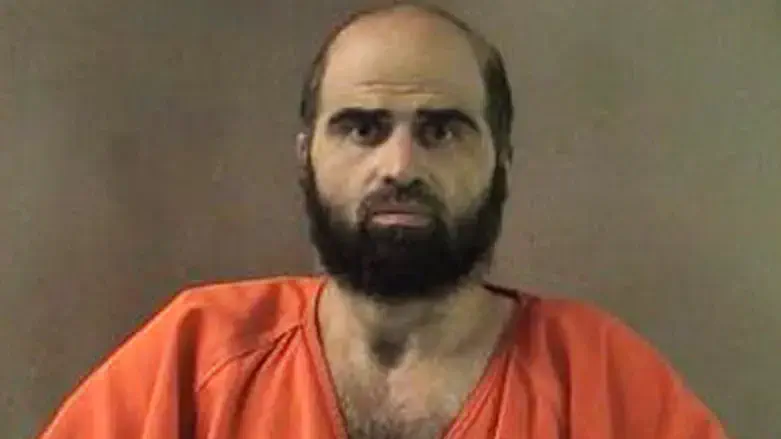
The Pentagon announced Thursday that the execution of Nidal Malik Hasan, the former US Army major convicted of the 2009 Fort Hood terrorist attack, will be livestreamed to the public, The Associated Press reported.
Hasan, who murdered 13 people and wounded 32 others at the Texas military installation, is scheduled to be executed by firing squad on December 3, according to Secretary of War Pete Hegseth.
Speaking Wednesday to Real America's Voice News, Hegseth confirmed that the execution would be accessible to the public.
“We’ll make sure that people are able to watch it, that it’s public," Hegseth said.
Asked whether Hasan had submitted any final requests or attempted to contact the Trump administration, Hegseth responded: “Don’t care. We’ll see him on December 3rd."
Pentagon officials subsequently clarified Thursday that the execution would be broadcast via livestream, with additional information about the arrangements to be released later.
Pentagon spokesperson Sean Parnell had announced Monday that President Donald Trump approved carrying out Hasan's execution.
The White House referred questions about the planned livestream to the Pentagon on Thursday.
Hasan, a US Army psychiatrist who held the rank of major, carried out the attack at Fort Hood in November 2009.
He entered a medical processing building where soldiers were waiting to receive vaccinations and medical clearance before deployment. After shouting “Allahu akbar", he opened fire with a handgun equipped with a laser sight.
Evidence presented during his trial established that Hasan had spent weeks preparing for the attack.
His preparations included recording a gun store employee demonstrating how to replace the magazine in a pistol he had purchased. He also visited a shooting range outside Austin, where he sought instruction on reloading quickly and accurately.
Soldiers who survived the attack later testified that Hasan's ability to reload rapidly made it extremely difficult to stop him.
Investigators recovered 146 spent cartridge casings inside the building, along with dozens more outside, where Hasan continued firing at soldiers attempting to escape toward the parking lot.
During legal proceedings, Hasan said he had carried out the attack to prevent American soldiers from deploying to Afghanistan and killing fellow Muslims.
A military judge prohibited him from using that argument as a defense.
Hasan, who represented himself during portions of the trial, made little effort to contest the evidence against him. He told jurors that the evidence would establish his responsibility for the shooting and described himself as a soldier who had “switched sides."