

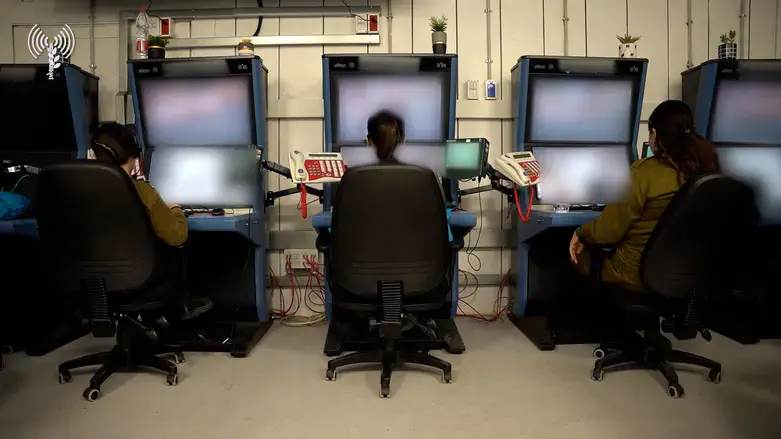
Three years after the October 7 failure, the IDF is overhauling its observation unit and developing new capabilities intended to improve the ability of female surveillance soldiers to operate during an attack and assist forces in the field.
Kan Reshet Bet reported on some of the changes, including upgrades to technological systems, relocation of operations rooms away from the border, self-defense training, and the establishment of a new framework to consolidate and process information arriving from the field.
One of the planned changes is the development of a more advanced version of the “See-Shoot" system. At the same time, the operations rooms and technological equipment used by the surveillance soldiers are also expected to be upgraded.
Preparations for a possible attack are also changing. The surveillance soldiers will receive training and equipment for self-defense, including weapons training, shooting practice, and Krav Maga. The IDF has also established new procedures for responding to an attack.
Some operations rooms have already been relocated to sites farther from the border, but the process has not yet been completed. According to the report, some operations rooms remain unfortified, and the IDF's stated goal is to fortify all of them or relocate them elsewhere.
The changes are being implemented as part of the lessons learned by the Border Defense Corps following October 7. The surveillance soldiers issued warnings in the period leading up to the war and on the morning of the attack itself, but their warnings went unheeded.
“There is no doubt that we made mistakes. It was a total failure," a senior military official said.
Another aspect of the overhaul concerns the way information from the field is collected and processed. The IDF is establishing an intelligence collection agency that will centralize information received from combat soldiers and surveillance soldiers and work to strengthen cooperation with the Military Intelligence Directorate.
According to a security official, one of the failures exposed was in the integration, processing, and fusion of information among the various bodies.
As a result, the intelligence collection field is being rebuilt as a unified profession, encompassing intelligence collection for maneuvering forces, the surveillance unit, and border defense.
In the Gaza sector, the deployment of the unit has already changed, and surveillance soldiers are no longer stationed on the front line as an isolated unit.
The IDF is continuing to reassess the structure and size of its forces. At the same time, the intelligence collection unit is transitioning to a new technological system designed to improve the processing of information received from the field.