
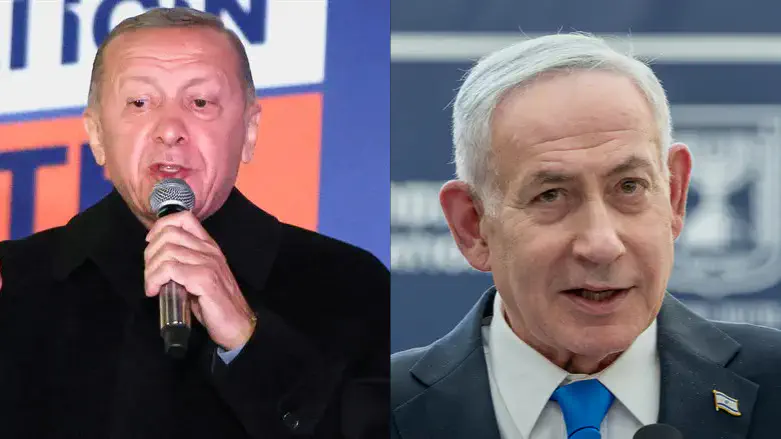
Rachel Avraham is the CEO of the Dona Gracia Center for Diplomacy and an Israel-based journalist. She is the author of “Women and Jihad: Debating Palestinian Female Suicide Bombings in the American, Israeli and Arab media."
On September 22, 2026, Recep Tayyip Erdoğan took the UN General Assembly podium for the 16th time and within minutes delivered the line he had come to New York for:
"Today, Gaza is not only the world's largest graveyard for children. It is also the place with the highest rate of child amputations in the world," he said. Then he added: "Gaza has become the most inhumane and shameful concentration camp of our time."
Erdoğan described children going back to school on prosthetic legs made of wood and said Gaza's children should see kites in the sky, not drones. He mendaciously put the dead at 74,000 over three years, most of them women and children, and told the hall the world faces a "genocidal mindset" that can never get enough of killing. The Israeli delegation stood up and walked out.
Israel answered on September 24 from two platforms. On X, Defense Minister Israel Katz called Erdoğan a "paper sultan," a man dreaming of restoring the Ottoman Empire. From the same UN podium, Benjamin Netanyahu called Erdoğan a tyrant who has killed thousands of Kurds, occupies northern Cyprus, threatens Greece and jails journalists. He also called the genocide charge against Israel "the greatest lie of the century."
Erdoğan talked about Gaza and its children, while Israeli politicians talked about Erdoğan. "Graveyard for children" travels without context. It fits on a placard, in a headline, in a chant at a rally in Madrid or Jakarta. "Paper sultan" conveys Katz's opinion of the Turkish president and tells a listener nothing about the war.
Experts described the trap in advance. In September 2026 the Dor Moriah Analytical Center polled 11 specialists on Turkey's campaign against Israel, and its expert on influence campaigns said that whatever Israel does and however it answers, it stays on the defensive and has to repeat the accusations, which lends them legitimacy. All 11 experts listed the genocide charge among Turkey's narratives, and eight named statements by Erdoğan and his Directorate of Communications as the fastest way to set the agenda for foreign politicians and journalists.
Netanyahu confirmed the mechanism in his own speech. "Israel didn't commit genocide. Israel prevented genocide," he said. Two days after Erdoğan spoke of a genocidal mindset, Israel's prime minister put the charge back on the record himself, twice in two sentences.
The Turkish machine then went to work on the Israeli reply. Anadolu Agency, which the Directorate of Communications lists as an affiliated institution, reviewed the footage and counted roughly 70 countries whose delegations walked out of Netanyahu's speech or stayed away, among them Saudi Arabia and Jordan. The United Arab Emirates, Israel's closest Arab partner, broke with the walkout and stayed in the room. Burhanettin Duran, head of the Directorate, said on X that Netanyahu's attacks on Erdoğan could not obscure the catastrophe in Gaza or the legal cases against Netanyahu himself.
By September 24, the day Katz posted "paper sultan," the Turkish Presidency had published the speech as a book in Turkish, English and Arabic. "Graveyard for children" is now in print