
Carroll Barry-Walsh is a lawyer/investigator specialising in financial investigations and
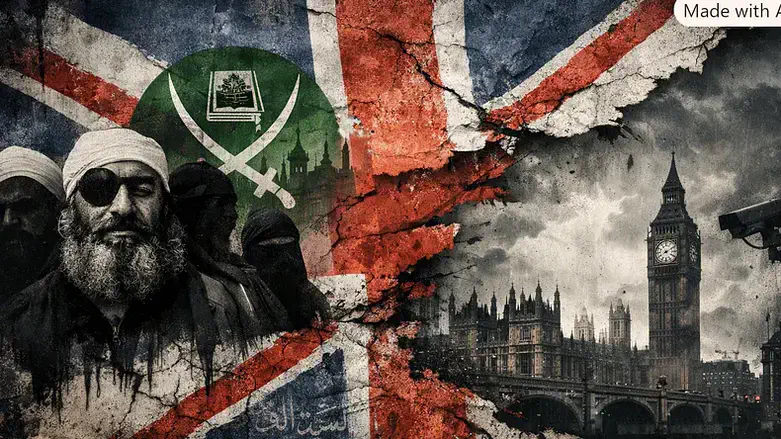
The arrests this month in Manchester, and concerns about possible attacks at RAF Fairford, sent shockwaves across the country, but they are only the latest echo of a pattern of indulgence, delay, and denial when it comes to Islamist extremism. This pattern includes political parties on both the left and the right.
This should not be a controversial position. Ample evidence exists for those willing to hold their noses against opprobrium and look.
Algerian terrorist, Rachid Ramda
The Armed Islamic Group (GIA) is an Algerian terrorist group which grew out of the Algerian civil war in the 1990’s, following a military coup. It carried out many civilian massacres in Algeria. In 1994-1995, it started a campaign of bombings and attempted bombings in Paris involving bombs left in cafes, tube and train stations, and outside a Jewish school. Civilians were targeted. Intelligence sources showed that the group had links to Algerians and Islamists living in the UK, Italy and Belgium.
The French security services considered Britain to be ‘a crossroads for would-be terrorists’ and that it was being used as a ‘home base’ to raise money, recruit members and draw inspiration from militant messages from radical Islamists living freely in Britain. The French authorities were deeply concerned at Britain’s failure either to prosecute or extradite them.
They felt that Britain was being deliberately lenient to Islamist terrorists operating outside the UK so long as they did not misbehave in the UK. The fact that this may have facilitated deaths on the streets of Paris added insult to injury. It was this that led the French security services to sarcastically describe London as ‘Londonistan’.
The case of Rachid Ramda, an Algerian living in Britain linked to the bombings in Paris, caused particular concern. It took 10 years before he was finally extradited to France in December 2005 for trial.
The Egyptian cleric
Abu Hamza is an Islamist cleric, born in Egypt, who moved to England as a young man and based himself at the Finsbury Park mosque. In the late 1990s, he became notorious for his sermons praising terrorist attacks, jihadists and his influence on other Islamist terrorists, including, in his career, praising those involved in the second failed suicide bombings in July 2005.
Only when the US sought his extradition for terrorist offences in 2004 did the British authorities finally prosecute him on various charges of inciting murder and racial hatred via his sermons and other material found at the mosque. After serving his sentence, he was extradited to the US, where he has been sentenced to life.
The Jordanian cleric
Abu Qatada, a Palestinian Arab cleric with Jordanian citizenship and described as Bin Laden’s right-hand man in Europe, came to Britain on a forged passport in 1993. He was accepted as a refugee and granted asylum in June 1994. He had been convicted in Jordan in absentia on various terror charges.
He was described by the British authorities as a national security threat and a central figure in al-Qaeda-related terror activity in the UK. An immigration court described him as a ‘truly dangerous individual’. As the BBC put it in 2014, he had long been seen as one of a group of ‘hardline thinkers who provided the intellectual arguments for religiously-justified violence. Although his political relationship with al-Qaeda was never straightforward, his worldview became virtually indistinguishable’.
His well-known theological opinion, that it was Islamically lawful to kill the wives and children of ‘apostates’, was used to justify civilian massacres. This is an ideological position that is, at its core, violently anti‑woman. Despite this, it took 10 years before he was finally extradited to Jordan in 2013.
The Muslim Brotherhood
In 2014, then UK Prime Minister David Cameron commissioned a report on the Muslim Brotherhood, eventually published in 2015. It stated that it had a highly ambiguous relationship with violent extremism; that membership of or association with it should be a red flag for possible radicalisation; that it was hostile to the UK; and that it had expressed support for groups such as Hamas.
Despite this, the government decided not to proscribe it, but keep it under review.
How well this review has gone can be gauged by the decision of the UAE in 2026 not to fund students to study at British universities because of the risk of exposure to Islamist radicalisation and the influence of the Muslim Brotherhood. The UAE and other Arab states have warned Britain over a number of years of the risk of allowing the Muslim Brotherhood to operate freely in Britain. The Brotherhood is banned or designated as a terror organisation in Egypt, Saudi Arabia, UAE, Jordan, Bahrain, Syria, Russia, the US, Argentina and Germany. But not here.
‘Mr X’: the Hamas operative
According to a Sunday Times article on 26 September 2026, a Hamas member and bodyguard to the Hamas leader arrived in Britain a decade ago and was granted refugee status. Despite the authorities knowing of his background and his arrest for smuggling firearms into Gaza, he was subsequently granted British citizenship. He is now being prosecuted in Britain on various charges. He is also wanted by the German authorities in connection with a terror plot targeting Jews in Berlin and Vienna in 2025, one of the largest such plots being investigated by the German and other European authorities.
He has been granted anonymity.
The British security services
The British security services were stung by French criticism over Rachid Ramda. In March 2020, Jonathan Evans, a former MI5 head, rejected the claim that the UK had given a free pass to terrorist sympathisers in return for no attacks in the UK. Instead, he said:
‘The problem was that we didn’t actually know what was going on because we were not looking. There was all sorts of stuff going on that we just were not aware of. It was not that we were deliberately turning a blind eye, just that we had not noticed.’
This is the ‘Incompetence Not Malice’ defence beloved of all institutions facing criticism. How true it is, given the repeated warnings and requests from the French security services at the time, let alone earlier warnings, who can say.
And Now?
At any event, both the security services are now well aware of the risks from this particular variety of terrorist ideology. As are the politicians. In April this year, the government raised the UK’s terrorism threat level to ‘severe’ and pointed out that foreign states were deploying criminal proxies. In July, after years of delay, the Iranian Revolutionary Guards Corps (IRGC) was finally proscribed as a threat to Britain’s national security.
To be clear: the government’s position is that the IRGC is a state entity, proscribed as involved in terror. Yet we continue to have normal diplomatic relations with Iran. This exemplifies Britain’s caution towards Iran, blurring the lines between diplomacy and denial. Is Britain once again trying to run with the hare and hunt with the hounds?
Still more: the ideology at issue is profoundly anti‑woman - hostile to female autonomy, hostile to dissent, and hostile to the very freedoms that make feminist activism possible. Pretending this is merely a geopolitical balancing act erases the women who live under the Iranian regime.
As for the risks: as Gerry Adams said, the security services have to be lucky all the time whereas the terrorists need only be lucky once. These are terrible odds, and the security services, for all their undoubted efforts, have not beaten them, as the report into the Manchester Arena bombings in 2017 pointed out.
In the last year alone, there have been terror attacks on Jews in the UK and two foiled plots, the latest in the last couple of weeks. It has been all too easy to dismiss these as the consequences of the war in Gaza, all Israel’s fault and not something which should bother anyone else. This is - at best - a comforting delusion.
As the evidence given at the trial of three individuals convicted of planning a Bataclan-style massacre of Manchester Jews shows, and as set out in the judge’s sentencing remarks -
‘You are antisemitic. You intended to target the Jewish community. Your conversations and postings make it clear how deep-seated your hatred is for Jewish people. However, your motivation for planning this terrible attack ran deeper than that. I am sure that you were both fervent supporters of ISIS. You saw anyone who did not hold similar views to your own as an enemy. You spoke in condemnatory terms of Christians (whom you, Walid Saadaoui, referred to as Crusaders), the police, any Muslim who did not share your extremist views and was, in your opinions, an apostate to the religion, and, in your case Amar Hussein, the Government of this country. You were both more than happy that anyone in any of those groups should get killed as part of your attack.’
The costs of Britain’s caution are not abstract. We are all at risk: but when extremists slip through the gaps, or are invited in, it is disproportionately women and girls - from concert‑goers to pre-teens at dancing classes - who bear the brunt of the violence.
And the connections and the implications for public policy? Those will be in Part Two.
LIVE EVENT IN LONDON on 22 October, ‘Rethinking Feminism After 7 October’, with panellists Kara Jesella, Julie Bindel and Nimco Ali. Secure your ticket here.