
Nachum Kaplan is a journalist and commentator. He has 25 years media experience and held senior international roles at Reuters and IFR. He holds a B.A. in Politics and Indonesian from Monash University. He is also a practising psychotherapist. His substack is Moral Clarity.
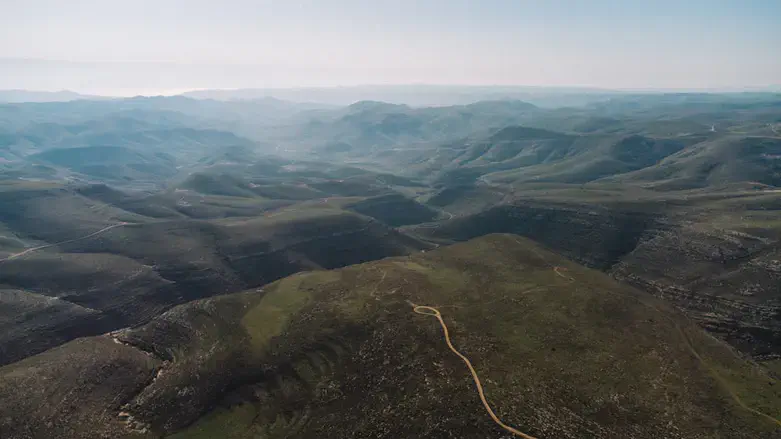
Controlling the Judea and Samarian (aka 'West Bank')highlands is crucial to Israeli security.
The feckless United Nations (UN) is under the delusion that making it more difficult to book a holiday apartment in Israel will alter Israel’s strategic geography.
That, stripped of diplomatic upholstery, is the theory behind the UN’s latest expansion of its database of companies doing business connected to Israeli communities in Judea and Samaria. Some 61 companies have been added, taking the total to 214. The list includes businesses involved in everything from agriculture and transport to tourism and real estate.
It is not formally a sanctions regime, but its purpose is hardly mysterious. Companies placed on it acquire reputational, legal and commercial risk. Investors can divest, consumers can boycott and governments can tighten restrictions. Fair-weather friends Britain, France and Canada have already moved separately to block imports from Israeli so-called "settlements," some of them thriving cities.
The theory is beautifully bureaucratic in the extent to which it is detached from reality.
Raise the economic cost of "settlement". Increase Israel’s diplomatic isolation (and cause massive Palestinian Arab unemployment as a by product). Make the communities progressively more expensive to maintain. Eventually, they figure, an Israeli government will look at the balance sheet and decide the enterprise is no longer worth the trouble and withdraw.
This approach has as much chance of succeeding as I have of joining Cirque du Soleil.
Israelis do not look east from Tel Aviv and see a balance sheet. They see the mountains their ancestors walked through and the key to their security.
Security is an aspect of Israeli communities in Judea and Samaria that is always missing from international discussions. Yes, there are Israelis who want to live in the "settlements" for ideological, historical, and religious reasons. Not to mention cheaper land. Yet security in the face of daunting topography was the original reasont the "settlements" were established and the strategic rationale remains strong and unchanged.
UN lists of shame or other sanction regimes do not make Israel’s topography disappear. Those wanting to understand the Israeli-Palestinian conflict should start by looking at a map rather than a diplomatic communiqué.
Israel’s central coastal plain is extraordinarily narrow. At its narrowest pre-1967 Six Day War point, Israel was just over 14 kilometers (nine miles) across between the Mediterranean and the region of Judea and Samaria, occupied by Jordan before 1967. The hills of Judea and Samaria immediately to the east rise above the country’s principal population and infrastructure belt.
Below those hills lie the greater Tel Aviv metropolitan area, major highways, power infrastructure and Ben Gurion Airport, the country’s international gateway.
Israel’s Institute for National Security Studies (INSS) - which is hardly a hawkish think tank, having argued against unilateral annexation and supported political separation from the Palestinian Arabs - identifies western Judea and Samaria as terrain controlling Israel’s strategic depth. Its security studies have repeatedly treated the high ground, the Jordan Valley, strategic routes and the airport’s protection as central issues in any viable territorial arrangement.
This is why Israel should not and will not give up this land. Regardless of how one views the "settlements" and Israel’s presence in Judea and Samaria, withdrawing is not just a matter of closing a few vineyards and avocado plantations outside of Ariel in the Samarian highlands.
After October 7, a nightmare scenario is not something abstract to Israelis. It is not hard to envisage such an attack coming from Judea and Samaria, which is already brimming with Palestinian Authority police, firearms and military infrastructure.
Suppose Israel withdrew its forces and communities behind something approaching 1967 borders and sovereignty passed to a Palestinian Arab government. Now imagine that government is as the Palestinian Arab leadership is now - weak, corrupt, fragmented, full of Islamists, supportive (even financially) of terror attacks against Jews and vulnerable to further militant infiltration.
It is a disaster-in-waiting.
Nothing in that scenario requires Palestinian Arab conventional military superiority.
Quite the opposite.
The military danger that Judea and Samaria creates is precisely the modern asymmetric warfare that allows a comparatively weak actor to exploit geography against a much stronger adversary.
If they have the highlands, the Palestinian Arabs do not need armored divisions capable of reaching Tel Aviv. They just need the ability to move weapons, build clandestine infrastructure, conceal launch systems, penetrate borders, conduct surveillance and periodically threaten strategically important civilian and transport infrastructure. The IDF is there now, preventing all of the above.
The distance involved is tiny; just a few kilometers.
Ben Gurion Airport illustrates the problem. Israeli security planners have long worried about the terrain overlooking approaches to the airport. INSS studies of possible Israeli-Palestinian arrangements have discussed the need to prevent direct or high-trajectory fire against runways and threats to descending aircraft, and have treated control or monitoring of relevant terrain as an essential issue any agreement would have to solve.
An airport does not have to be destroyed to become strategically vulnerable. It just has to become intermittently unsafe.
Civil aviation operates on confidence, redundancy and predictable security. A persistent threat to flight paths or runways could impose enormous economic consequences even if most attempted attacks failed. So Israel’s main airport is not simply another civilian facility but the country’s strategic central nervous system.
Then there is the coastal plain itself. A large proportion of Israel’s population, economic activity and critical infrastructure is concentrated in this narrow belt. Israeli strategic literature has consequently obsessed over “strategic depth" since the state’s earliest decades. That is because Israeli generals stayed awake during geography class, so they know that nature gave them precious little depth to begin with.
Brookings Institution’s analyses have likewise noted the vulnerability the narrow coastal strip produces and the military significance of the western slope of the Judea-Samaria ridge.
Modern weapons have not ameliorated this concern. In some respects they have magnified it.
A mountain is no longer valuable just because artillery can be placed on it. Elevation assists observation, communications and surveillance. Small unmanned systems have lowered the cost of reconnaissance and attack. Precision weapons have increased the vulnerability of infrastructure that can be identified and repeatedly targeted. Distributed armed groups no longer require Cold War army logistics to create strategic disruption.
Another geographic question compounds Israel’s fear. Who controls the eastern frontier?
The Jordan Valley is not just empty land between Palestinian Authority cities and Jordan. It is what separates the Judean and Samarian highlands from the broader region to the east. It is one of the three areas in Judea and Samaria that Israel considers of vital security interest, alongside the Jerusalem perimeter and the western high ground overlooking Israel’s central heartland.
If Israel does not control the highlands and the external frontier, the military problem changes again. Israel would no longer only be policing hostile cells inside area controlled militarily by Israel, where it can combat them. It would be trying to prevent weapons, personnel and technology from entering the sovereign territory of another political entity.
Those are profoundly different propositions.
Israel’s withdrawal from Gaza in 2005 hangs over this discussion.
Jerusalem removed every settlement and permanent military installation from inside Gaza in 2005. Hamas subsequently gained control. Over the following years Israel faced rocket attacks on civilians, tunnels, and an entrenched armed organization on the other side of the border, culminating in the October 7 pogrom in 2023.
Such a situation in Judea and Samaria is as plausible as me eating the last piece of halva without asking if anyone else would like it.
In Judea and Samaria, the asymmetry is savage.
If the international community is right, an Israeli withdrawal could help create a peaceful Palestinian Arab state beside Israel. Good luck with that.
If Israeli hawks - among which I count myself - are right, Israel could discover that it exchanged military control of commanding terrain for an armed hostile entity overlooking the country’s most densely populated region.
The first outcome would be historic and the first time the international community has been right about anything. The second would be devastating and possibly irreversible.
This is why the vapid phrase “two-state solution" conceals more than it illuminates. The dispute has never been about whether Palestinian Arabs should possess flags, ministries, passports and a UN seat.
The difficult questions are what military capabilities such a state or statelet possesses; who controls its borders; who controls its airspace; what prevents weapons smuggling; what happens if its government collapses; whether Israel retains intelligence access; whether Israeli forces have any right of intervention; what security regime operates in the Jordan Valley; what happens on the ridges overlooking central Israel; and who enforces the agreement when it is violated.
Past Israeli security proposals for a two-state outcome, all of which the Palestinian Arabs rejected in favor of terror and war, wrestled precisely with these problems. These proposals contemplated Palestinian Authority demilitarization, special arrangements in the Jordan Valley, controls on external entry points, strategic early-warning sites and bilateral or international mechanisms designed to stop a future Palestinian Arab state from becoming a platform for attack.
This is why the boycott approach is doomed. It attacks the cost of Israel’s presence in Judea and Samaria without solving the problems an Israeli withdrawal would create.
Expedia cannot demilitarize Ramallah, Airbnb cannot patrol the Jordan Valley, and a European import ban cannot guarantee that a Palestinian Arab government will be friendly, stable or capable of suppressing armed factions, either now or in the future. The almost certain outcome would be a failed Palestinian Arab terror state overlooking Israel.
A UN corporate database cannot tell an Israeli cabinet what happens if a future Palestinian Arab security service fragments, if a militia seizes power, if foreign weapons begin crossing the eastern frontier or if a hostile organization embeds itself in the hills a few kilometers from Israel’s principal population corridor.
International pressure is assured to fail when it treats the Israeli position as though none of the countervailing security considerations exist. That is why the UN’s expanded database will achieve nothing except confirm Israel’s belief that it needs to become more self-sufficient.
The dispute is not about whether Israeli consumers can still buy imported goods or whether a European tourist can rent a house in a "settlement". It is about who controls the hills and the frontier because all sides know that this is where the advantage lies.
Above all, it is about which side carries the consequences if that experiment fails.
The international community can impose economic costs on Israel, isolate "settlements" commercially, discourage investment, sanction individuals, companies and goods. Those measures might change particular Israeli calculations at the margins.
What they cannot do is flatten the Judean hills, move Ben Gurion Airport, widen Israel’s coastal plain or change the nature of Palestinian Arab politics and their desire for jihad and martyrdom.
That is the central strategic problem. Until diplomacy offers answers more substantial than a list of companies, Israeli soldiers and settlers will not be moving anywhere.