

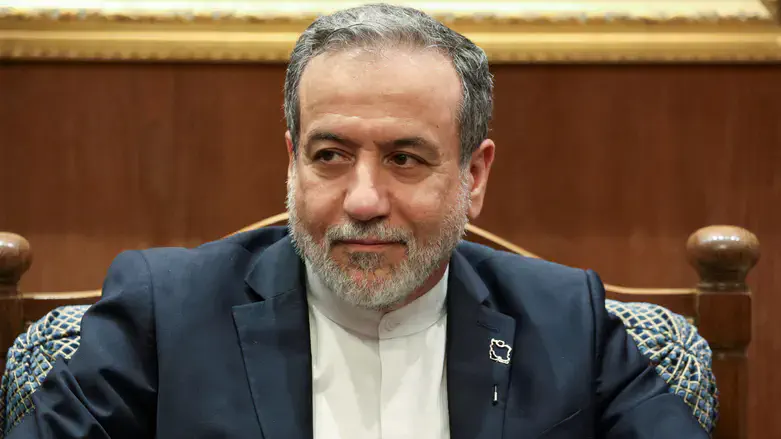
Iranian Foreign Minister Abbas Araghchi warned on Sunday that Iran is fully prepared for renewed military confrontation with the United States, including what he described as a "doomsday war," while maintaining that Tehran remains willing to pursue a diplomatic agreement with Washington.
Speaking with Kristen Welker on NBC News' Meet the Press, Araghchi addressed President Donald Trump's rejection of an Iranian seven-day proposal aimed at reopening the Strait of Hormuz and restoring normal activity in the Persian Gulf.
The Iranian Foreign Minister questioned Washington's rejection of the proposal, saying Tehran was prepared to reopen the strategic waterway in exchange for several measures, including the release of frozen Iranian assets, the removal of restrictions on Iranian oil sales, and an end to the war.
Araghchi said the proposed arrangement would allow the United States to complete the requested measures within four or five days, followed by the reopening of the Strait of Hormuz on the sixth day and the resumption of negotiations toward a final agreement on the seventh.
Despite Trump's public rejection of the proposal, Araghchi said Iran was still awaiting an official American response through mediators.
Addressing the possibility of renewed negotiations, Araghchi accused Washington of repeatedly undermining diplomatic efforts, claiming that the United States had launched military operations against Iran during previous rounds of talks and subsequently violated an agreement reached between the two countries.
"To be honest with you, we have no reason to come back to diplomacy and engage with this administration once again," he said.
Nevertheless, he added, "But I'm still trying diplomacy because I think we shouldn't miss any chance for peace."
When Welker asked whether he trusted President Trump, Araghchi responded, "Well, we trust ourselves. We are ready for diplomacy. We are ready for war at the same time."
The Foreign Minister was also questioned about reports that Trump could resume military strikes against Iran following the US midterm elections.
"We are fully prepared for the war to be resumed. And I repeat, we stand firm in the face of any new aggression, even if it comes to a doomsday war," Araghchi declared.
He maintained that Iran had adjusted its military approach following previous confrontations, saying, "We have learned our lesson from the two previous wars, and we have corrected our tactics. We have changed our tactics, and we are fully prepared to do that."
The interview also addressed Iran's nuclear program, particularly its stockpile of uranium enriched to 60%, significantly higher than the enrichment levels required for conventional civilian nuclear electricity production.
Asked why Iran required uranium enriched to such a high level, Araghchi insisted that the activity was lawful under the Nuclear Non-Proliferation Treaty (NPT) and maintained that the material was intended exclusively for peaceful purposes, including medical applications.
"We have enriched uranium up to 60% for peaceful purposes, and it is within our commitment in the NPT. We have not violated the NPT," he said.
He also stated that Tehran had previously offered arrangements concerning its 60% enriched uranium during negotiations in 2025 and 2026, and suggested that the issue could be reconsidered if Washington demonstrated goodwill.
However, Araghchi said Iran preferred to postpone discussions concerning its nuclear program until later stages of negotiations, prioritizing confidence-building measures under the proposed seven-day agreement.
In the final portion of the interview, Welker questioned Araghchi about the absence of public appearances by Iran's Supreme Leader since he assumed office in March, asking why the Iranian authorities had not released video evidence of his condition.
Araghchi attributed the lack of public appearances to security concerns, claiming that the Supreme Leader continued to face threats from the United States.
"There are lots of indications that he is under threat by Americans, and there are other indications that he is in full control," he said.
He added that Iranian officials continued to receive instructions and opinions from the Supreme Leader, rejecting suggestions of competing centers of authority within the Iranian leadership.
Araghchi said the Foreign Ministry maintained close coordination with the government, the Islamic Revolutionary Guard Corps (IRGC), the Supreme National Security Council, and parliament, emphasizing that the country's institutions were operating together in confronting American sanctions and military operations.