
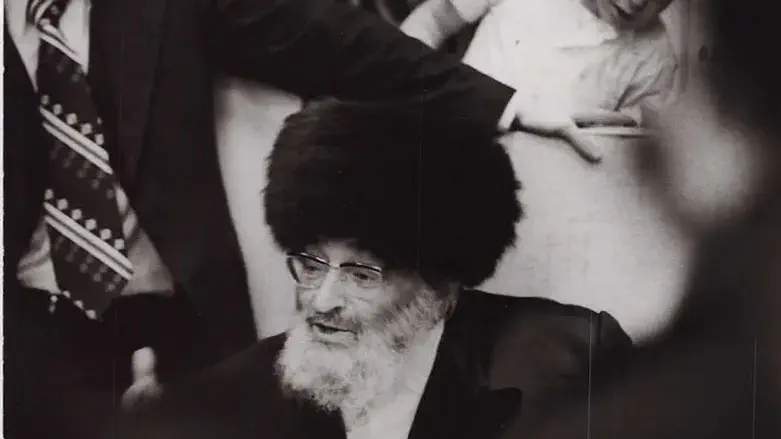
Probably one of the most dynamic Rosh Yeshivas who has ever lived, HaRav Yitzchok Hutner (1906-1980) the Rosh HaYeshiva of Yeshiva Rabbi Chaim Berlin and Kollel Gur Aryeh in Brooklyn, New York who later also founded Yeshiva Pachad Yitzchok in Jerusalem, placed a huge emphasis on making Yom Tov an extra special uplifting experience. He would, so to speak, create an airtight bubble around his yeshiva on the Chagim (Jewish holy days) and inside of it would elevate the atmosphere and fill it with exuberance and spiritual electricity.
He chose highly talented musically gifted Talmidim (students) to lead the prayers and placed a great emphasis on singing many parts of the prayers, especially the Hallel prayers. He would also encourage some creative students to compose new melodies to be sung on the holidays.
During the holidays he would deliver masterfully crafted Divrei Torah that he called Ma'amarim (discourses) using a poetic Yiddish and basing his ideas on the Talmud, Tanach, Rishonim like the RAMBAN (Rabbi Moshe ben Nachman 1194-1270), RAMBAM (Rabbi Moshe ben Maimon 1135-1204), and Achronim like the MAHARAL of Prague (Yehuda Livo ben Betzalel 1524-1609) and the RAMCHAL (Rabbi Moshe Chaim Luzzatto 1707-1746) as well as from various Kabbalah and Chasidic masters without explicitly mentioning their names.
He was like a huge sponge that took in the entire Torah and Jewish Mesorah (tradition), synthesised it, and came out with the most novel Chiddushim (new ideas) based on the vast store of knowledge that he had within him. Gifted with a brilliant mind, a photographic memory, power of speech and a gigantic love of Yiddishkeit, his own enthusiasm bubbled over and was infectious, sparking and uplifting the souls of his listeners to greater personal spiritual heights and development.
Rav Hutner only had one daughter, the late Rebbetzin Bruria Hutner David (1938-2023) married to Rav Yonosan David and they had no children. After Rav Hutner's wife Rebbetzin Masha Hutner passed away in 1972 he would spend Yom Tov in the actual yeshiva building. The yeshiva's large Sukkah became the center of Rav Hutner's Sukkos celebrations following the meals.
Rav Hutner would usually invite guests such as the yeshiva's other rabbis, members of the Hanhallah (administration) and their wives and families. With Rav Hutner seated at the head of the table there were on average about twenty invited guests in all who joined him for the Yom Tov meals.
Before Rav Hutner would start his meals at night he would wait a long time, to give others a chance to finish their meals and then they would walk over to join the singing and the lectures (Ma'amarim) that Rav Hutner would deliver late into the night. Day-time meals were quieter and everyone was given a chance to rest afterwards. The themes of Rav Hutner's talks virtually every night of Sukkos would be based on the custom of welcoming the famous Biblical Ushpizin ("Guests") into the Sukkah that has become a widespread custom among religious Jews.
The theme for the first night's talks would be the Biblical Abraham, the second night's "guest": was Yitzchok (Isaac), the third night was Yaakov, followed by Aaron, Yosef, Dovid. Eventually these talks would be written and published by Rav Hutner as Pachad Yitzchok on Sukkos. Rav Hutner spoke his lectures in a beautiful poetic Yiddish but when he wrote up the talks they were written by him in a clear classical Hebrew, some say reminiscent of the style of one of his formative teachers Rav Avraham Yitzchok HaCohen Kook (1865-1935). Over-all, Rav Hutner named his system of thought, one that he wrote up in his Pachad Yitzchok works as "Hilchos Dei'os Vechovos Halevavos" (Laws of Ideas/Concepts and Duties of the Heart).
Rav Hutner's thought system was described as "Nistar Belashon Nigleh" (hidden/secret Torah spoken in the language of revealed/open Torah) similar to the methodology of the MAHARAL of Prague whom Rav Hutner emulated and quoted often. Rav Hutner would often stress the principle of "Ein Lanu Eisek Benistaros" (we have no business in the esoteric/hidden Torah) and he would never use the words "kabbalah" or "Zohar" or "Sefiros" and the general terminology of esotericism and mysticism of Judaism with which he was well acquainted. He was well versed in the writings and concepts of the Kabbalistic and Chasidic masters but did not make a show of it.
In the middle of Davening, before the Hallel prayers, time was taken to Bentch (make the blessings) on the Arba Minim (Lulav and Esrog etc set) in the yeshiva's Sukkah. This would take time until everyone did this. Then Hallel would begin with the most uplifting melodies. The Hoshanos prayers were said last, after the Musaf prayers were concluded. Rav Hutner would not put on Tefillin during Chol Hamoed (intermediate days) and about 90% of the yeshiva followed his example. When asked, he would say that this was following the custom of the GRA (Vilna Gaon) and the MAHARAL of Prague. Those who would put on Tefillin on Chol Hamoed did so without a Bracha (blessing) and would sit separately, usually in the empty Ezras Nashim (women's section) while they wore Tefillin.
On the night of Hoshana Rabba (the last day of Sukkos) Rav Hutner would not speak but rather he had the custom of sitting in the Sukkah and saying the entire book of Tehillim (Psalms) since according to tradition they were composed by King David and he is the last Ushpizin ("guest") of Sukkos. Rav Hutner did not say "Mishna Torah" (book of Deuteronomy) in the yeshiva on the night of Hoshana Rabba.
At this point the Ruach ("spirit") in the yeshiva was running on high gear with anticipation building for the climax of Shemini Atzeres and Simchas Torah. Rav Hutner sat in the Sukkah on Shemini Atzeres but did not recite the Brocha (blessing) Leishev Basukkah (to sit in the Sukkah) on Shemini Atzeres. Rav Hutner hosted both the night time meal and the day day time meal of Shemini Atzeres in his Sukkah.
On the night of Shemini Atzeres Rav Hutner waited till late at night when everyone could finish their meals with their families and then walk over to be with Rav Hutner in his Sukkah in the yeshiva. There would be a lot of singing and drinking of Schnapps. Rav Hutner was at his most jovial best on Shemini Atzeres and would talk for a long time with everyone in the Sukkah pushing forward to hear him as not everyone could fit in and there was a huge overflow crowd into the yeshiva's hallways attached to the Sukkah.
After the day-time meal of Shemini Atzeres Rav Hutner would recite the Yetziah Min HaSukkah (exiting the Sukkah) prayer and sing "Harachaman Hu Yakim Lanu Es Sukkas Dovid Hanofales" (The Merciful One will raise up for us the fallen Sukkah [the Temple] of Dovid that has fallen) and dance out of the Sukkah while singing this.
There were always three sets of Hakafos (dancing in circles) with the Sifrei Torah taken out for this purpose: On Shemini Atzeres at night; on Simchas Torah at night; and on Simchas Torah in the afternoon. Each Hakofa was dedicated to one of the seven Ushpizin starting with Avraham, then Yitzchok, then Yaakov etc. There was a special Niggun (tune with words) for each Hakofa plus special singing of Seu Shearim when the Torahs were placed back in the Aron Kodesh (ark). All the yeshiva's Torahs were used and one year Rav Hutner picked up a Gemara (volume of Talmud) and danced with it!
Then at about two or three AM late at night On Shemini Atzeres Rav Hutner would dance down from the Sukkah to the main Beis Medrash (the yeshiva's main study hall) and they would start a full round of seven Hakafos that lasted all night until dawn of the next day. Once the Hakafos were over the full morning service was held and everyone went home to rest and get ready for the Yom Tov meal.
The custom of Hakafos on Shemin Atzeres at night is not according to the regular Lithuanian Askenaz custom followed by the Litvish yeshivas but it is done among the non-Litvak Chasidim. Supposedly Rav Hutner claimed that it was Minhag HaGRA, the custom of the Vilna Gaon (Rabbi Eliyahu ben Shlomo Zalman 1720-1797) to celebrate full Hkafos on the night of Shemini Atzeres unlike the custom accepted by the rest of Lithuanian Ashkenazic Jewry.
About this, Rav Hutner used to joke and ask: "When could one find an occasional Misnaged who is Davening (praying) in a Chasidisha Shtiebel (Shull)?" And he would answer "On Shemini Atzeres (where there are Hakafos) at night and on the first two nights of Pesach in Shul after Ma'ariv, when the Minhag HaGRA is to say full Hallel with a Brocha (blessing), unlike the custom of Lithuanian Jewry which is not to recite Hallel on the first two nights of Pesach in Shul after Ma'ariv! In his yeshiva Rav Hutner introduced the customs, to celebrate the Hakafos on the night of Shemini Atzeres and to say the full Hallel with the Brocha on the first two nights after Ma'ariv on Pesach.
Israelis may not appreciate the magnitude of this because in Israel Shemini Atzeres and Simchas Torah are combined into one day while outside of Israel the holiday is split into two separate days.
Rav Hutner represented a paradox. On the one hand he was a Lithuanian Rosh Yeshiva, while on the other hand he behaved and outwardly looked like a Chasidic Rebbe, even putting on the Chasidic clothing and a Spodik (round fur hat) in his later years. When asked about this he would typically say it was because he was following the customs of the Vilna Gaon or Minhag Yerushalayim. Among Litvaks and Misnagdim he looked upon as a Chosid, while among the Chasidim he was looked upon as a Litvsh Rosh Yeshiva. To pin down exactly who he was would be impossible.
Ma'ariv would be Davened in the yeshiva on Simchas Torah night. Then everyone would go home to eat their Yom Tov meal. Afterwards people would gather in the yeshiva for the start of the Simchas Torah Hakafos that would last until dawn of the next day when only Shacharis, Hallel and Musaf would be prayed. Then everyone went home again fo rest a little and eat the Yom Tov day meal and then return to the yeshiva for Mincha when the Choson Torah and Choson Bereishis would be called up and then the next set of Hakafos would start going until nightfall and concluded by Ma'ariv. By that time everyone was exhausted but exhilarated.
Each year the Chosen Torah and Chosen Breishis that were chosen were usually two up and coming outstanding young Kollel members and it was considered a great honor to be selected for this. Aliyos to the Torah were never sold or bought or auctioned in the yeshiva.
One of the most famous songs during the Hakofas and that still is sung in Yeshiva Rabbi Chaim Berlin on Simchas Torah in Yiddish went: "Olam haba iz a gutta zach, ober lernen Torah iz a besser zach, varft avek yedden yoch lernt Torah noch und noch, olam haba iz a gutta zach" - "The world to come is a good thing, but learning Torah is a better thing, throw away all burdens, learn Torah more and more, the world to come is a good thing"!
Rabbi Yitschak Rudomin was born to Holocaust survivor parents in Israel, grew up in South Africa, and lives in Brooklyn, NY. He is an alumnus of Yeshiva Rabbi Chaim Berlin and of Teachers College-Columbia University. He heads the Jewish Professionals Institute dedicated to Jewish Adult Education and Outreach - Kiruv Rechokim. He was the Director of the Belzer Chasidim's Sinai Heritage Center of Manhattan 1988-1995, a Trustee of AJOP 1994-1997 and founder of American Friends of South African Jewish Education 1995-2015. From 2017-2024 he was a docent and tour guide at The Museum of Jewish Heritage - A Living Memorial to the Holocaust in Downtown Manhattan, New YorkHe is the author of The Second World War and Jewish Education in America: The Fall and Rise of Orthodoxy.
Contact Rabbi Yitschak Rudomin at izakrudomin@gmail.com