

The Board of Peace unveiled a six-month recovery program for the Gaza Strip on the sidelines of the UN General Assembly on Wednesday, setting out 66 programs with an estimated cost of approximately $2.45 billion.
The program is intended to begin once funding and access allow and is divided into six clusters: infrastructure development, human development, economic acceleration, digital transformation, legal recovery, and peace and security.
Nickolay E. Mladenov said the presentation marked a shift from preparation to implementation. "A year ago we had no framework, no roadmap, and no Palestinian-led National Committee for the Administration of Gaza (NCAG) ready to assume responsibility in Gaza. Today we have all three," he said.
Mladenov said the recovery program consists of "66 costed programmes, around US$2.45bn, ready to begin the moment funding and access allow," citing shelter, water, hospitals, schools, power, roads, and jobs to be delivered by Gazan contractors and engineers. "Not a wish list, a plan," he added.
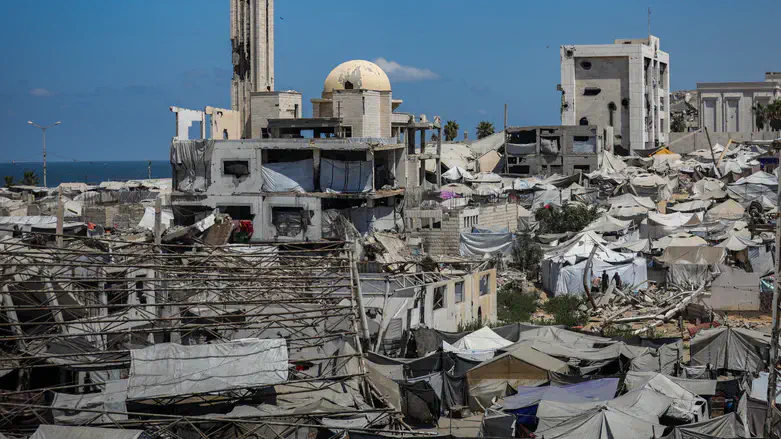
According to the program materials, the largest cluster is Infrastructure Development, comprising 24 programs with an estimated cost of approximately $1.205 billion. The largest items in that cluster include about $400 million for humanitarian shelters, including in-kind support; about $275 million for debris recovery and unexploded ordnance management; about $100 million for public transport support; about $78 million for repair of partially damaged houses; and about $67 million to rehabilitate an additional five hospitals.
Other infrastructure programs include hospital rehabilitation, diesel generation and fuel, road network rehabilitation, a warehouse and logistics zone, restoration of water, sanitation and hygiene services, solar power systems, desalination plants, solid waste removal, municipal services, border crossing facilities, electricity transmission rehabilitation, and fishery and port fleet recovery.
The Human Development cluster includes 17 programs estimated at approximately $303 million. The plan lists about $80 million for winterization, including in-kind support; about $50 million for an immediate health response; about $45 million for release of higher education certificates; and about $40 million each for a household purchasing support pilot and a back-to-school program.
Additional human development measures include medical evacuations and treatment abroad, support for special-needs children's schools, mobile and prefabricated medical units, education abroad, compensation for lost educational years, restoration of minimum religious services, Waqf land recovery, work at the Omari Mosque and Porphyrius Church, scholarships, essential-goods packages, and cooked meals.
The Economic Acceleration cluster contains seven programs estimated at approximately $35 million, including supply-chain rollout, a food-security pilot, grants for small and medium-sized businesses, a lease-to-own program for heavy construction equipment, a Gaza technology park, a regional production park, and a Gaza Peace and Investment Fund.
Digital Transformation includes six programs estimated at approximately $17 million: a digital ID rollout, 4G connectivity, eLearning and eHealth pilots, datacenter and cloud-storage facilities, and a digital-payments rollout. The Legal cluster consists of an integrated justice-sector recovery program estimated at under $10 million.
The Peace and Security cluster contains 11 programs estimated at approximately $885 million or more. Its largest items are an Interior Commission facility and a mission-support site in Rafah, each estimated at about $275 million; approximately $140 million for mobilization of the International Stabilization Force; and approximately $120 million for police mobilization. The cluster also includes logistics support, a decommissioning program, transition of crossings management, police facilities, local trust and reconciliation committees, a community radio channel, and civil-service transitional payments, which remain to be costed.
The program document states that all costs are rough estimates and remain subject to change, describing them as indicative six-month phased-activation figures prepared for discussion rather than a final budget.
In his statement, Mladenov said the next steps "must be careful and verifiable," and called for commitments made at Sharm el-Sheikh to be upheld and for humanitarian access to improve, including for winterization.
He also said the International Stabilization Force and vetted police must deploy, weapons must be decommissioned, and recovery must begin at scale. Mladenov described the National Committee for the Administration of Gaza as "a bridge, not a permanent administration," and called on partners to support its plans and use their influence with all parties.
"None of this is easy," Mladenov said. "Nobody has ever attempted what we are doing in Gaza. Not in this conflict and not anywhere else. There will be setbacks and weeks when progress is slow. But a year ago this was an idea on paper. Today it is a plan, with people ready to carry it out."