
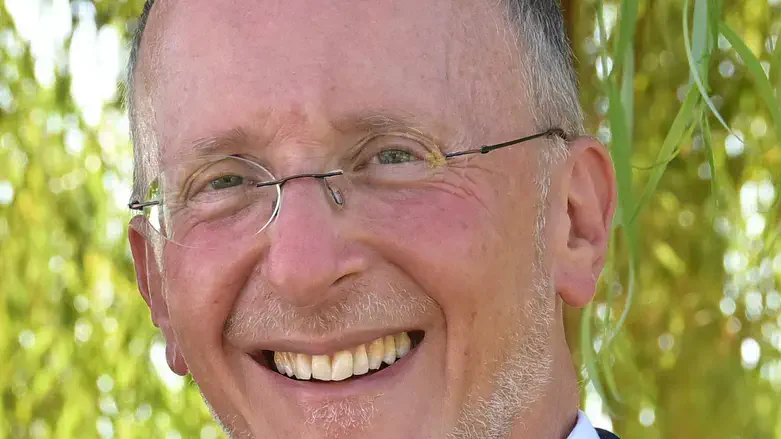
Moshe Shalev did not follow the conventional route into Israel’s technology elite. He grew up in a haredi family in Bnei Brak and was educated in haredi institutions. Already married with two children, he began studying for an accounting degree in evening classes while working during the day to support his family.
From there, his journey took an extraordinary turn. Shalev entered IDF Unit 8200, where he met the brilliant young computer scientist Dean Leitersdorf. In 2023, they founded Decart, an artificial intelligence company developing technology that enables AI models to operate more efficiently.
Just three years later, Decart employs only around 100 people but has raised approximately $450 million. It was valued at $4 billion in its latest funding round, and Anthropic - the American company behind the Claude AI system - has reportedly discussed acquiring it for as much as $6 billion.
Shalev’s story is exceptional. But it also hints at a much larger economic opportunity. Israel’s haredi population has almost doubled since 2009, reaching approximately 1.45 million people - more than 14 per cent of the country. It is expected to reach two million by 2033. Yet the employment rate among haredi men remains in the low-50s, and only around five per cent work in high-tech, compared with 19 per cent of other Jewish Israeli men.
These figures are usually presented as a threat to Israel’s future. But every weakness can also contain an opportunity.
Israel already possesses one of the world’s densest startup ecosystems. More than 2,000 Israeli companies are working in artificial intelligence, and AI businesses attract a remarkably high proportion of Israeli technology investment. The country has the ideas, entrepreneurs and international connections. What it increasingly lacks is skilled human capital.
Meanwhile, within the haredi community is a rapidly growing population trained in intensive study. Years spent analysing Talmudic arguments do not automatically qualify someone to design computer systems. Mathematics, English and technical training remain essential. Yet the habits developed in the beit midrash - concentration, logical analysis, intellectual independence and persistence - are hardly irrelevant to coding and artificial intelligence.
The question is whether Israel can connect these two worlds.
That brings us to the four species of Sukkot. The etrog, lulav, myrtle and willow are radically different. According to the Midrash, they represent four types of Jews, possessing different combinations of Torah learning and good deeds. The mitzvah is not fulfilled by choosing the finest species and discarding the others. We bring all four together.
Nor must any species surrender its identity. The willow does not become an etrog, and the etrog is not asked to imitate the palm branch. Each contributes something different, and their power emerges when they are bound together for a common purpose.
This may be the model Israel now needs.
Discussions about haredi integration too often assume that one side must defeat the other. Either haredim must abandon their distinctive way of life, or the modern Israeli economy must accept that much of this growing community will remain outside it.
Moshe Shalev’s journey suggests another possibility: integration without erasure.
Schools can teach English, mathematics, coding and AI while respecting Torah study, daily prayer, Shabbat and haredi communal life. Indeed, Kodcode, a programme designed with rabbinic involvement, has already placed more than 850 haredi men into technological national service roles,and over 80 per cent of its graduates have subsequently entered full-time technology employment.
Imagine that potential multiplied across an expanding population. Israel’s technology sector contributes entrepreneurial energy, practical expertise and global networks. The haredi world contributes educational discipline, strong family structures, demographic growth and a deep commitment to learning. Bringing the two together could simultaneously reduce poverty, expand Israel’s tax base, answer the technology sector’s need for talent, and create thousands of productive careers.
It will require change from both sides. Haredi education must provide more young people with the skills needed to participate in the modern economy. Employers must build pathways that allow religious commitments to be maintained. Neither task is simple, but the potential rewards are enormous.
On Sukkot, we bind together four very different species, lift them and move them in every direction. Their differences do not disappear. Together, however, they become a mitzvah.
Israel’s next great economic breakthrough may not come from inventing another technology. It may come from unlocking the talents of more of its people. The ingredients are already in our hands. We need only learn how to bind them together.
Rabbi Leo Dee is the author of “The Business Case for Israel", which explores the demographic, economic and spiritual forces shaping the future of the Jewish people. It is available on Amazon around the world and from Bookpod in Israel.