

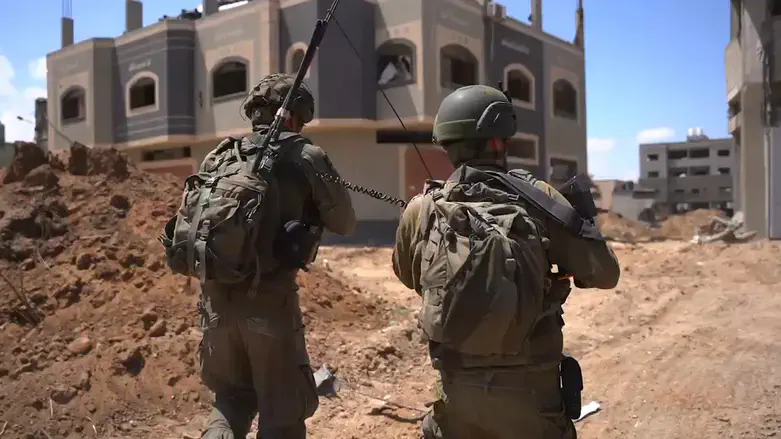
Soldiers from the Karmeli Reserve Brigade reported for an extensive 100-day tour of duty in recent days. After receiving mobilization orders, they left jobs, closed private businesses, cancelled family plans, and bid farewell to their families out of a sense of mission for the nation.
However, now, precisely in the midst of operational missions, some were notified that they are expected to be released, not because the security threat has diminished, but rather because of a lack of funds.
Sources in the brigade told Arutz Sheva-Israel National News about the unusual situation, the likes of which, according to them, has not been seen since the beginning of the war. They claim that the mobilization orders were issued legally and in line with operational needs. However, after the soldiers had already reported to their units, it turned out that the budget to fund their service period was not fully approved.
According to a senior official in the brigade, the defense establishment assumed the IDF's budget would increase, so the forces were called up for a lengthy tour of duty. "In the end, the money didn't come, and the solution that was found was to release the soldiers who already left their lives and reported for the mission," he stated.
Behind the decision, the reservists say, lie hundreds of personal dramas. Business owners who shuttered their shops, employees who notified their employers of a hundred-day absence, and officers and soldiers who cut family vacations short and even returned from abroad to report now face uncertainty after already paying a financial, professional, and family toll.
Soldiers warned that if the situation continues, it will significantly harm operational readiness. "It's not just a few soldiers being released," the sources say. "There is a concern that full platoons will be broken up, not because the mission is accomplished, but because there are no funds to support the troops."
Some are also criticizing the defense establishment's priorities. According to the sources, if cuts were required, it would have been appropriate to make them in command and home front units and in non-combatant positions, not in units on the front lines that bear the burden of combat.
The crisis comes amid an ongoing dispute between the Defense Ministry and the Finance Ministry regarding a war budget increase. While the echelons continue to argue, those who most directly feel the brunt of the consequences are the reservists.
"The soldier doesn't care about a dispute between the Finance Ministry and the Defense Ministry," one of the sources stated. "He asks one simple question: if you knew that there is no budget, why did you ask us to leave our families, our jobs, and our businesses to enlist for 100 days?"