

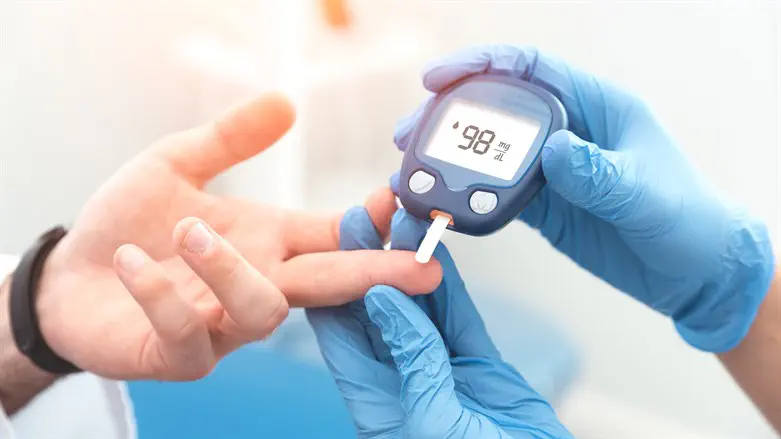
As Yom Kippur (the Day of Atonement) approaches, many people with type 1 diabetes will once again face a difficult question: Is it possible to observe the fast without putting their health at risk?
A new study conducted jointly by the Jerusalem College of Technology (JCT) and Shaare Zedek Medical Center offers encouraging findings, showing that advanced diabetes technologies may enable many people with type 1 diabetes to fast safely.
The study, conducted by the diabetes clinic team at Shaare Zedek Medical Center and led by Dr. Floris Levy-Khademi of Shaare Zedek and Dr. Eli Heifetz, a lecturer and researcher at JCT, examined whether automated insulin delivery (AID) systems could enable adolescents and young adults with type 1 diabetes to safely complete prolonged Jewish fasts.
Researchers analyzed 109 fasts undertaken by 80 adolescents and young adults with type 1 diabetes on Yom Kippur and Tisha B’Av in 2023 and 2024. All participants used automated insulin delivery systems that combine an insulin pump with a continuous glucose monitor.
The findings, recently published in the Journal of Diabetes Science and Technology, showed that 71.5% of participants successfully completed the fast without significant complications.
"The most important finding of the study is that there were no life-threatening complications among the participants, with no cases of severe hypoglycemia or diabetic ketoacidosis (DKA), the two major complications that raise concerns during prolonged fasting," said Dr. Heifetz, whose son was diagnosed with diabetes as a child and has observed full fasts since age 13, including in the years before today’s advanced technologies became available.
The study also found that participants’ blood sugar control actually improved during the fast. Participants remained within their target glucose range 80.7% of the time during the fast, compared with approximately 72% during the week leading up to it. The amount of time participants experienced low blood sugar was also relatively limited.
One of the study’s most notable findings was the importance of advance preparation and consultation with the patient’s medical team.
"Approximately 68% of participants adjusted their pump settings ahead of the fast, either by raising their glucose target or reducing their insulin dosage," said Dr. Levy-Khademi. "Among those who made adjustments, 84.5% successfully completed the fast, compared with just 40% of those who did not. Statistical analysis showed that adjusting pump settings before the fast increased the likelihood of successfully completing it eightfold."
The researchers noted that this is the first study to examine the use of automated insulin delivery systems during prolonged Jewish fasts.
"The findings indicate that this technology may enable some people with type 1 diabetes to fast safely, but only with individualized adjustments to their system settings and appropriate medical guidance," the researchers said.
They cautioned, however, that the findings should not be interpreted to mean that everyone with type 1 diabetes can safely fast.
"The study participants were relatively young and had good glucose control. The decision about whether to fast therefore needs to be made on an individual basis, based on the recommendation of the treating physician and in consultation with the appropriate halakhic (pertaining to Jewish law -ed.) authority," the researchers concluded.