

An Israel Democracy Institute (IDI) poll found that 74% of the Jewish public in Israel fast on Yom Kippur (the Day of Atonement), 63% fully and 11% partially.
According to the findings of the report, the haredi, Religious Zionist, and religious-traditional publics have full fasting rates of 97%-98%. 90% of the non-religious-traditional public fast; 77% fully. 47% of the secular public observes the fast at least partially, with 28% fully fasting and 19% partially fasting.
The study shows demographic gaps between different population groups: 88% of Mizrahi Jews fast (81% fully), compared to just 64% of Ashkenazi Jews (50.5% do so fully). The gap remains when breaking it down by religious level. Among secular Jews, 63% of Mizrahim fast while 39% of secular Ashkenazim do.
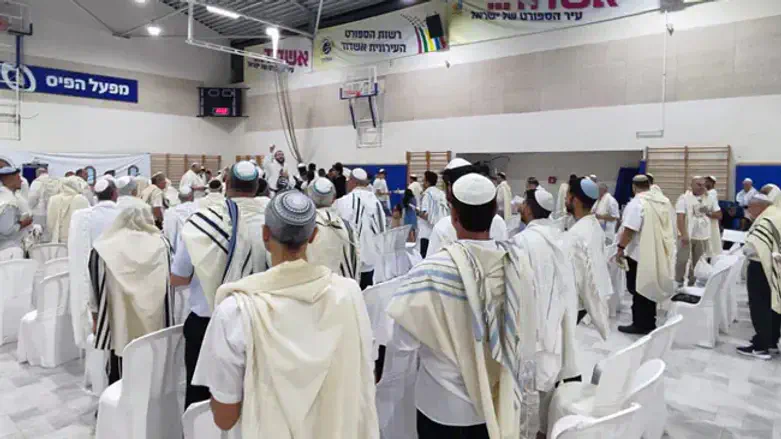
As far as participation in prayer services, 57% of the general Jewish public attends synagogue on Yom Kippur. 51% participate in Orthodox services, while 6% attend Reform or Conservative houses of prayer. A breakdown by religious observance shows that 90% of religious-traditional Jews and 67% of non-religious-traditional Jews attend services. One in five (20%) secular Jews attend services.
For a significant segment of the population, Yom Kippur is the only opportunity during the year to visit a synagogue. Eighteen percent of Israeli Jews attend Yom Kippur services despite not visiting a synagogue at any other time during the year. This figure rises to 37% among non-religious traditional Jews and stands at 16% among secular Jews.
Overall, 32% of those attending Yom Kippur services do not visit a synagogue during the rest of the year. Among secular participants, that figure reaches 79%.