
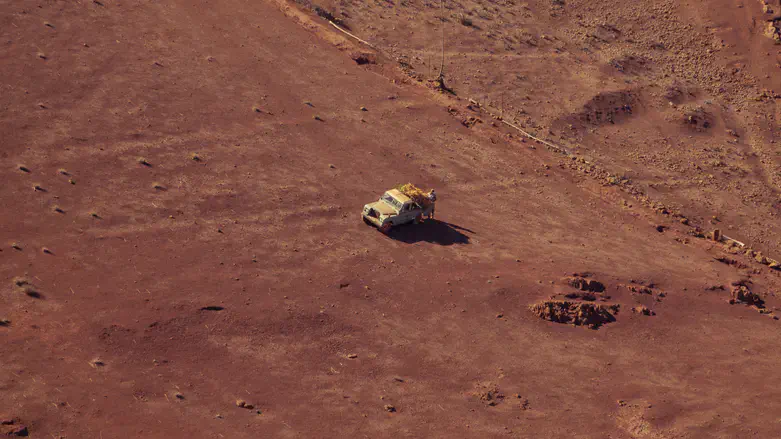
A defense AI model can perform well in testing and still struggle when a camera shakes, a target occupies only a few pixels, weather changes the scene, or an audio sensor captures wind instead of a clean signal. In many cases, the problem starts before the model architecture.
It starts with the training data.
For defense tech teams developing UAV navigation, situational awareness, acoustic detection, maritime monitoring, and other sensor-based systems, data annotation must reflect how the system will operate outside a controlled dataset.
Five real-world projects show how high-quality data annotation by Label Your Data helped defense AI models spot camouflaged targets, navigate using aerial imagery, detect airborne threats, and track objects at sea.
How Training Data Shapes Defense AI Systems
Aerial footage can contain camouflage, motion blur, changing altitude, partial visibility, and objects that look very different from above. Maritime video adds moving cameras, glare, waves, and long-range targets. Acoustic systems must separate a relevant signal from engines, animals, explosions, and weather. A generic data labeling rule will not cover these conditions.
That makes data annotation for defense technology an engineering process rather than a simple production task. A specialist AI training data provider should help the ML team define the taxonomy, document edge cases, test the instructions on real samples, review early batches, and update the rules when the data exposes a new situation.
In practice, annotation QA reviewers must check that a partly camouflaged vehicle, a distant vessel only a few pixels wide, or a drone sound mixed with wind is labeled consistently across every batch. Ambiguous samples should be flagged for review, with the resulting decisions added to the annotation guidelines so the model does not learn conflicting patterns.
Data security also has to be part of the labeling workflow through restricted access, controlled environments, encrypted transfers, and clear permissions.
Inside Five Defense Tech Annotation Projects
Label Your Data has supported Ukrainian AI companies, defense technology teams, and volunteer initiatives on military and dual-use projects since 2022.
The datasets and model objectives differed, but the same pattern appeared across the annotation work: reliable output depended on close feedback between domain specialists, ML engineers, annotators, and QA reviewers.
Military Drone Awareness
In the NATO-compliant military drone awareness project, the Label Your Data team handled aerial image and video annotation to help defense systems identify camouflaged equipment and personnel across changing terrain and weather.
The work included more than 2,000 annotation hours. The broader project reduced equipment detection time from six hours to 15 minutes. The resulting artillery reconnaissance technology was also presented in NATO offices.
UAV Navigation Improvement
Another project used aerial image annotation to improve UAV navigation. It required bounding boxes and polygons for terrain, obstacles, vehicles, waypoints, and other objects in aerial imagery.
The Label Your Data team annotated more than 20,000 objects and also handled data uploads, verification, the annotation environment, and team training. This gave the client a complete operating workflow instead of a collection of labeled files.
Artillery Fire Correction
For an artillery fire correction algorithm, data annotators created a custom video dataset from UAV footage. They labeled target locations and environmental factors that could affect the defense AI model.
Label Your Data used restricted data access, encryption, and a controlled office environment to handle the sensitive material.
Acoustic Target Detection
Defense AI is not limited to visual data. In the acoustic target detection project, four annotators processed about 700 hours of audio over two months.
They classified sounds from drones, helicopters, jet aircraft, and cruise missiles while separating them from wind, animals, explosions, and other background noise. The case showed how much targeted training and structured QA matter when classes can sound similar.
Object Segmentation and Tracking
Commercial defense and aerospace projects can be just as varied. For Nexvision, a French embedded-vision company, Label Your Data ran three annotation streams in parallel: 40,000 pupil images with ellipse masks, 30,000 eye images with bounding boxes, and 4,000 maritime videos with manual object tracking.
The resulting datasets supported gaze-detection and maritime-awareness models, with every batch delivered on time and no major rework required.
How to Vet a Defense AI Data Partner
Before choosing an annotation partner for a defense AI project, your team should ask each potential vendor:
- Can the team work inside our required tools and data environment?
- How will edge cases and guideline changes be documented?
- What QA process is used for small, occluded, or ambiguous targets?
- Can the provider support images, video, audio, and geospatial data as the system develops?
- How quickly can the team expand or reduce capacity without losing consistency?
The goal is to find a specialist AI data partner that can build training data that stays useful when operating conditions become unpredictable. For defense AI, that can determine whether a promising model remains a demo or becomes a field-ready system that defense teams can rely on.