
Steven Teplitsky writes on THE WITNESS LEDGERsubstack.
The Receipts of the “Empire"
History, when stripped of the pious humbug of the pedagogues, leaves little mystery as to how genuine empires do business. The trade of the authentic conqueror has always been a straightforward racket, requiring only three things: gunboats, sovereign decrees, and an insatiable appetite for someone else’s property.
Look upon the genuine imperial roll call:
The United Kingdom: Planted its standard across India, North America, Australia, and half of Africa through sheer, unblushing naval supremacy.
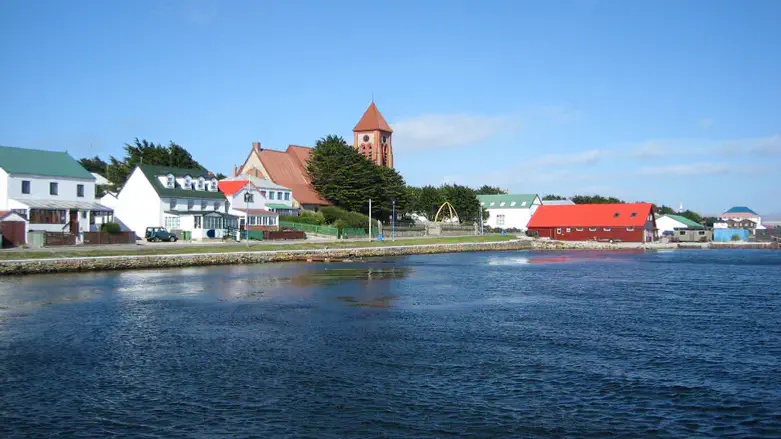
It still holds on to Akrotiri and Dhekelia on the island of Cyprus, Anguilla, British Virgin Islands, Cayman Islands, and Montserratin the Caribbean,Bermuda in the North Atlantic Ocean, British Antarctic Territory, British Indian Ocean Territory, Gibraltar, Pitcairn Islands in the Pacific Ocean, South Georgia and the South Sandwich Islands, Saint Helena, Ascension and Tristan da Cunha in the South Atlantic, Turks and Caicos Islands in the Atlantic Ocean. And the Falkland Islands off Argentina.
Britain is notably the only country to still have territories in every continent on earth, except Australia.
France: Swallowed vast stretches of Northwest Africa and Indochina under the grand banner of a “civilizing mission."
Spain: Sent pious conquistadors across the Americas and the Philippines to bag whole continents for the Crown.
Portugal: Carved out trading fiefdoms and plantation realms from Brazil to the African coast.
The Netherlands: Commandeered spice routes and dominated the East Indies through chartered corporate greed.
Belgium: Turned the Congo Basin into a private slaughterhouse for rubber and ivory.
Germany & Italy: Scrambled late for the scraps, hacking out domains from Tanganyika to the Horn of Africa.
Other European Powers: Danes, Swedes, and the Russian autocracy grabbed whatever overseas ports or contiguous soil lay within reach of a musket.
Non-European Empires: Imperial Japan devoured Korea and chunks of China, while the United States marched across a continent and pocketed Puerto Rico and the Philippines.
The Imperial Ledger
This business was not a Sunday school picnic. While the exact body count over five centuries is obscured by defective census-taking, hard demographic estimates put the butcher’s bill of classic colonization well north of 100 million corpses.
The modus operandi of the genuine imperialist was simple: show up with artillery, cow the natives, sack the countryside, and ship the loot home to the mother capital. No viceroy ever wasted an afternoon haggling over real estate deeds, nor did an invading armada cool its heels waiting for an escrow clearance before hoisting the royal colors.
The Curious Case of the Yishuv
And so we come to the late 19th and early 20th-century resettlement of Jewish pioneers in their ancient sandbox.
If this was “colonization," then it stands as the only imperial conquest in the chronicles of mankind carried out entirely by checkbook and civil notary.
The pioneers of the early Yishuv arrived with neither gunboats nor an imperial treasury at their back. They were penniless refugees fleeing Russian pogroms, landing in a dilapidated Ottoman backwater. They possessed no sovereign decrees, no regiments, and no royal charters.
They brought bank drafts.
Under the Ottoman Land Code of 1858, vast expanses of the Levant were owned by aristocratic absentee effendis loafing in the cafés of Beirut, Damascus, Cairo, and Paris. These gentlemen held legal title to uncultivated, malaria-infested swamps, stony wastes, and desolate sand dunes. When Jewish buyers arrived with cash in hand, the noble landlords sold with unseemly haste-and at preposterous, gouging prices.
The transactions were recorded down to the last piastre in the Ottoman tabu and later rubber-stamped under British ordinances. The aristocratic Sursocks of Beirut made an absolute killing liquidating useless bogs in the Jezreel Valley to buyers paying castle prices for swampland.
Sinking Capital vs. Sacking Land
The genuine empire sacks a territory to fatten the home treasury.
The early Zionists performed the exact opposite comedy. Wealth did not flow outward to an emperor; philanthropic capital flowed inward, collected nickel by nickel in blue tin boxes from schoolchildren and dreamers across the diaspora.
Nor did these settlers inherit lush plantations. In Hadera and the Jezreel bogs, they paid princely sums for the privilege of wading chest-deep in muck, feeding the mosquitoes, catching malaria, digging drainage trenches, and planting eucalyptus trees.
The Rhetorical Claptrap
To brand this business “colonization" or is to murder the language for political sport.
Cortés did not secure thirty-year mortgages. The Dutch East India Company did not file notarized land deeds with municipal clerks before seizing Java. King Leopold did not negotiate leases with Congolese village elders.
The Yishuv was a displaced, indigenous remnant buying back neglected tracts of their ancestral home, dunam by dunam, under the skeptical noses of foreign imperial masters.
History knows the ugly face of empire. It is stamped in cannon smoke, mass graves, and sovereign plunder.
Paying to settle the Yishuv was not colonization, it was not conquest.
It was just closing costs.
(And Judea and Samaria were part of the land allocated to the nascent Jewish State by the League of Nations and the San Remo Conference before it. But that is another story.)
If you’re saying, “I didn’t know that," then now you know the whole story.