
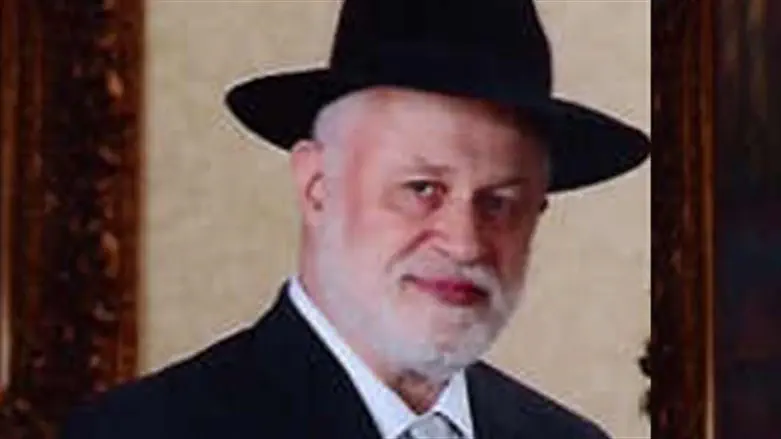
HaRav Yitzchok Hutner (1906-1980) the late Rosh HaYeshiva of Yeshiva Rabbi Chaim Berlin and Kollel Gur Aryeh in Brooklyn innovated many new customs in his yeshiva. For example, when he headed the yeshiva they did not recite Selichot (customary prayers recited before the High Holy Days) late at night on the Saturday night the week before Rosh Hashana according to the Ashkenaz custom. Rather the first round of Selichot were said Sunday morning before the Shacharit morning prayers. In addition Rav Hutner edited the Selichot so that most of them were left out selecting one main one to be recited out aloud. Each day of Selichot a different Piyut was selected from that day's selection.
When asked about this Rav Hutner would say that he is against "Zogachts" meaning rote recitation of lots of prayers and that he preferred that fewer things were said in order of the Selichot and could be said with Kavana (intention). When asked about what Minhag he followed, Rav Hutner would say that there is no such thing as "Minhag HaMakom" (custom of the place) in America, unlike in Europe where each community had Minhagim (customs) that went back hundreds of years. So that in America one may take on new Minhagim (customs) since the very place of America as a new continent meant that there were no established Minhagim to follow as long as one followed the customs they are used to, but he innovated new ones for his Talmidim (disciples).
Preceding Rosh Hashana Rav Hutner would deliver a Ma'amer (discourse) on the topic of Rosh Hashana introducing Chiddushim (novel ideas) about that festival. Eventually many of these discourses were published and there is a special volume of Rav Hutner's works called Pachad Yitzchok devoted to the topic of Rosh Hashana.
At one of his last Ma'amarim about Rosh Hashana Rav Hutner spoke about the uniqueness of the Ten Days of Repentance between Rosh Hashana and Yom Kippur and suggested that these ten days are suited for Teshuva (repentance) because they are a "gap" between the days as counted by the Lunar calendar and the days as counted by the Solar calendar. The ten day differential creates a loophole in time so to speak when unusual things can be done like turning back the clock on people's sins that is the essence of repentance.
Davening (prayers) in the yeshiva took a long time. In his early years Rav Hutner himself led many of the prayers but as time went on he appointed special Talmidim (students) to lead the prayers who Davened (prayed) with passion and devotion. Quite a few alumni would come and spend Yom Tov with the Rosh Yeshiva in the yeshiva. The prayers were conducted by a fixed roster of Baalei Tefila (prayer leaders).
For example Maariv on Rosh Hashana as well as Musaf on both days was led by the late Rabbi Betzalel Reifman who had a booming raspy voice. Rabbi Reifman was Executive Director of the yeshiva for decades and Rav Hutner loved the way he intoned and dramatized the words of the prayers.
Rav Hutner took a very long time to Daven (pray) his silent Shemoneh Esrei/Amidah prayers. There is a story that is told that once Rav Shraga Feivel Mendlowitz (1886-1948) the Menahel (director) of Yeshiva Torah Vodaat in Brooklyn asked Rav Hutner's opinion about hiring a famous Gadol (Torah sage) from Europe to fill a position at Yeshiva Torah Vodaas, Supposedly Rav Hutner opposed the appointment, and that person was not hired, on the grounds that that Gadol prayed his Shemoneh Esrei too quickly which is not suitable for a Rosh Yeshiva who must lead by example. So everyone in the yeshiva had to wait a long time until Rav Hutner completed his Shma Yisroel and then his Shemoneh Esrei.
After Maariv, the evening prayers on the first night of Rosh Hashanah, everyone present would stand on line literally for hours and he expected that each person in the room should come by him and say "L'shana Tova Tikatev Vetichasem L'Alter Al'chaim Tovim Besifran Shel Tzadikim Gemurin" ("May you be written and sealed for a good year immediately and for a good life in the books of the completely righteous") and if a newcomer would know this he would teach iot to him word by word even though there were hundreds of people in the yeshiva still waiting in the line.
The reason he instituted this custom is because the judgement that begins on Rosh Hashana is written by Hashem (God) on the first night of Rosh Hashana. That is why from the first day of Rosh Hashana until Yom Kippur the custom is to say "G'mar Chatima Tova", may you be inscribed in the Book of Life.
Rav Hutner would pick out people to offer them special blessings. In my case on my first Rosh Hashana in the yeshiva, he pulled me down by the collar and said "we are expecting to hear good news from you!" There were even some impatient attendees who would go home, make Kiddush and eat the meal and come back three hours later and still be in time to wish the Rosh Yeshiva his favored words for that night. While those who were in the line would wish each other a good Yom Tov and Rav Hutner's words for that night as well as wishing the other rabbis the same. There was a lot of scurrying around by people trying to wish their preferred friends and rabbis a good Yom Tov often with extra blessnigs to go around.
After Rav Hutner's passing, when his disciple Rav Aaron Schechter (1928-2023) rook over as the Rosh HaYeshiva of Yeshiva Rabbi Chaim Berlin and Kollel Gur Aryeh, he shortened Rav Hutner's Nusach (order of recitation) and would say simply "Ketiva Vechatima Tova" ("May you be written and sealed for the Good") which is the common greeting used by Jews before Rosh Hashana.
On the day of Rosh Hashana for Shofar blowing Rav Hutner would leave his seat at the front of the yeshiva and stand at the Bimah (where the Torah is read) and call out the Tekiot to his trusted Baal Tekiah the late Rabbi Shmuel Wolman. Rav Hutner would cry copiously under his Tallit (prayer shawl) when the Psalm Lamnatzeach is recited seven times by the congregation. Rav Hutner had a melodious almost cantorial voice and would call out the Tekiot in a very unique way, hitting haunting very high notes and low notes as he read out the order of the Tekiot for Shofar blowing. such as "TEKIAAAAAAH" soaring high and hitting a high note, or, "Tekiah Gedolah....." tapering off and hitting a low note. It was quite spine chilling to hear all this. Rabbi Wolam would blow the Shofar in an unusual way, some say it was Minhag Yerushalayim (custom of Jerusalem) with the Shevarim sound broken into two separate sounds with one being a high note and the next being a low note.
On his last Rosh Hashana, before Shofar blowing, in the yeshiva a few months before he would pass away, Rav Hutner shouted out some things that many who were present still remember. He said it in Yiddish: "Klal Yisroel (the Jewish People) is on fire! Everyone should cling to the Torah with their last strengths! In this yeshiva Gedolei Yisroel (great Torah scholars) are growing!" It was said in Rav Hutner's typical passionate and dramatic style, piercing the atmosphere and as he was saying it, Rav Schechter rushed towards the Bimah to catch the words as they were being spoken by his Rebbi.
I was not present at Rav Hutner's meals on Rosh Hashana as he held them in private so I do not know what he did with Simanim (special foods) Yehi Ratzons and Shehechyanu (special prayers and blessings) on those nights and days.
Spending time with Rav Hutner and the Hanhala (leadership) of the yeshiva on Yom Tov was an inspiring, enchanting, uplifting, spiritual, emotional experience that only those who were there can truly know. It was as if one entered an entirely different dimension of time and space and entered into a special rarefied world where only a purely Torah atmosphere was breathed and experienced.
To conclude, Rav Hutner did this with greatness and precision. He said in later years that whatever he had innovated he thoroughly researched and looked into at the time of the innovations. In one of his famous lectures Rav Hutner asked what the difference is between a yeshiva in our modern days and what a yeshiva was in past times. He based his reply on saying that in the Torah there are two things that were built, the Teiva (Noah's ark) and the Mishkan (the Tabernacle).
He followed up by emphasizing that in the past a yeshiva was like a holy tabernacle where one went to worship and elevate oneself. In modern times, the yeshiva is like Noah's ark, where everyone who is inside of it and connected to it lives while everyone on the outside of it is at risk of perishing, In that spirit Rav Hutner made being in yeshiva with him on Rosh Hashana and on any Yom Tov (holiday) a supercharged experience of living an elevated Torah life close to HaKadosh Baruch Hu (the Holy One Blessed be He).
Rabbi Yitschak Rudomin was born to Holocaust survivor parents in Israel, grew up in South Africa, and lives in Brooklyn, NY. He is an alumnus of Yeshiva Rabbi Chaim Berlin and of Teachers College-Columbia University. He heads the Jewish Professionals Institute dedicated to Jewish Adult Education and Outreach - Kiruv Rechokim. He was the Director of the Belzer Chasidim's Sinai Heritage Center of Manhattan 1988-1995, a Trustee of AJOP 1994-1997 and founder of American Friends of South African Jewish Education 1995-2015. From 2017-2024 he was a docent and tour guide at The Museum of Jewish Heritage - A Living Memorial to the Holocaust in Downtown Manhattan, New York. He is the author of The Second World War and Jewish Education in America: The Fall and Rise of Orthodoxy. Contact Rabbi Yitschak Rudomin at izakrudomin@gmail.com