
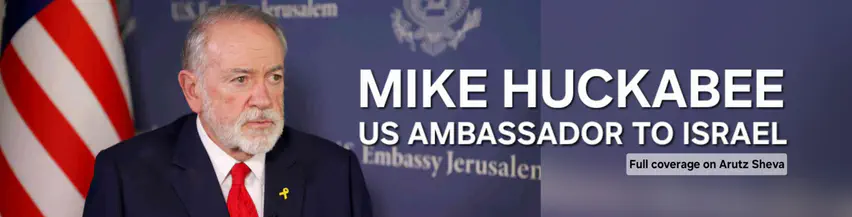

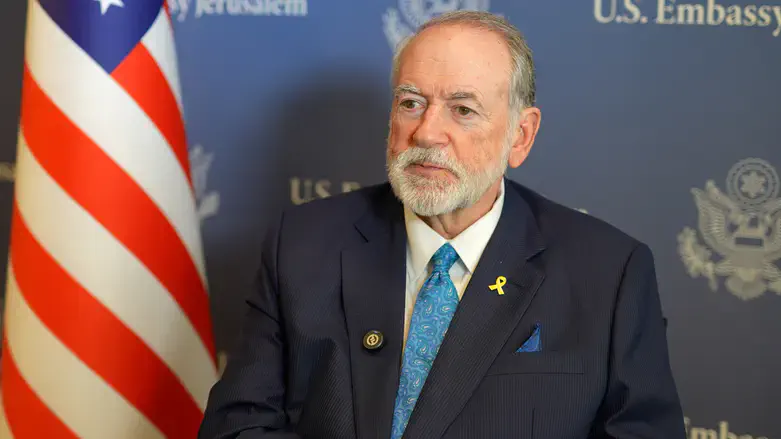
In his speech to the gathering in the Palestinian Arab town of Turmus Ayya, U.S. Ambassador to Israel Mike Huckabee said:
“I’ve learned from raising children and training dogs that if there is a behavior that you want more of, you reward the behavior, and you get more of that behavior. But if there’s a behavior that you want less of, you consequence that behavior."
Remarkably, his visit to that town was a great example of rewarding behaviour. The question he apparently did not ask was what behaviour his own visit was rewarding.
Many of the comments under the X post in which he links to his complete speech are very clear about what he rewarded.
For example: John Haller wrote:
“You got set up, then played. Embarrassing. You should know better."
Huckabee’s visit, with media in tow, took place on Saturday, the Jewish Sabbath. Religious Jews in the area could not respond publicly until Saturday night, leaving the accounts Huckabee heard and his own words of praise to circulate for hours before the people being accused could answer.
You can read Huckabee’s entire speech on the official embassy website: Remarks by U.S. Ambassador Mike Huckabee at Turmus Ayya Town Hall.
Now read the response by security guard Amishav Melet:
“Dear Mike Huckabee,
Now that Shabbat has ended, I saw your post and the alerts across the news channels about your visit today to Turmus Ayya - and about those “dangerous and threatening settlers" whom you apparently saw driving a security Ranger.
*Well, that was me. I was the driver of the Ranger you filmed.*
"And I want you to hear directly from me what actually happened today.
"This morning, our shepherd, who was out with the flock, reported that dozens of vehicles had gathered at the edge of the village - precisely in an area from which, over the past several months, there have been repeated attacks and arson incidents against us.
"I got into our security Ranger to check what was happening, and at the same time we notified the IDF as per protocol.
"When we arrived and saw respectable people and media crews, we said hello and continued on our way. Shortly afterward, the army informed us that this was a proper, coordinated visit.
"That is the entire story."
Note: We might question why Amishav drove his vehicle on Shabbat, something that violates the Sabbath. He had received a security alert and, because of “pikuah nefesh" or the obligation to protect lives, Jewish law commands him to act and so he went out. He would not have driven a vehicle to initiate an unprovoked attack on the Sabbath.
Amishav’s post lists seven allegations concerning people he says have terrorist ties or have supported terrorism, some of whom Huckabee met during his visit. He claims that one of them even headed the opposition to displaying American flags in town.
Amishav is not a neutral observer in this dispute. Some reporters have accused him of violence and intimidation against Palestinian Arabs, allegations he denies. He founded an outpost on land in Area B near Turmus Ayya. His account therefore needs to be scrutinized just as carefully as the accounts Huckabee heard inside the village.
Sky reporter Adam Parsons interviewed him at his outpost in December 2025. Did Huckabee talk with him?
And that is precisely the point: Huckabee appears to have heard one side of a bitter and violent local conflict and rendered his judgment before hearing the other.
If Amishav’s account is correct, Huckabee rewarded the successful presentation of a carefully curated narrative: show the American ambassador alleged Jewish violence, omit Arab violence, present edited footage without what preceded it, and allow people with their own histories of violence or incitement to appear simply as victims of "settler aggression".
Huckabee did not merely listen. He supplied the moral judgment. He called the settlers responsible for violence a “band of terrorists," described the residents of Turmus Ayya as victims of lawlessness, praised their extraordinary civility and promised to use American influence to press for action.
If presenting one side of a violent local conflict brings the American ambassador to your home, produces international headlines and results in promises of American pressure, then precisely what has Huckabee rewarded?
Amishav has now put another account before him. Huckabee does not have to accept it. But according to his own principle, surely he now has to investigate it before deciding which behaviour deserves reward and which deserves consequences.
And perhaps, the next time he hears only one side of a violent local conflict, he will wait before rendering judgment.