
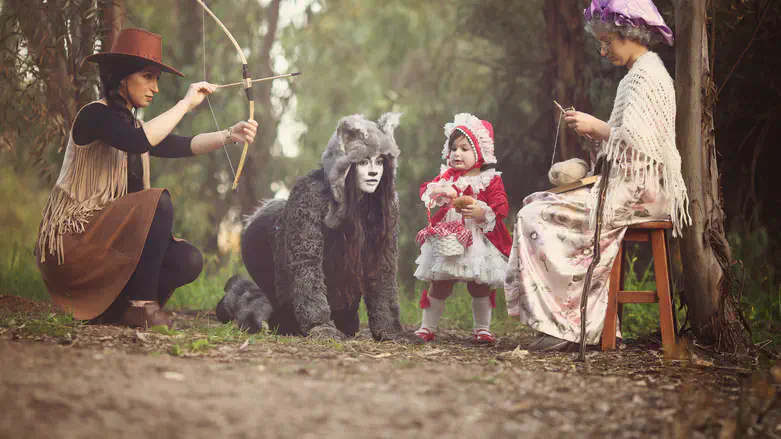
At the very hours durring which the University of Cambridge put a censor's notice on “Little Red Riding Hood", 130 Christians were massacred in Ituri, Congo.
The Islamic State claimed the slaughter: 25 of the Christians were beheaded.
Let us repeat it, to avoid any misunderstanding: 130 Christians killed without anyone hearing about it.
The Congolese scenes are by now even more gruesome than the Nigerian ones, where 30 Christians were killed during the same hours in the Plateau.
The two pieces of news - “Little Red Riding Hood" and the beheaded Christians - are only apparently unconnected.
No newspaper has devoted a single line to the 130 Christians cut to pieces.
Not a coincidence, but an inverted moral hierarchy.
Not because the facts are unknown: the agencies report them, religious organizations such as Barnabas document them, the jihadist videos circulate. But those facts do not fit into the narrative canon.
It is not even a question of geographical distance.
Gaza and the "West Bank" (ah, the “Jewish settlers") occupy Western screens 24/7; another slaughter of Congolese and Nigerian Christians does not even surface.
It is not the logistical difficulty of reaching remote areas: reporters go everywhere when the narrative requires it.
The reason is more subtle, more cowardly.
These Christians are black, but not black in the “correct" post-colonial version; and they are poor, but not poor in a way that indicts Western capitalism.
Here it is, then: if only those massacred Christians were Palestinian Arabs.
If only the nameless bodies buried in the red earth of the Nigerian Plateau, the children burned in the churches of Congo, the women kidnapped and disfigured in the Sahel, carried another name, another flag, another cause.
If only the three hundred and more souls torn every month from the faith in Nigeria were souls of Gaza, then the Italian newspapers would open with it on the front page, the European squares would fill with flags and slogans, university professors would suspend classes, artists would paint murals, singers would dedicate songs and big concerts, politicians would tear their clothes on live television.
If only these martyrs were Palestinian Arabs, one would not speak of “clashes between farmers and herders" nor of “banditry" or of “climate pressures."
One would speak of genocide. One would speak of a crime against humanity. One would speak of colonialism.
The newsrooms would send correspondents armed with cameras and indignation. Social media would explode with hashtags. Embassies would be besieged. Universities occupied. The moralist gang of Report would make us twelve specials.
But they are not Palestinian Arabs. They are black Christians, poor, distant and inconvenient. And so they remain invisible. They remain figures in reports of organizations that no one reads. And our time reveals its true hierarchy of pain: it does not matter how many die, it matters who dies and above all fighting againstwhom they die.
Meanwhile the wolf is no longer a wolf. It has become “adult content."
But the wolf, outside the Western classrooms and newsrooms, does not arrive with a notice. And those who have never learned to recognize the wolf will end up, sooner or later, being devoured by it without even knowing what killed them.