

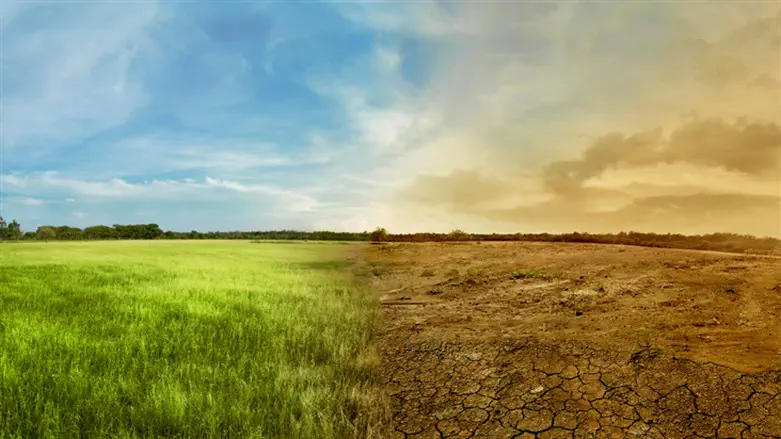
A new and concerning report published by the UN climate agency presents a worrying forecast.
According to the report, over the next five years, the Earth is expected to repeatedly cross the international climate threshold established as a safe limit and break the record for the hottest year.
According to the data, there is a 75% chance that the average global temperature between 2026 and 2030 will be more than 1.5 degrees Celsius higher than during the pre-industrial period.
There is also a 91% chance that at least one of the next five years will cross the 1.5-degree threshold, and an 86% chance that one of them will break the heat record set in 2024.
Climate scientist and report co-author Melissa Seabrook noted that this is not a one-time tipping point, but rather that the effects worsen with every slight increase in temperature. “It’s important to note that 1.5 isn’t some sort of cliff edge that we’re going to fall off," Seabrook said. “Every tenth of a degree has increasingly severe impacts."
Climate scientist Friederike Otto added that remaining above this threshold for an extended period would lead to extreme weather events that would cost lives, affect food prices, and increase major wildfires.
The report also warns of rapid warming in the Arctic at a rate 3.5 times faster than the rest of the world due to melting snow and ice, alongside unusually dry conditions in the Amazon Basin that could increase the risk of wildfires and harm water supplies.
At the same time, researchers point to the development of a strong El Niño phenomenon in the Pacific Ocean that could persist until 2028 and contribute to a further rise in temperatures, while above-average rainfall is expected in Africa’s Sahel region, potentially leading to flooding.
Senior UN officials stressed that current efforts to curb climate change are insufficient in light of the continued use of fossil fuels.
UN climate chief Simon Stiell addressed the report’s findings, saying: “Despite progress in recent years, it is clear that global warming is still outpacing global efforts to curb it."
Stiell added: “Whether it is extreme heat, massive storms, floods, wildfires or droughts that hit food supplies and prices, every country is already paying an enormous price for this global climate crisis."