

Israel's National Cyber Directorate reported roughly 1,300 suspicious calls and messages during Operation Roaring Lion. About 77 percent were classified as phishing attempts. A scam becomes more believable when exposed personal data gives the caller facts to build around.
ClearNym focuses on finding exposed records across data broker sources then coordinating opt-out requests. According to its website, the service scans more than 493 sources and monitors for information that returns after removal. Its guides also explain the suppression process for manual removal. Readers can learn more before submitting a removal request.
What Can Strangers Find?
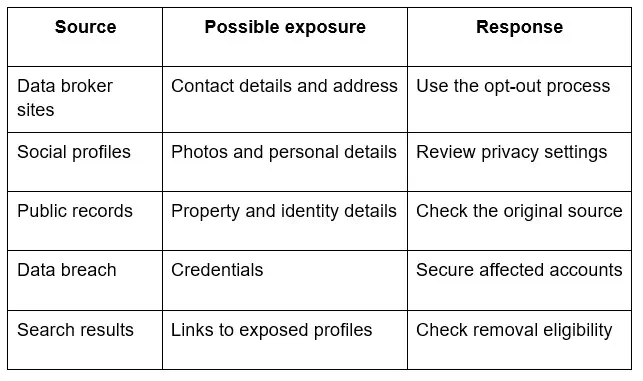
Start by searching your name. A Google search may reveal personal information through people search sites, social media and public records. Details can include addresses, relatives and employment history.
A data broker collects personal data from multiple sources. These records can give criminals enough context to make phishing attempts more convincing.
Why Search Removal Is Not Deletion
Removing personal information from a search engine does not erase the original source. Google may remove eligible personal details from search results while the information remains on the website.
For better privacy, find the original page and submit a removal request directly. Since search engines, broker sites and public databases store information separately, no single request can delete every digital trace.
A Practical Privacy Check
The goal is not to remove yourself from the internet overnight. The goal is to reduce unnecessary exposure. A manageable routine helps.
1. Start by searching your name with a city or previous address.
2. Review search engine results and identify the original web pages.
3. Find personal information on relevant data broker sites.
4. Request removal through official request forms.
5. Delete unused social media accounts and each forgotten online account.
6. Review privacy settings on accounts that remain active.
7. Recheck previous listings because information can reappear.
These steps to remove your information also help reveal how large a digital footprint has become. Some data removal services submit requests on your behalf. Before choosing one, check its coverage and monitoring policy.
Data Breaches Add Another Risk
A data breach can expose passwords, phone numbers and sensitive information that may reach the dark web. This can increase identity theft risk.
Use unique passwords and two-factor authentication. Check important accounts after a breach. Criminals often combine information from several sources, so reducing exposed personal data gives them fewer clues to exploit.
Why Deleted Information Can Return
Removing personal information is rarely permanent. The FTC warns that people search listings can reappear when underlying records change. A broker might receive fresh information from data brokers or public sources after an earlier opt-out.
That is why data removal works better as routine maintenance. Search periodically. Delete your data from unused services. Request removal when an old listing returns. These habits help keep your information from becoming an easy research file for strangers.
Privacy laws also provide rights in certain jurisdictions. Those rights vary by location and circumstances, so official government guidance should guide formal requests.
Conclusion
A convincing phishing call often begins before the phone rings. Public records, people search sites, a data broker and a past data breach can provide personal info that makes a false story sound credible.
The answer is not panic. Audit the digital footprint. Remove your information at its source. Secure important accounts and watch for returning listings. Removing personal exposure cannot erase every trace from the public web. It can reduce the information available to someone preparing the next scam.
FAQ
Can a phone number really increase identity theft risk?
A phone number becomes more useful when linked with other personal details. Criminals can use combined information during phishing or impersonation attempts.
Does deleting a Google result delete the original information?
No. Search removal and source deletion are different actions. The original website can continue hosting the material.
Is a zero digital footprint realistic?
For most internet users, no. A more practical objective is reducing unnecessary exposure while protecting sensitive accounts and limiting future sharing.