

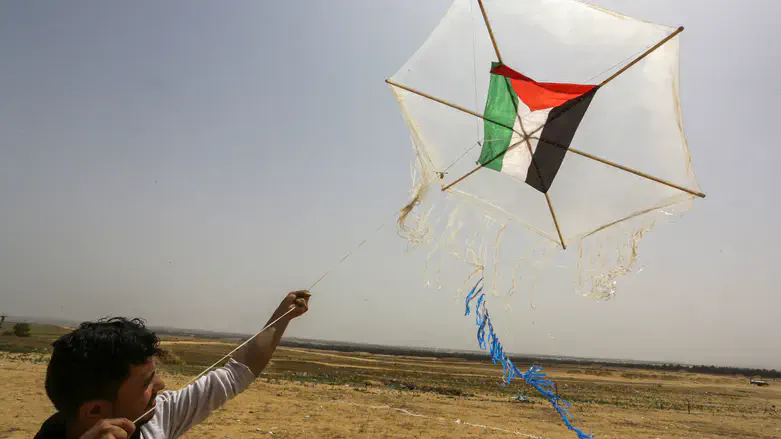
Concern is growing over a possible return of the arson kite phenomenon along the Gaza border: Four kites have been found since Friday in the areas of Kibbutz Nahal Oz and Be’eri, and residents of the Gaza border communities are calling on the defense establishment not to take the incidents lightly and to immediately investigate their origin.
According to reports, no incendiary materials or explosives were found on the kites. However, residents note that previous waves of kite terrorism also began with terrorists sending “innocent" kites, followed only later by incendiary kites that caused widespread fires throughout the Gaza border area.
The incidents are the latest in a series of similar occurrences in recent months. Just this week, another kite bearing Arabic writing was found near Nahal Oz, while a week earlier another kite was discovered in Moshav Shuva. Since the October 7 attack, at least seven kites have been found in the Gaza border area.
At this stage, the IDF has not confirmed that the kites came from the Gaza Strip and says it cannot determine their origin with certainty. Nevertheless, the fact that they entered the area is causing concern among residents.
The “Future for the Gaza Envelope" movement warned against a return to the policy of restraint that characterized the years before the war.
“Residents of the Gaza border communities already know how it begins-at first it is just one kite, then another, and eventually the exception becomes routine. After October 7, the State of Israel must not return to this pattern," the movement said.
The organization called on the defense establishment to investigate the origin of the kites, determine their purpose, and prevent the phenomenon from developing further.
“Security for the Gaza border communities cannot be limited merely to the deployment of forces. The responsibility is to eliminate the threat and not allow it to return."
Sha’ar HaNegev Regional Council head Uri Epstein also demanded that the IDF change the way it handles such incidents. According to him, every kite that crosses the border must be detected and dealt with in real time-even before it lands in Israeli territory.
“When there is no response, the message to the other side is that they can continue," Epstein said. “After October 7, we will not once again accept the words, ‘It will be okay.’ The writing is already in the sky, and now the responsibility is to act in time, not after the fact."