

A report by the Wall Street Journal on Monday shed more light on President Donald Trump's threat of military action against Oman amid growing frustration over efforts to reach a nuclear agreement with Iran and reopen the Strait of Hormuz.
Oman has been involved in talks with Iran aimed at allowing greater commercial traffic through the strategic waterway. The report cited US officials who said the negotiations were making progress, potentially easing pressure on global energy markets and domestic gas prices.
At the same time, some members of the Trump administration have expressed concern that Oman could help Iran secure a nuclear agreement more favorable to Tehran.
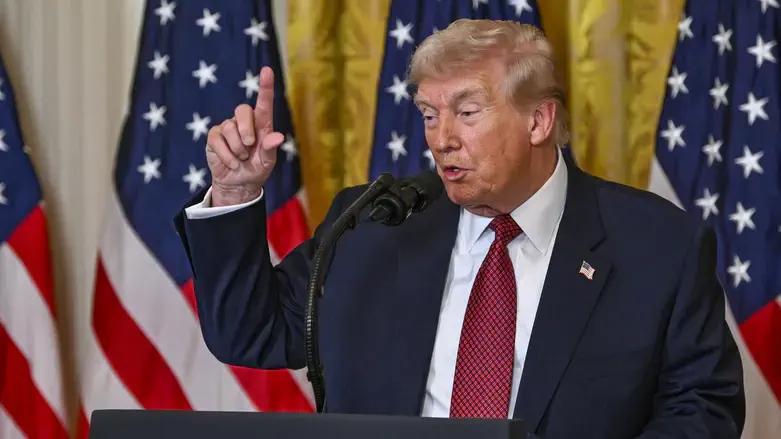
“I don’t think they behaved very well, but we’d handle them very easily just like we do others," Trump told reporters in the Oval Office on Monday, without specifying what actions by Omani officials had angered him.
The report said senior administration officials are divided over how to approach Oman. Some privately view the Gulf country as too closely aligned with Iran, while others argue that its longstanding relationship with Tehran makes it particularly useful as a mediator.
There is also concern in Washington that an agreement between Iran and Oman could leave Tehran with greater control over the Strait of Hormuz. Trump has pushed for the waterway to be fully reopened, citing its importance to global energy supplies.
Oman is the latest country to face Trump's criticism over its response to the conflict with Iran. On Sunday, Trump ordered cuts to a joint US-South Korea military exercise after South Korea declined to assist with efforts to reopen the strait.
Trump has also criticized European allies, including the UK and Spain, for what he considers insufficient assistance in confronting Iran.
Trump's 60-day deadline for ending the war and securing Iranian concessions on its nuclear program expired Monday without an agreement. The US has increasingly relied on Qatar and Pakistan in mediation efforts, while Oman has played a reduced role despite initially serving as a mediator between Washington and Tehran.
Trump has indicated to aides that he could regard Iran as having been prevented from obtaining a nuclear weapon, and the conflict as won, if Tehran agrees to fully reopen the Strait of Hormuz.
Relations between Washington and Muscat have deteriorated in recent months. Omani Foreign Minister Badr al-Busaidi, who had helped mediate US-Iran discussions before the war, has repeatedly criticized the US decision to launch the conflict.
The report also noted that the Trump administration had previously threatened sanctions and possible military action against Oman following intelligence assessments that the country could seek to impose tolls on vessels using the Strait of Hormuz. Oman denied those assessments.
Secretary of State Marco Rubio has repeatedly warned that Iranian tolls on the Strait of Hormuz would constitute a red line for the administration and could establish a dangerous precedent for other strategic waterways.