
Stephen M. Flatow, an attorney, is president of the Religious Zionists of America-Mizrachi and the author of A Father's Story: My Fight for Justice Against Iranian Terror.
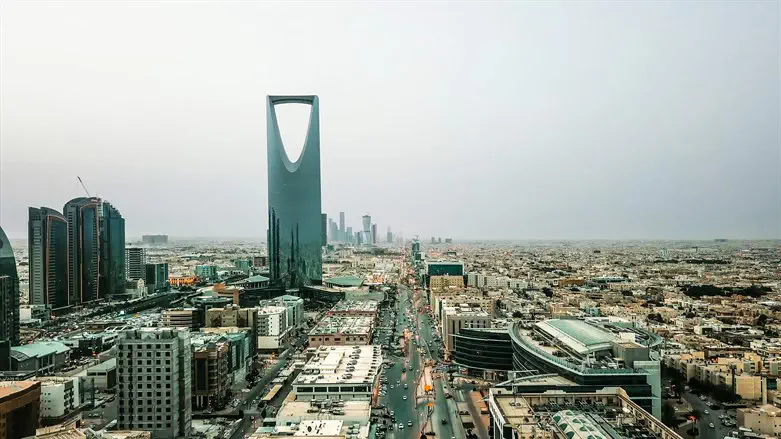
On August 7, in Islam's holiest city, Saudi Arabia’s Mohammed bin Salman stood between Turkey’s Recep Tayyip Erdogan and Pakistan’s Shehbaz Sharif and signed the Mecca Joint Defense Agreement - a NATO-style pact declaring that an attack on any one of the three is an attack on all three. Turkey’s Foreign Minister Hakan Fidan is already talking about expanding the pact beyond three countries.
Commentators from Tel Aviv to Washington reached the same conclusion within days: Saudi Arabia had built its own collective security framework without recognizing Israel, removing the normalization incentive Washington spent months constructing.
Anyone who followed this Kingdom for more than a news cycle should not be surprised.
Start with the sales pitch Washington had been running. Donald Trump had tied a US-Saudi civil nuclear cooperation agreement directly to Riyadh normalizing relations with Israel, and as of the Mecca signing, the administration had offered no formal response - a silence analysts read as a strategic retreat. Saudi Arabia didn't need to say no. It just built an alternative and let the Accords wither on the vine.
That outcome tracks Saudi public opinion, not just palace calculation. A Washington Institute survey found that Saudi approval of normalizing with Israel fell from 41 percent in 2020 to 20 percent in 2023 to just 13 percent in 2025, while the Anti-Defamation League took the unusual step of warning about intensifying antisemitic discourse and public attacks on the Accords by prominent Saudi figures. This is not a kingdom straining at the leash to embrace Jerusalem. It is a kingdom whose own street is more hostile to Israel than it was five years ago - and Bin Salman knows it.
None of this is new terrain for the House of Saud. This is the country that helped organize the Arab League boycott of Israel in 1948 and only recently began quietly walking parts of it back. It is the country whose religious export, Wahhabism, produced Osama bin Laden and fifteen of the nineteen 9/11 hijackers. Its justice system - public beheadings, guardianship laws, a monarchy answerable to no electorate - has never pretended to share Western premises about the individual and the state.
A country built on that foundation was never going to treat a liberal democracy like Israel as its natural partner, whatever the economic and military logic said. Riyadh wanted the security guarantee. It just wanted it from fellow custodians of Sunni Islamic legitimacy, not from the Jewish state.
Turkey brought exactly the resume you'd expect from a NATO ally that treats the alliance as a menu rather than a commitment. Erdogan's 2019 purchase of Russian S-400s got Turkey bounced from the F-35 program under U.S. law, and through the summer of 2026 Trump kept signaling he'd lift the sanctions and let Ankara back in - only to run into a bipartisan wall in Congress, whose members cited the S-400's threat to F-35 stealth technology, Turkey's continued occupation of northern Cyprus, and its ties to the Muslim Brotherhood. As of late July, the State Department was still telling Congress the sale is illegal as long as Turkey keeps the S-400s.
It was that live fight over the F-35 - not some abstract grievance - that pushed Netanyahu to go public. With Trump in Ankara for the July NATO summit and reportedly close to reopening the F-35 program to Turkey, Netanyahu made his case directly to CNN, warning that arming Erdogan further would "destroy the power balance in the Middle East" and describing Turkey as "a regime that's infected with the Muslim Brotherhood, which hates the United States." "He threatens to destroy my country, the one and only Jewish state," Netanyahu said - not a rhetorical flourish; Erdogan has called for Israel's destruction in a mosque sermon and branded Netanyahu a war criminal and "the butcher of Gaza."
This is an ally the U.S. can't fully arm because it doesn't fully trust it, asking for America's most advanced weapon while its president campaigns for Israel's annihilation. That's not a NATO partner. That's a hedge.
And then there's Pakistan: a nuclear-armed state that has spent roughly half its independent existence under direct military rule, that maintains a permanent adversarial posture toward India, and whose intelligence services have a long, well-documented history of playing both sides of the war on terror. Pakistan's Prime Minister showing up in Mecca to co-sign a mutual defense treaty is not a surprising twist. It's Tuesday.
What ties these three together isn't geography or economics. It's an Islamist self-conception that has never fully made peace with the West - and that includes a deep discomfort with a Jewish state sitting at the center of a region each of these countries believes it should lead. Saudi Arabia sees itself as the guardian of Mecca and Medina and the natural head of the Islamic world. Turkey, under Erdogan, has spent years rehabilitating Ottoman nostalgia into foreign policy. Pakistan was founded explicitly as an Islamic state.
None of the three needed the Abraham Accords to feel secure or legitimate. They needed each other.
So, when the headlines expressed shock that Saudi Arabia chose Ankara and Islamabad over Jerusalem, the honest response was: what did you expect? These three countries didn't drift together by accident. They found their level. They deserve each other - and the West should stop being surprised when the Abraham Accords' most important prize declines, once again, to show up.
...