
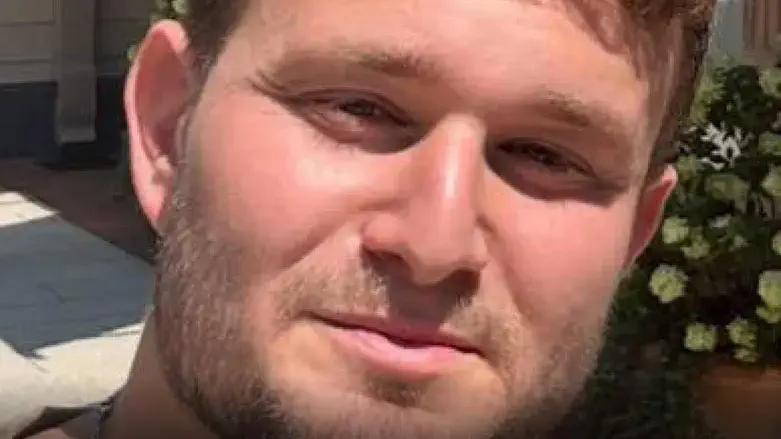
I rarely weep, but when I first read about the death of Jewish American lone soldier, William (Z'eev) Shakin, I sobbed. Heroic action and magnificent selflessness compel me to do so.
Then, when I attended via livestream his levaya-his memorial service-I briefly wept again. This all-American religious 25 year old, half-Ashkenazi, half-Moroccan, from Great Neck, New York, was buried on Har Hamenuchot in Jerusalem. His grave may be found at Block 15, Section D, Row A, Grave 67. He was the descendent of both Ashkenazi and Moroccan rabbis. I tried hard to catch the names of his Moroccan maternal ancestors but failed to do so. It may have been Mrejen.
As we now know, Shakin was war-wounded and could not find a way to continue on in this life after seeing so much evil cutting down his haverim in the Golani 13 Brigade; after he witnessed his friend killed in battle-perhaps after he understood that the war against the Jews and against Jewish Israel seems to have been going on for millennia and was not about to end anytime soon.
At least a thousand people were there to see him off, to honor him.
Will was an all-American "guy"" who loved hockey, fishing, and skateboarding. However, he and his family were also religious and very educated. Every relative who eulogized him quoted from the Torah, Talmud, Pirkei Avot-as well as from our current parasha, Shoftim, Judges-to address him. This included his sister and his mother.
Will was generous. He bought gloves, long johns, a generator for his fellow soldiers.
Here is how the many speakers described him:
"He believed in something bigger than himself."
He "loved life and was always looking for his purpose...Will was always searching for a just cause."
Will was the "most purpose-driven man I ever met."
"Your heart was too big for this world."
People called him a "fire." He was on fire to do good in this world.
Every speaker, friend, and relative apologized for not having understood how much Will had been suffering, for not having been able to console him or to help him find the help that he needed.
When Will returned to America, he enrolled in Yeshiva University's School of Social Work. However, he was suffering from what they once called "shell shock" after World War One and Post Traumatic Stress Disorder (PTSD) after the Vietnam War. This is more serious than a broken bone (Will did not know that he came home with a fractured ankle, which was more easily mended than his non-visible wounds). PTSD has often been underrated, even mocked by those who do not understand that psychic wounds can steal the color from one's life, make continuing to live dishonorable, unbearable.
The symptoms include nightmares, insomnia, flashbacks, intrusive memories, anxiety, numbness, hypervigilance, an inability to focus. This goes on, day after day. Night after night. Some war-wounded soldiers remain trapped on the battlefield with no respite, no exit.
Therapy is not always effective nor is it always available. Drugs may or may not be effective. Time alone may not heal a fractured soul. We do not understand why one soldier can return to life (almost) as he knew it before, and why another one cannot do so, however hard he tries.
The beloved writer Stefan Zweig safely escaped Germany, but he died by suicide because he could not live in a world in which the Nazis had risen and destroyed the European culture he once knew and loved.
Perhaps-just perhaps-our hero Z'eev Shakin could not continue a life that had not only become too painful for him to bear, but also one in which his ability to do good on earth, to help and protect others may, in his eyes, have become forever broken.
Someone who spoke said, "We will never let your fire die out, your candle will become our collective duty." (And here I am paraphrasing.)
May this be our promise as well.
May Z'eev z"l finally rest in peace.