
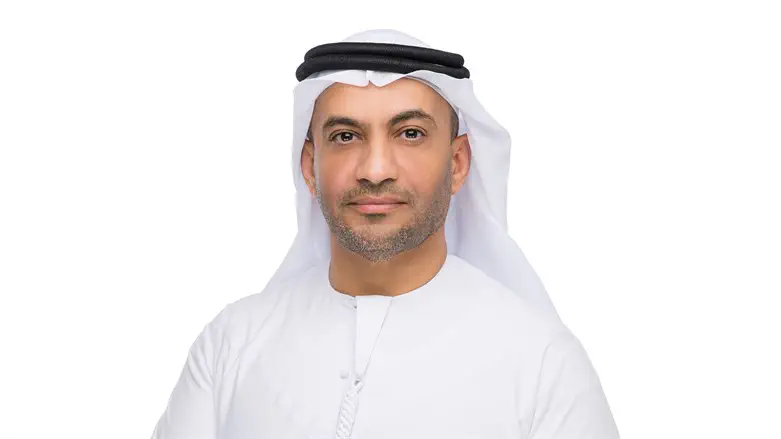
Dr. Salem AlKetbi is a UAE political analyst and former Federal National Council candidate
On the map, Iran may look like a cohesive state. Inside, however, it is a patchwork of ethnic groups, religious sects, and regions that differ widely in wealth and integration. The question of its future begins with this paradox.
This goes beyond the prospect of the regime’s collapse to the fate of the state itself, should the center that has long held its peripheries together through force, identity, and interest break apart. The issue thus becomes what kind of unity can endure, and whether the map will remain intact if the state itself starts to unravel from within.
This prospect cannot be separated from an imperial memory deeply embedded in the Iranian state’s consciousness. Ever since the Achaemenids conquered Babylon, annexed the Fertile Crescent, and reached Egypt, Iran has been firmly cast as a regional hub whose mission extends beyond defending the plateau to subduing its surroundings.
Dynasties and doctrines have changed. Yet this impulse has returned under different names, from the Sasanians and Safavids to the so-called Islamic Republic.
The throne of Khosrow is no longer a physical seat of power. It has persisted, however, as an idea of lost standing and lost domain, driving the center again and again to project its influence farther than its capacity to protect it can sustain.
The Sasanian experience exposes the core of this dilemma. Khosrow II extended Persian power into Syria and Egypt, and for a moment the empire appeared to be recovering its ancient reach. That very expansion, however, created frontiers too vast for the state to defend. When the Byzantine emperor Heraclius retook the initiative, the Sasanian advance reversed into retreat and the center descended into turmoil.
Even so, Persia still commanded military strength, resources, and expertise far exceeding those of the emerging Islamic state. It failed, though, to turn its material advantage into strategic superiority. Muslim Arabs brought the Sasanian Empire to an end, while repeated attempts to revive its old image have ever since come at a painful cost to Iran’s influence, resources, and stability.
This outcome does not mean every new Iranian expansion is doomed to defeat but it does reveal a recurring strategic law. Whenever ambition outstrips the state’s ability to consolidate its gains, influence turns into attrition, and external commitments become a burden on the domestic order.
The Islamic Republic has revived this pattern in modern form by building networks of allies and militias to project its presence from Iraq and Syria to Lebanon and Yemen. A change of tools, however, has not solved the old dilemma. Influence requires money, protection, and legitimacy, and these resources shrink the longer conflicts drag on and the tighter the pressure on the home front becomes.
The cost of this expansion does not stay confined to foreign lands. It quickly rebounds inward, laying bare the fragility of the bond between the state and its outlying regions. This is where the ethnic question assumes its full weight. In reality, Iran is a multiethnic, multilingual, multisect state, not the solid Persian monolith its official rhetoric suggests.
No definitive official census exists on the share of each group in the population, but geography tells us what numbers do not. Azeris, Kurds, Arabs, Baloch, and Turkmen are concentrated in border provinces. Some hold rich natural resources, while others are contiguous with ethnic kin outside the country. This map grows more sensitive in Khuzestan, which holds a major share of Iran’s oil wealth, and in Sistan and Baluchestan, which stretches to the Gulf of Oman coast and abuts unstable frontiers.
By no means is this a blueprint for partition. It could become a map of unrest, however, if the state loses its ability both to deter dissent and to distribute resources fairly.
Marginalization, for its part, does not automatically produce secession. The Iranian state has built a national identity that weaves together Persian history, Shiite Islam, and the concept of a civilizational state. Azeri and other non-Persian elites have also integrated deeply into governing, economic, and military institutions. Internal migration has further mixed populations in Tehran, Isfahan, Mashhad, and other major cities, to the point that drawing clean ethnic boundaries would require mass displacement and prolonged conflict.
Partition thus looks straightforward on paper. On the ground, it would be extraordinarily brutal. Any dividing line would cut through cities, families, and shared interests, not across uninhabited spaces.
Although domestic dynamics are the starting point, Iran’s geography concerns more than Iranians alone. Major powers have repeatedly viewed the country as an arena where influence can be divided.
The 1907 Anglo-Russian Convention offers the clearest precedent. It split the country into a Russian sphere of influence in the north, a British sphere in the southeast, and a neutral zone between them, without formally carving it into separate states.
The agreement’s relevance today lies in its logic rather than its obsolete borders. It proves that an intact map does not prevent the fragmentation of sovereignty. A state can remain nominally unified while its actual capacity is parceled out among domestic and foreign forces.
Iraq after 2003 offers a recent illustration of this paradox. The state was hollowed out but never formally partitioned. Its borders remained in place while its sovereignty was distributed among local institutions and external powers, and its divisions became more political and sectarian than geographic.
This is a scenario Iran does not wish to repeat, just as its neighbors have no desire to inherit its chaos. A breakdown of authority in Iran could reactivate Kurdish, Baloch, and Azeri issues beyond its borders, and trigger competition over oil, ports, maritime routes, and military installations.
For these reasons, many powers prefer a unified but weakened Iran over a divided and chaotic one. Partition might curb the center’s ability to project power abroad. It could also spawn competing entities, volatile frontiers, and permanent foreign intervention.
To some actors, reining in Iran’s external agenda while keeping the state intact appears more manageable. This choice, however, postpones the crisis rather than solving it.
The peripheral communities that have paid the price for a project they had no hand in choosing will not indefinitely accept their homelands being treated as a resource for the center rather than a home for their people. This sentiment resonates with every Iranian in the provinces who sees his or her region’s wealth spent on far-flung influence while local needs remain unaddressed.
The alternatives for Iran should therefore not be reduced to a stark choice between harsh centralism and violent partition. A federal state structure, or even a confederal arrangement should state weakness reach an advanced stage, could grant regions greater authority over education, culture, resources, and development, with safeguards to prevent the reimposition of hegemony from Tehran.
In my judgment, far-reaching decentralization offers the least costly path to preserving the country’s borders and halting the buildup of grievances. Any formula that recreates a centralized state pursuing an external agenda without these guarantees will amount to little more than a truce between one crisis and the next.
Iran today stands before a choice that involves not just the fate of the regime, but also the very structure of the state.
If it abandons the imperial illusion and distributes power and wealth more equitably, it may yet preserve its borders within a fairer union that poses less threat to others. If, on the other hand, the Iranian regime reconsolidates its grip and resumes its search for lost dominion, the old cycle of ambition, expansion, attrition, and defeat could repeat itself, though with more severe consequences this time.
A state unwilling to limit its foreign entanglements may discover that time has a way of diminishing its landmass.