
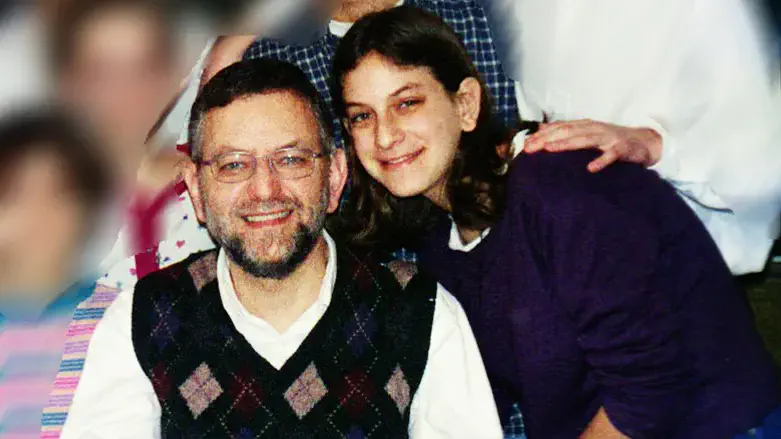
No one ever wants to ask themselves the question that had me in its grip the night after the Sbarro terrorist attack on August 9, 2001. How can we keep alive the memory of our murdered child?
The life of Malki, the youngest of the children we brought to Israel when we settled in Jerusalem in 1988, ended in a thundering explosion. Most of the implications were too complex and too baffling to be solved in those first hours and months. We still struggle with them today.
But the idea that our child’s beautiful life would be trampled and forgotten had already crept into one of the darkest parts of my thoughts.
Just a few days before she was murdered in the Hamas bombing of the Sbarro pizzeria, Malki, 15, arrived back home glowing with the thrill and sheer joy of spending some days at a camp for children who grapple with what are euphemistically called special needs. She and a schoolfriend had presented themselves at the camping ground’s front gate asking to be let in and claiming experience and skill in being helpful. They were initially pushed away, and then let in. It turned into something wonderful for everyone.
Had I been there, I would have provided a parent’s validation of Malki’s “candidacy" as a helper. I would have told the dedicated professional team who run this particular camp every summer with tremendous distinction that Malki was terrifically empathetic, and familiar - through actual day-to-experience - with what physically limited children need in order to be helped through the activities of their day.
Malki’s subject knowledge was not text-book learning but hands-on in the most literal sense. Her youngest sister Haya Elisheva was, and is still today, entirely dependent on others for every aspect of her life. While my wife Frimet is in charge of her care, Malki had a valued role as her right-hand-man.
At school and in her circle of friends, she had also become an advocate for changing attitudes to special-needs children. Her insight, along with her reservoirs of good sense and love, were unmissable. They were augmented by her energy and her sometimes startling ability to think outside the box.
English was Malki’s native language but all her schooling was done in Hebrew. When she came across a glossy magazine called Exceptional Parent aimed at American families raising children with disabilities, she decided to write them a letter, in English, and share some of her experience.
Referring to Haya, she wrote: “She is severely mentally retarded. She is a lovely sister. I love reading stories to her and cuddling up with her. Although she does not respond on the outside, I know she is responding on the inside. I am sure that when she has a fun time, she laughs in her heart."
When medical emergencies compelled us to take Haya to the emergency room, Malki often came along and stayed overnight. This was not for story-time or cuddling, but she had a clear-eyed view of what she could do - for instance, waking her mother when a pediatric nurse alarmingly attached the wrong tube to her little sister.
As Haya grew from baby to toddler, we came to see how seriously life-impacting her condition was. Those were years filled with experiences - mostly unpleasant - of fighting for our right to give Haya the best possible care while she lived with us at home. There were efforts by doctors and our health fund to persuade us otherwise, but for us it was clear that living in an institutional facility was not going to be Haya’s fate. She would grow up living with us, and she has.
Immediately following Malki’s death, we sat together for the seven days that Jewish custom prescribes for mourning a loved one. This was when we made our decision: The memorial we wanted for our Malki would be to establish an enduring, compassionate organization to support families raising children with severe disabilities.
Keren Malki was formally established a month later as that memorial. The certificate from Israel’s Registrar of Non-Profits was issued on the morning of September 11, 2001 - the day that turned into 9/11 some hours later.
The Malki Foundation was built on a core value: to empower families to keep their child in the loving framework of the family home while assuring them of access to paramedical therapies and home-care equipment. Years later, I can say we know this model intimately well and it works.
The outcomes, twenty-five years on, make us very proud. They include our serving and supporting some 3,000 children and their families, like Netanel and his parents. Born as one of a set of triplets to parents who had two children at home already, Netanel suffered trauma at birth. His family were told to expect very little. However, after years of inspirational dedication, of every kind of stress and challenge - and some support from Keren Malki which extended will into his teenage years, this young man, hampered by physical disabilities but managing them heroically, emerged as one of the brightest in his class at school. He lives independently and continues to demonstrate a powerful sense of wanting to contribute to society as he pursues his university studies.
This is growth in the spirit of Malki.
Here’s the closing paragraph of what my murdered daughter wrote when, just eleven years old, she addressed the editors of an American magazine parents of children with special needs:
“In conclusion, I want to say to all of you that are reading this right now. You are not allowed to lose your hope because maybe a miracle will happen. Never lose hope!"