
Herzl's oft-quoted promise that "every man will be as free and undisturbed in his faith or his disbelief, as he is in his nationality", was a pledge of civic liberty extended to all future citizens, Jew and non-Jew alike. It was freedom of conscience - not a declaration that competing denominations constitute Zionism's foundation. To read it otherwise is to confuse a civil right with a religious ideology.
History is even less kind to the Agency's formulation. The movements that today carry the banner of "pluralistic Judaism" were not Zionism's cornerstone; they were among its most determined opponents.
The Reform movement's Pittsburgh Platform of 1885 declared: "We consider ourselves no longer a nation, but a religious community, and therefore expect neither a return to Palestine..." In July 1897 - weeks before the First Zionist Congress convened in Basel - the Central Conference of American Rabbis resolved its total disapproval of any attempt to establish a Jewish state. In 1942, Reform rabbis founded the American Council for Judaism for the express purpose of fighting Zionism. The Reform movement entered the World Zionist Organization only in the late 1970s and fully reconciled with Zionism only in its 1997 Miami Platform.
The Conservative movement fares a little better, in this history - yet its record, too, refutes the Agency's claim. Solomon Schechter, the architect of American Conservative Judaism, endorsed Zionism in 1906 - but as a bulwark against assimilation and an ally of traditional Judaism, not as a warrant for pluralism. He did so over the public objections of his own seminary's patrons, and his successor at the Jewish Theological Seminary, Cyrus Adler, remained a committed non-Zionist. Institutionally, the movement joined the World Zionist Organization only with the founding of Mercaz in 1976. Where early Conservative Zionism existed, it was an argument from peoplehood and tradition - which is
precisely our point.
The Jewish Agency’s statement also invoked the Kotel, the Western Wall. For the sake of historical integritymand honesty, we refer readers to the Memorandum on the Western Wall, submitted in 1930 to the Special Commission of the League of Nations on behalf of the Jewish Agency for Palestine - the direct precursor of today's Jewish Agency for Israel, written by the same Cyrus Adler, Ph.D., D.H.L., then president of the Conservative movement's Jewish Theological Seminary in New York.
What, then, was the Zionist movement's actual founding arrangement on religion? The Basel Program of 1897 contains not a single word of religious law. When the question arose, the Second Zionist Congress in 1898 resolved that Zionism would undertake nothing contrary to the precepts of the Jewish religion - a pledge of deference to traditional Judaism, offered to keep Orthodox Jewry within the tent.
The paper trail settles the matter. Language about "mutual respect for the multi-faceted Jewish people" entered the movement's platform only in the 2004 Jerusalem Program. It appears nowhere in 1897, and nowhere in the 1951 revision. The Zionist movement's own constitutional documents date the concept - and refute the words "has been." And, let us be brutally honest, a politically (and financially) motivated phrase added to the World Zionist Organization Jerusalem Program, by a small group of delegates, does not redefine Zionism.
Some will object that Zionism was always a big tent, and that is true: the World Zionist Organization has housed secular, religious, socialist, and Revisionist factions for well over a century. But coalition politics is not theology. A Congress in which Mizrachi and Poalei Zion (a movement of Marxist Zionist Jewish workers) sat together did not thereby declare all Judaisms equally valid; it declared the Jewish people indivisible. Herzl's Altneuland preached civic tolerance - its villain is the demagogue who would deny others a share in the commonwealth - but tolerance among citizens is not "pluralistic Judaism" as a creed. Both partners to the founding compact, the secular majority and the religious Zionists, would have rejected such a creed. It would have shattered the coalition from either side.
Why does this matter? Because the Jewish Agency is a national institution, entrusted with the heritage of the entire Jewish people.
Zionism's cornerstone was, and remains, Klal Yisrael - the unity of one people. That foundation is broad enough for every Jew who ever prayed, in any accent, "Next year in Jerusalem." It requires no retroactive renovation.
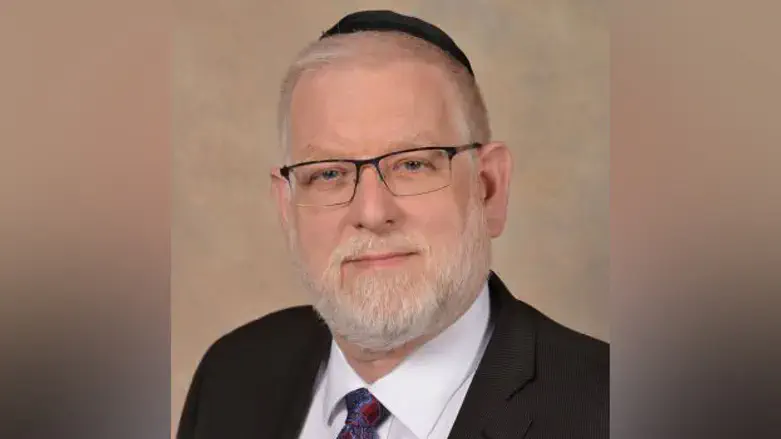
Rabbi Pesach Lerner is Chairman of Eretz HaKodesh, a slate representing Torah Jewry in the World Zionist Congress/Organization, and serves on the Board of Governors of the Jewish Agency for Israel
Source List
"A Cornerstone Laid a Century Late"
Sources for each factual claim and quotation, in the order they appear in the article.
1. The Jewish Agency statement being answered
Quote: "a diverse, pluralistic and tolerant Judaism has been and remains one of the cornerstones of Zionism."
Statement issued by the Jewish Agency for Israel Board of Governors. Source: the Jewish Agency’s own press release / Board of Governors resolution on its website, jewishagency.org (Newsroom / press releases).
2. Herzl - Der Judenstaat (The Jewish State, 1896)
"We are a people - one people."
Theodor Herzl, The Jewish State (Der Judenstaat), trans. Sylvie d’Avigdor, Chapter I ("Introduction"). Full text: Project Gutenberg #25282 - https://www.gutenberg.org/ebooks/25282 ; cross-check: Jewish Virtual Library, https://www.jewishvirtuallibrary.org/quot-the-jewish-state-quot-theodor-herzl
"No, indeed... We shall keep our priests within the confines of their temples in the same way as we shall keep our professional army within the confines of their barracks."
Same work, Chapter V ("Society of Jews and Jewish State"), subsection "Theocracy." The passage opens: "Shall we end by having a theocracy? No, indeed..." Same Gutenberg / JVL links as above.
"every man will be as free and undisturbed in his faith or his disbelief as he is in his nationality"
Same work, Chapter V, "Theocracy" subsection (the sentence immediately following the priests/barracks passage).
3. Reform movement
Pittsburgh Platform, 1885: "We consider ourselves no longer a nation, but a religious community, and therefore expect neither a return to Palestine..."
Reform "Declaration of Principles" (Pittsburgh Platform), 1885, fifth plank. Central Conference of American Rabbis: https://www.ccarnet.org/rabbinic-voice/platforms/article-declaration-principles/
July 1897 CCAR resolution disapproving a Jewish state, weeks before the First Zionist Congress (Basel, Aug 29-31, 1897).
Central Conference of American Rabbis resolution, Montreal convention, July 1897; CCAR Year Book vol. 7 (1897). Text and scholarship: Michael A. Meyer, Response to Modernity (Oxford UP, 1988), p. 293; summary at My Jewish Learning, https://www.myjewishlearning.com/article/reform-judaism/ . Congress dates: https://www.jewishvirtuallibrary.org/first-zionist-congress-and-basel-program-1897
1942: Reform rabbis founded the American Council for Judaism to fight Zionism.
Jewish Virtual Library, "American Council for Judaism," https://www.jewishvirtuallibrary.org/american-council-for-judaism ; Thomas A. Kolsky, Jews Against Zionism: The American Council for Judaism, 1942-1948 (Temple Univ. Press, 1990).
Reform entered the World Zionist Organization only in the late 1970s; fully reconciled with Zionism in the 1997 Miami Platform.
ARZA (Association of Reform Zionists of America) founded 1977-78; Reform seated at the 29th World Zionist Congress, Feb 1978. CCAR, "25th Anniversary of ARZA," https://www.ccarnet.org/ccar-resolutions/25th-anniversary-of-arza/ . 1997 platform: CCAR, "Reform Judaism & Zionism: A Centenary Platform" (Miami, June 24, 1997), https://www.ccarnet.org/rabbinic-voice/platforms/article-reform-judaism-zionism-centenary-platform/
4. Conservative movement
Solomon Schechter endorsed Zionism in 1906 as a bulwark against assimilation.
Solomon Schechter, "Zionism: A Statement" (1906), in Seminary Addresses and Other Papers (1915), pp. 91-104; the "bulwark against assimilation" line is on p. 93. Scan: https://archive.org/details/seminaryaddresse00scherich
Schechter acted over the public objections of his seminary’s patrons (Jacob Schiff, Louis Marshall).
Encyclopedia.com, "Solomon Schechter," https://www.encyclopedia.com/people/philosophy-and-religion/judaism-biographies/solomon-schechter ; Schiff’s public rebuke quoted by JTS: https://www.jtsa.edu/balfour-then-now/
His successor Cyrus Adler remained a committed non-Zionist.
JTS "Former Chancellors," https://www.jtsa.edu/former-chancellors/ ; Jewish Virtual Library, "Cyrus Adler," https://www.jewishvirtuallibrary.org/cyrus-adler ; JTA (July 1, 1931) on Adler heading the non-Zionist Agency members, https://www.jta.org/archive/dr-adler-heads-43-american-non-zionist-agency-members
The movement joined the WZO with the founding of Mercaz in 1976.
MERCAZ USA history, https://www.mercazusa.org/2024/11/zionismworldcouncilandmercaz110824/ (MERCAZ founded Nov. 2, 1978). .
5. The 1930 Memorandum on the Western Wall
Cyrus Adler’s "Action Requested" text ("...that the Kotel Maaravi is a Holy Place to the Jews... under the direction of the Rabbinate in Jerusalem, who shall assume responsibility therefor.")
Cyrus Adler, Memorandum on the Western Wall, Prepared for the Special Commission of the League of Nations on Behalf of the Jewish Agency for Palestine (Philadelphia, 1930); "Action Requested" section, p. 83. Title page and background: https://cojs.org/memorandum_on_the_western_wall-_the_jewish_agency_for_palestine-_jerusalem-_june_1930/ ; digitized copy: https://books.google.com/books?id=Up1CAAAAYAAJ . Commission: International Commission for the Wailing Wall, 1930 (report: https://unispal.un.org/pdfs/59A92104ED00DC468525625B00527FEA.pdf). Jewish Agency for Palestine → Jewish Agency for Israel continuity: https://www.jewishagency.org/who-we-are/
6. Zionist constitutional documents
Basel Program of 1897 contains no religious law.
Full text: Jewish Virtual Library, https://www.jewishvirtuallibrary.org/first-zionist-congress-and-basel-program-1897 ; Encyclopaedia Judaica, "Basle Program," https://www.encyclopedia.com/religion/encyclopedias-almanacs-transcripts-and-maps/basle-program
Second Zionist Congress (1898) resolved that Zionism would undertake nothing contrary to the religious law of Judaism.
Formal resolution, Second Zionist Congress, Basel, 1898. Primary protocol (Stenographisches Protokoll, 1898), pp. 222-223: https://archive.org/details/zionistencongressiibasel1898.ocr ; scholarship: Moshe Rinott, "Religion and Education," Studies in Zionism 5:1 (1984).
"Mutual respect for the multi-faceted Jewish people" entered the platform only in the 2004 Jerusalem Program; absent in 1897 and the 1951 revision.
2004 Jerusalem Program (full text): World Zionist Organization, https://www.wzo.org.il/page/extraordinary-congress/jerusalem-program/en (adopted by the Zionist General Council, June 2004). 1951 Jerusalem Program: Encyclopaedia Judaica, "Zionist Congresses," https://www.encyclopedia.com/religion/encyclopedias-almanacs-transcripts-and-maps/zionist-congresses
Mizrachi and Poalei Zion (Marxist Zionist workers) sat together in the Congress; WZO housed secular, religious, socialist, and Revisionist factions.
Encyclopaedia Judaica via encyclopedia.com: "Mizrachi" (founded 1902), https://www.encyclopedia.com/religion/encyclopedias-almanacs-transcripts-and-maps/mizrachi ; "Po’alei Zion," https://www.encyclopedia.com/religion/encyclopedias-almanacs-transcripts-and-maps/poalei-zion ; "Revisionists, Zionist" (founded 1925), https://www.encyclopedia.com/religion/encyclopedias-almanacs-transcripts-and-maps/revisionists-zionist
7. Herzl - Altneuland (Old-New Land, 1902)
Altneuland preached civic tolerance; its villain (Rabbi Dr. Geyer) would deny others a share in the commonwealth.
Theodor Herzl, Old-New Land (Altneuland), trans. Lotta Levensohn (Bloch, 1941); scan: https://archive.org/details/old-new-land . Secondary: Shlomo Avineri, "Rereading Herzl’s Old-New Land," Jewish Review of Books (Summer 2012), https://jewishreviewofbooks.com/articles/213/rereading-herzls-old-new-land/