
Negar Karamati is a journalist and former Persian language news editor, and an anchor who works in the legal field. She writes on Iran‘s political and social issues, including women's rights and Iran's religious minorities, particularly the Baha’i.
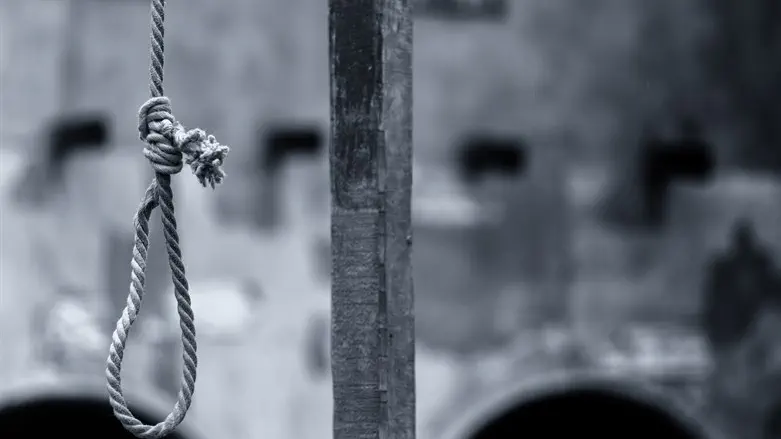
Every dawn that begins with a noose is not a promise of a new day. It is a declaration of a society’s wounded conscience.
In Iran today, the morning silence is too often broken by the news of another execution. Behind every name announced by state authorities is not only a life taken, but a message sent to an entire society: fear remains one of the instruments of power.
The death penalty has always represented one of humanity’s deepest moral questions. Civilization began when human beings attempted to replace revenge with law and to connect law with justice. Yet whenever governments claim ownership over human life, civilization itself moves backward.
Execution is not merely the end of one person’s existence. It is a political message. It tells citizens that fear has defeated dialogue, that force has replaced reason, and that obedience is valued more than dignity.
For decades, the Islamic Republic of Iran has used executions as a tool of control. Political dissidents, protesters, activists, and members of vulnerable communities have faced a justice system that international observers have repeatedly criticized for lacking transparency and fair trial protections. The issue is not only the number of lives lost, but the creation of a society where the possibility of death becomes a constant instrument of intimidation.
The tragedy becomes even deeper when violence is presented in the language of holiness.
When the name of God, religious rituals, or sacred principles are used to justify taking human life, the question is no longer only political or legal. It becomes a profound moral question about the relationship between faith and power.
True faith calls human beings toward humility, compassion, and responsibility. But unchecked power can transform even the most sacred words into instruments of fear. History has shown repeatedly that when governments use religion to justify oppression, they do not strengthen faith; they weaken its meaning.
The rulers of many eras believed that by eliminating their opponents, they could eliminate the future. Empires, dictatorships, and ideological regimes throughout history have attempted to silence criticism through prisons, executions, and intimidation. Yet history has consistently delivered a different verdict.
The names of victims remain in collective memory, while those who ordered their deaths are remembered through the lens of shame and accountability. The memory of a nation is often stronger than the weapons used against it.
An execution does not take only one life. It leaves families grieving, mothers waiting for voices that will never return, and children growing up with wounds they did not choose. When a society becomes accustomed to watching death, it risks losing something even more valuable: its moral sensitivity.
This is why executions are not only a human-rights issue. They are a reflection of the relationship between a government and its people.
A government confident in its legitimacy does not need fear as its foundation. It does not need the sound of prison doors and execution orders to maintain authority. It earns stability through justice, accountability, and respect for human dignity.
Some argue that the death penalty is necessary for security or justice. This debate exists in many societies and legal systems. But regardless of differing views on punishment, every nation has a responsibility to question whether the deliberate taking of human life can ever create a more humane society.
The measure of a government is not the number of people it can imprison or execute. It is the degree to which it protects human dignity even when confronting those it considers enemies.
In Persian culture, dawn has long represented hope, renewal, and the possibility of a new beginning. The sunrise is a reminder that darkness is never permanent. But when dawn arrives with the news of another execution, even the symbolism of morning becomes wounded.
The sun rises, but it first passes through the shadow of the noose.
And yet, hope cannot be executed. Ideas cannot be hanged. Memory cannot be buried.
History has shown that no government can permanently silence the human desire for freedom and dignity. Eventually, societies judge their rulers not by the power they possessed, but by the humanity they preserved.
Every dawn leaves humanity with the same question: Will we allow future generations to inherit a world where morning is remembered not for light, birdsong, and hope but for the shadow of the noose?
The answer will not be written by those who hold power today. It will be written by the conscience of those who refuse to look away.