
Duvi Honig is Founder & CEO, Orthodox Jewish Chamber of Commerce
A remarkable warning just came out of the Gulf.
A Saudi source close to the leadership in Riyadh, speaking in an Israeli television report, said flatly that the Iranians are playing Trump and pulling him in different directions, and that the region cannot go on indefinitely in a condition that is neither war nor peace. Coming from one of America's closest Arab partners - and one that pressed Washington hard to strike Iran in the first place - that is not a warning to wave away.
Israel has been making the same argument for years.
Every time an agreement was signed with Tehran, Israeli leaders warned that the Islamic Republic's promises were worth little as long as the regime never abandoned its core objective: exporting its revolution, funding proxies, and dominating the region. Negotiations, they warned, would become another battlefield - one where Iran gained time instead of making peace.
That is no longer a theory.
Israeli intelligence has been saying it out loud.
Israeli assessments found that Iran restarted production of ballistic missiles, launchers and other critical systems far faster than anyone expected - working from surviving components, improvised underground facilities and partially restored production lines, with help from Russia and China. '
Israeli military officials now point to rebuilt missile bases and a reconstructed production plant near Tehran as evidence that the February 28 campaign did not accomplish what Washington claimed it did.
Then there are the satellite images.
Tehran signed a memorandum of understanding with the United States on June 17. Within weeks, commercial satellite imagery showed fresh activity at nuclear sites and missile facilities across the country - including at Taleghan 2, inside the Parchin military complex, a site experts associate with explosive material for nuclear weapons.
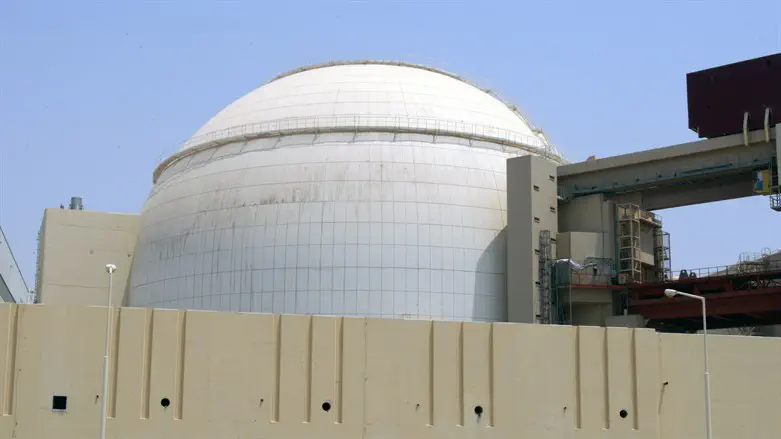
Iran has since suspended the memorandum entirely. Russia's state nuclear corporation, meanwhile, has begun returning its personnel to the Bushehr reactor.
And then there is the uranium.
Israeli intelligence assesses that at least part of Iran's stockpile of highly enriched uranium was moved into the underground facility at Pickaxe Mountain, near Natanz - findings Israel shared with Washington. Israel further assesses that thousands of advanced centrifuges were relocated to the same site, a complex built to be impervious to precisely the kind of bunker-buster strikes the United States has used elsewhere.
The material in question - roughly 440 kilograms enriched to 60 percent - remains the central sticking point in the talks, and Iran's supreme leader has reportedly ordered that none of it leave the country.
Read those three facts together.
- The stockpile is hidden.
- The machines to enrich it are hidden with it.
- And the leadership has ruled out surrendering any of it.
A regime that signs an agreement while moving its nuclear material deeper underground is not negotiating. It is stalling.
And who is directing all of this? A supreme leader who has not appeared in public even once since replacing his assassinated father in March - whose whereabouts became the subject of open speculation last week, with some analysts suggesting he may have left the country entirely. A regime that will not show its own people its own leader is not a regime preparing to compromise or one that can be trusted.
That leaves President Trump facing a dilemma no American president would envy.
On one hand, he understands the threat Iran poses - not only to Israel, but to American interests across the entire Middle East. On the other, he knows exactly what a wider war costs at home. Gasoline is already running roughly 27 percent above its pre-war average. Brent crude has been hovering near $96 a barrel. The administration is seeking tens of billions of dollars in supplemental appropriations for a war it has repeatedly described as already won.
Every one of those numbers lands on a kitchen table, and every one of them lands in November.
So the strategy has become the pause. American officials have described it plainly: strike, then pause, to avoid escalation and give diplomacy room to work. Washington's ambassador to the United Nations said the president is giving talks “some space," while China works through Pakistan to restart dialogue.
Iran understands that reality perfectly well.
If Tehran believes Washington has powerful economic and political reasons to avoid a broader conflict over the next several months, then every quiet day is not neutral. It is a deposit. It is another road repaved, another production line restarted, another centrifuge spinning under a mountain.
That is why this moment is about far more than diplomacy.
It is a race against time.
The United States is buying time to avoid a regional war and its economic consequences.
Iran is buying time to rebuild.
Both sides think the clock is working for them. Both cannot be right.
Only time will tell who wins. My concern is that by the time we know the answer, Israel - and the entire Middle East - will already be living with it.