
Originally written for the 120th anniversary of the Helsinki Synagogue issue of HaKehila, the magazine of the Helsinki and Finnish Jewish community, Helsinki, Finland, August 2026, and in commemoration of the anniversary year (August 2026 - June 2027). Arutz Sheva was given special permission to post this memorable article, which has so far appeared only in print and not online.
Since the synagogue is called "mikdash me'at", a representative of the Holy Temple, the fast of the 9th of Av seems the appropriate day to share it with our readers.
Note: All the works of art are in the public domain.
A Vision of the Heart: From the perspective of 150 years
Observing the centuries of art that depicted synagogues, art historians can come to the slightly paradoxical conclusion of analysing subject-matter and the inner message of an extensive body of artworks featuring the house of Jewish prayer.
While synagogues are present in many works of art, the role that an image of a synagogue plays in Jewish art throughout the centuries is largely neutral, emotion-wise.
As a rule, it reflects a reality, indicates a place, projects an architectural detail, or marks a landscape, indicating the belonging , the religious affiliation and 'a mapping’ of a landscape. But art historians can hardly find an emotion in the artworks in which a synagogue is the subject-matter.
There are several reasons for that tendency in Jewish art, starting from subjective, personal difficulties and certain restraint in an artists’ perception while painting or drawing the most serious of the Jewish ritual objects, the house of prayer, coming down to a more neutral vision and the role that a building might have in a work of art. Their role has often been seen by many artists as a truly technically difficult way of achieving artistic expression when trying to attribute it to something as static as a building or part of it.
How to make a subject such as a building emotional? How to create it in the way that people will feel the sentiments and emotions caused by the connection to it, both immediate and metaphorical ones? It turned out to be a very difficult , and thus a rare goal to achieve.
We had a look at a few of such rare artworks which indeed contain and transmit an unmistaken feeling, the feeling of love towards a synagogue that is palpable to anyone who looks at these works.
Meaningfully, in the overview, we looked at the artworks created by Jewish artists during the past 150 years, starting from 1878 and ending in 2026.
All those works were created by European masters living and working in Poland, France, and Finland, all of them coming from the Yiddish world of Poland, Belorussia, Lithuania and Ukraine, with its special vision, imagination, feelings, artistic perspective which can be defined as ‘a vision of the heart’.
The selected works depict the synagogues in Poland, Finland and pointedly, Israel, thus bringing the line towards the place where the heart of many Jewish artists always had been striving for - Jerusalem, Safed and the Holy Land in general.
Naturally, the artistic language of the selected works differs as it reflects its own time, from more classical, academic method of classical painting that had been accepted back in the second part of the XIX century, changing dramatically in the beginning of the XX century into the more expressive and far less academic language of modern art, and coming to the metaphorical expressionism of the XXI century with the artistic symbiosis of intellectual message and visual image as a new artistic language of our times.
The Young Genius of Jewish Art and Life : Maurycy Gottlieb, Poland
The name and art of Maurycy Gottlieb ( 12.02. 1856 - 17.07. 1879 ) occupies a particular position in the history of Jewish art, due to his highly dramatic destiny and the outstanding quality of his art.
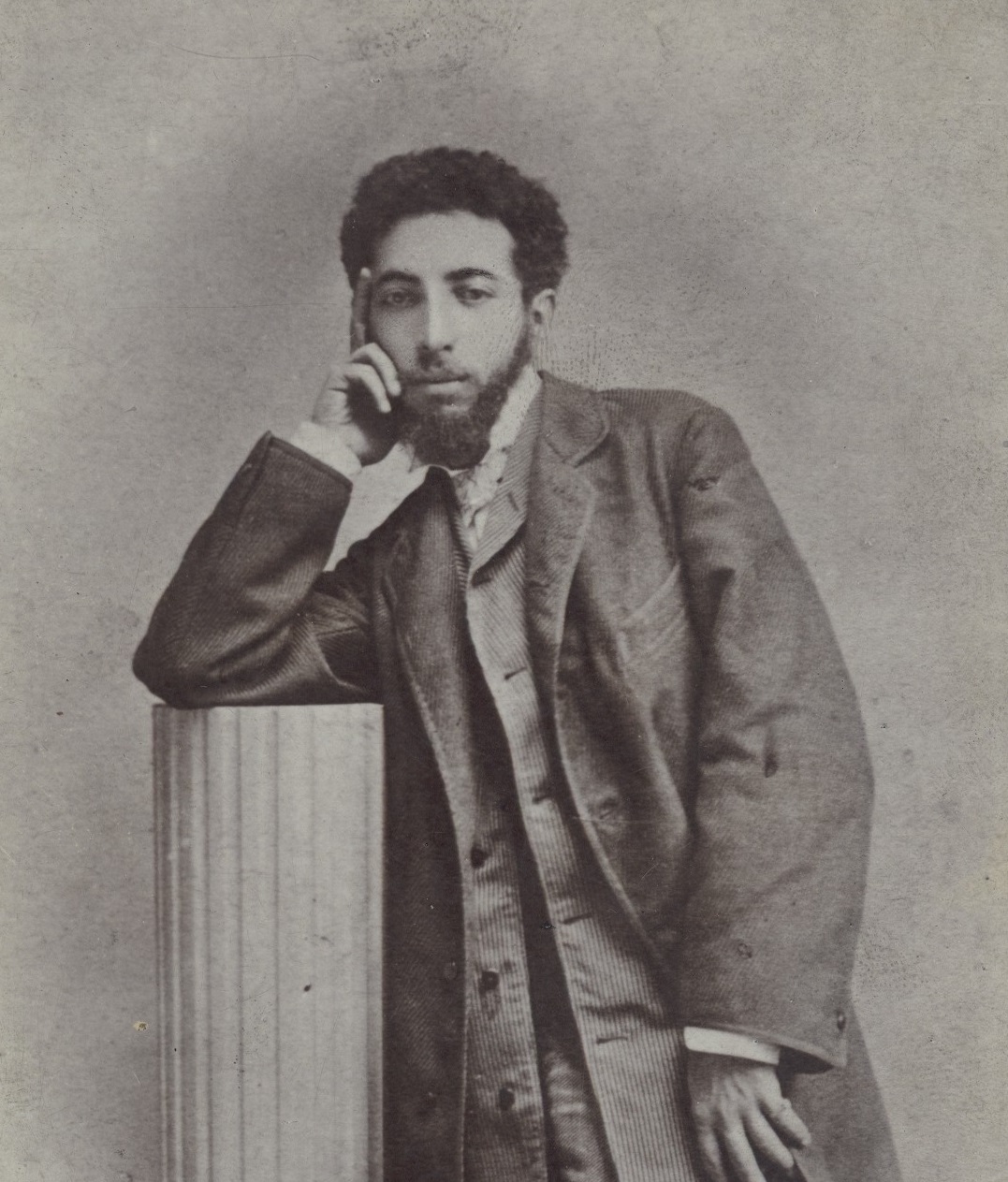
This artist lived only twenty three years, but he left a stunning legacy. Born in a wealthy family in Drohobych, Maurycy showed such a powerful artistic talent that he started to be mentored by a serious professional art teacher from the age of seven, reminding us of the young Mozart. The brilliant youth had been accepted to the Krakow Fine Art Academy at the age of 17 becoming an exceptional student of famous artist Jan Mateiko. Not being able to study normally there, due to becoming the subject of fierce anti-Semitism, young Gottlieb set on his European art-searching and studying travels, including Norway, Vienna, and Munich, where he always studied with the best artists who all were amazed by his immense talent.
Gottlieb was awarded a Gold Medal of the Munich Academy of Art in an unprecedented development in the history of that famous cultural institution, both due to his age and his race. Jewish artists, even if they had been awarded , occasionally, normally had to be satisfied with less prominent rewards, as a general rule in the XIXth century’s Europe , and actually most of the time as we know it.
It is in Vienna where Gottlieb started to paint Biblical scenes and delved deeply into the Jewish narrative in his works. It is understood that his productivity was as extraordinary as the quality of his art. It is believed that the art legacy of Gottlieb is about 300 works.
At the age of 20, Maurycy travelled to Rome which was the must route for artists and also for high-end society at the time. All these lessons with the best teachers and artists of his day, incorporating the best of the world culture into his super-talented young mind produced exceptionally rich material that becme the source of Gottlieb’s outstanding art.
When in Rome, the young but mature artist met again with his mentor, the greatest Polish artist of the time Jan Mateiko , and that important reunion prompted Maurycy to return to Krakow. It was there, in his native Poland where he worked with feverish energy, loved and suffered personally (after the love of his life Laura Rosenfeld broke their engagement, returned a huge amount of Maurycy’s letters that he wrote and sent her daily, and relocated from Vienna to Berlin where a year after their separation she married a wealthy banker, the choice of her family that preferred that stability to the fervent artist).
It was exactly at the time of his broken engagement with Laura when 22-year old Maurycy created his astonishing masterpiece, Jews Praying in the Synagogue on Yom Kippur ( 1878 ). This large painting, 245 x 190 cm, has everything that Jewish soul is about: beauty, thoughtfulness, reflections, rhythm and its heart.
All my life, I am simply astonished at how a 22-year old person was able to see so much and to express it with such mature craft and so much feeling and beauty. Not just beauty per se, in form and appearance, but what is known as ‘thinking, reflecting, soulful beauty’ which is an extremely rare occurrence in an art of any period.
No wonder that from the moment of its arrival to Palestine, at the then recently established Museum of Art in Tel-Aviv in 1939 , after a dizzy search for it all over Europe and being saved at the last moment (the story is worthy of a special essay), this very work, Maurycy Gottlieb’s Jews Praying in the Synagogue on Yom Kippur, is regarded as the foundation of the Jewish visual narrative in Jewish art. And it was created almost 150 years ago.
But there is more in this absolutely special painting, probably the most special one in the entire Jewish art.
Maurycy Gottlieb, who was a superb portraitist, and painted many self-portraits in varying images as well, not out of self-obsession, but because of his boiling search and self-questioning in both art and life which is only natural with such talent and at such an age, painted in three images of himself and two of his lost bride Laura. In addition, he portrayed his own father and perhaps grandfather, and also Laura’s mother with whom Maurycy maintained a close relationship.
Maurycy created his own image in three ages, all in the centre of a large painting: a small child with a medallion, a tormented adult with the same medallion, which is a central figure of this drama on canvas, and Maurycy at the age and time of his bar-Mitzvah , a reflective and somewhat sad child next to his father.
In this approach Gottlieb followed a long-established artistic tradition that was emphasised during the Renaissance. Maurycy’s intense travels and his time in Rome added to his aspiration to continue this well-established tradition.
In an amazing and hardly precedented detail in the very front of the artwork, the man who keeps the Torah scroll in the ritual of the Yom Kippur service and who is posed as emphatically sad, projects the kaporet, the decoration hanging during festive services over the meil, the mantel, of the Torah scroll.
What is written there? “Donated in memory of Rav Moshe Gottlieb the righteous, of blessed memory". And the date, the Yom Kippur of 1878. It was the statement and Maurycy's public and artistic farewell. He lived one more year, and died in July 1879, precisely two weeks after Laura’s wedding in Berlin.
In her diary, Laura mentioned sorrowfully that Maurycy took his life over her. Later on, and until this day, her understanding and the identical one of some of Gottlieb’s friends is disputed, and an array of his illnesses has been cited in support of the conviction that he died of one of them.
In the case of such immense talent and such a special soul, it is also possible that poor Maurycy could die of a broken heart. The dating of this extraordinary work and its astonishingly frank dedication on the Torah scroll’s kaporet should, actually, leave little room for any doubt on that matter.
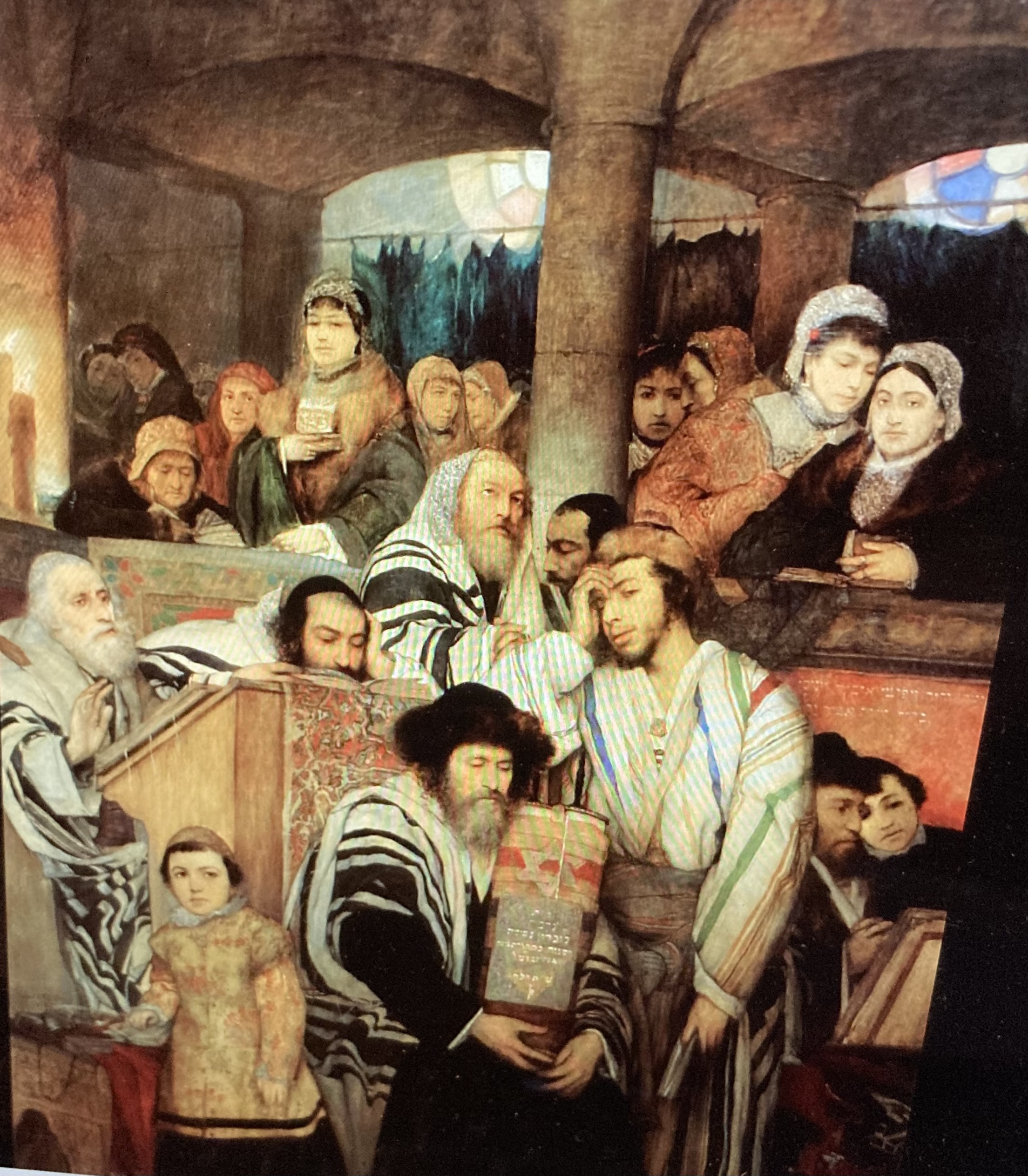
Maurycy Gottlieb. Jews Praying in the Synagogue on Yom Kippur , 1878. The Museum of Art, Tel-Aviv, Israel.
At the time when Maurycy Gottlieb lived and created, art was blossoming in a rich stream of Romanticism. In the case of Poland, the artistic tendency had been unfolding in the atmosphere of a strong nationalist movement which was in full swing at the time. Gottlieb, who was a highly talented person, had been open to life in the general society of his country. He was fluent in many languages, knew history, and tried hard to live a meaningful life in his country. Sadly, he was not lucky in this aspiration.
He was rebuked repeatedly with harsh, open anti-Semitic insults at different stages of his short life, to the degree that at one stage he found it impossible to continue to study at the Krakow Fine Arts Academy. And there were other incidents. That hostile attitude, both at the personal level and in general, an open, widely accepted hostility against Jews, was the background and circumstances of life for Maurycy Gottlieb in the second part of the XIX century in Europe.
That’s why, being at a critical emotional stage a year before his young and promising life ended dramatically, Maurycy Gottleb decided to express in the most open and convincing way, in his prolific artistic language, who he was, proudly and emphatically.
This extraordinary painting created by 23-year old superb talent has become one of the most important artworks about the Jewish world.
A European Jewish Heart in Jerusalem: Samuel Hirzenberg, Poland
Another outstanding Polish Jewish artist who painted a synagogue with palpable love was Samuel Hirzenberg (22.02.1865 - 15.09.1908). He lived twice longer than Gottlieb, and was almost his contemporary who was born during Gottlieb's life-time.
Hirzenberg was from Lodz, and he was born and raised not in an affluent family as Gottlieb's/ His father worked at a mill. As was the case in most of Jewish families in Central Europe at the time, Samuel pursued his artistic talent against the will of his parents, especially his father’s. His talent was supported by the family doctor who realised Samuel’s skills and who could see that his future lay in art.
His life and work had indeed many close parallels with Gottlieb’s. Hirzenberg also started to study art quite early, from the age of 15. He did it at Gottlieb's alma mater, the Krakow Academy of Fine Arts. He continued his studies at the same institution that was essential for Gottlieb, at the Munich Academy of Arts. He also was awarded a medal, this time a silver one, and not by the Munich Academy but by Parisian one, Academy Colaron where he also studied and worked. Further on, Hirzenberg also travelled to Rome, to learn from the best art first-hand, as Gottlieb had done a few decades earlier.
In the same way as Maurycy, at some point, Samuel decided to return to Poland and to resettle in his native Lodz. He was 28 at the time. He also later on lived in Krakow, at the place of his alma mater, as Gottlieb did.
But then, in the way that became a new mode for Jewish people in the beginning of the XX century, Hirzenberg came to Palestine. In 1907, as a well-known Jewish artist who produced many soulful works reflecting the Jewish world, he was invited by Boris Schatz, outstanding Litvak artist and founder of the Bezalel School of Art, to become a lecturer there.
The Bezalel School of Arts, which still functions today, is a well-known art establishment in Israel. It is heart-warming to remember that at its establishment in the beginning of the XX century, its founders were driven by their Eastern European Jewish, Litvak and Yiddish hearts and by their conscious, selfless Zionist effort.
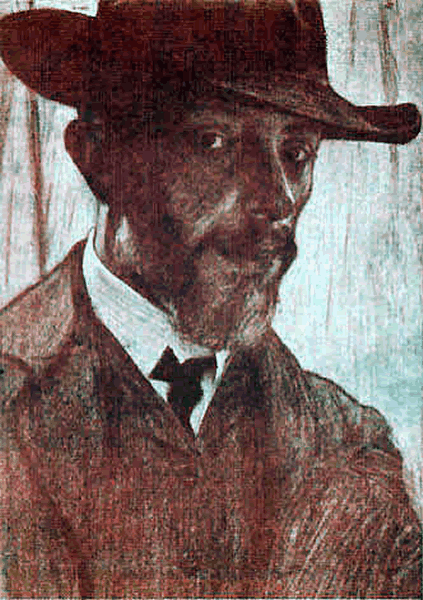
One of the most heart-felt artworks depicting a synagogue as a subject throughout the history of Jewish art was Samuel Hirzenberger’s small , 20 x 30 cm drawing Synagogue in Jerusalem which that talented artist created there, at the place, when he became the lecturer of just established the Bezalel Art Academy. Sadly, Samuel Hirzenberg, whose health had failed him substantially just prior his move to Palestine, died in Jerusalem soon after his aliyah. But his wonderful, warm, loving portrait of a synagogue still lives on, as many of his other works do.
In the beginning of XX century, the idea of the creation of the Jewish state was blossoming, receiving its mighty impulse from the decisions of the Zionist Basel Congress in 1897. It prompted a mighty wave of enthusiasm in all and every sphere of Jewish life, with many people coming to Palestine from all over the world at the beginning of the XX century to pursue the dream of the generations. Samuel Hirzenberg was one of them. He came to Palestine with his health deteriorating significantly. Still, he wanted to come, to be, to see, to work there. And to contribute. Which he did in the most warm and loving way.
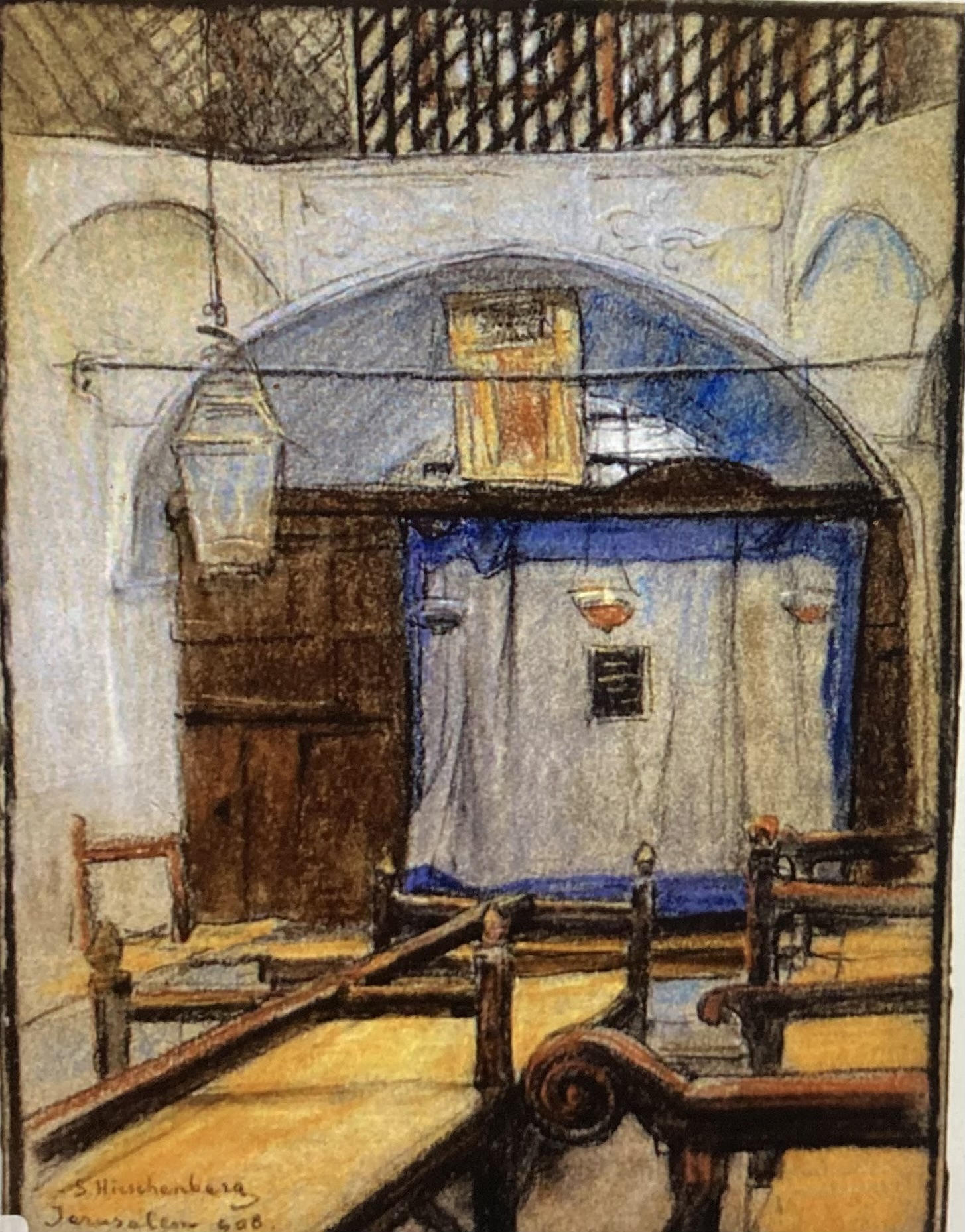
Samuel Hirzenberg. Synagogue in Jerusalem, 30 x 23 cm. 1908. Pastel on paper. Israel Museum, Jerusalem.
The World of Marc Chagall , France
Marc Chagall’s connection with the Land of Israel was one of unequivocal love. Love, in general, was Chagall’s mode of seeing the world throughout his artistic prism. He himself defined the main subject of his art as love from an early stage of his life and career. That attitude and that prism never changed.
Chagall was an introvert who kept his world inside but actually shared it with his contemporaries and all of us for generations to come in an outpouring measure due to his giant working productivity. It was his way of life.
Personally, the great master was a devoted Jew, and this emotional integrity is palpable throughout his artistic legacy.
He lived in turbulent times, and his family went through great emotional hardship. He was separated from his family whom he loved dearly, and his first wife Bella Rosenfeld, the love of his life, died tragically in the USA to where Chagall family had to flee the Holocaust.
Yet before those terrible events that left an indelible mark on Chagall’s inner world, in 1931 the happy family of Bella, Marc and young Ida were invited to visit Palestine by Meier Dizengoff, the first mayor of Tel-Aviv who cared about art, and especially European art. It was the first out of eight visits to Palestine and Israel by Chagall, the most happy and special one, as he would remember many times throughout his long life. The main reason for that, according to the artist himself, was the sensation of the very first visit to the Holy Land, and the fact that he was there with Bella.
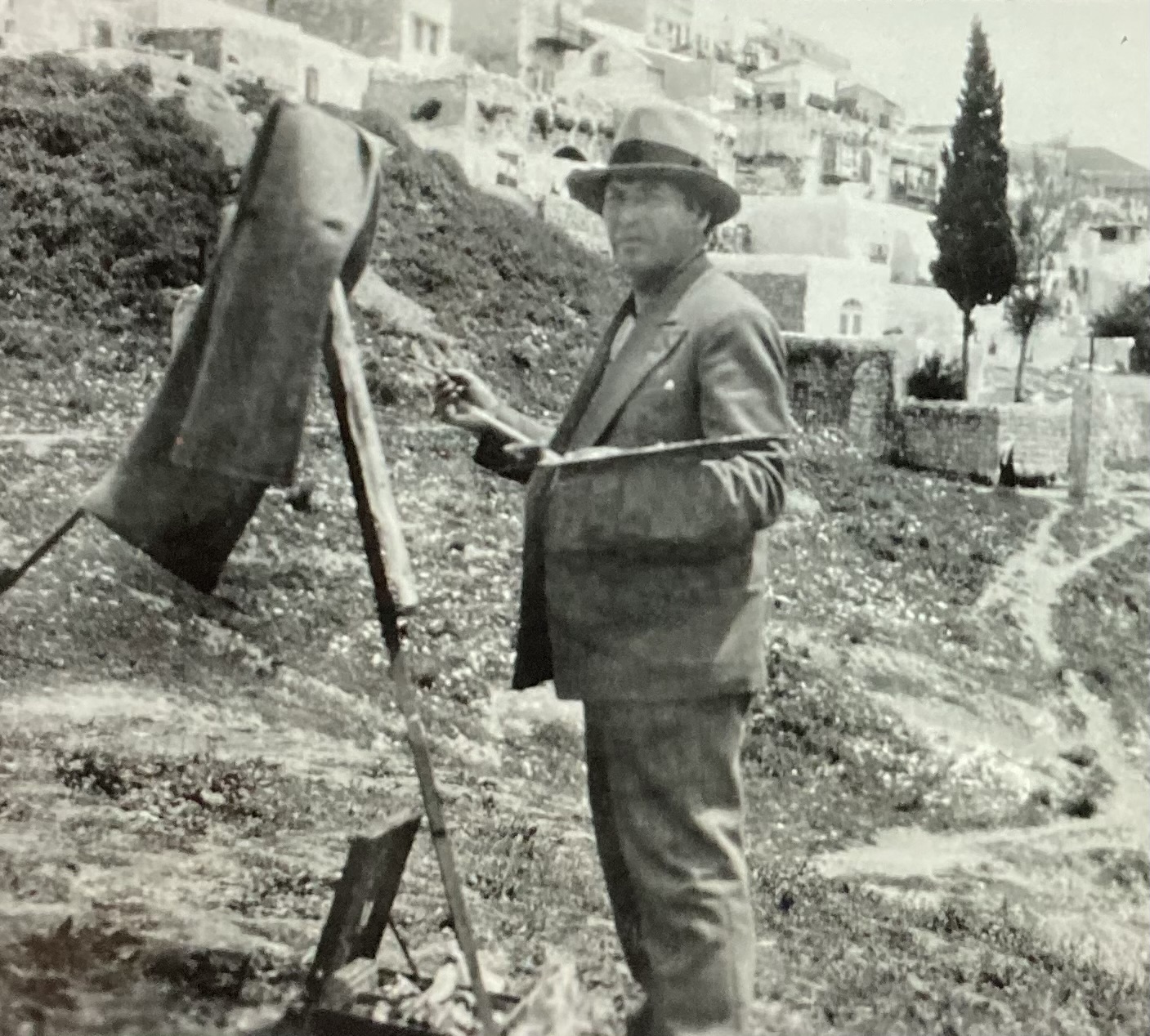
Marc Chagall during his first visit to Palestine, 1931. © Marc and Ida Chagall Archive.
During this first visit to Palestine, the Chagalls spent three months there, and travelled across the country.
At the time. Europe and France were at the brink of the antisemitic terror.. Hitler would come to power in two years, after which the sensitive Chagall, immediately understood the danger and was extremely worried about it. In 1931, France, where Chagall family lived, already started to experience a huge influx of refugee Jews coming from Eastern and Central Europe, to the degree that the French government at the time decided and implemented the specifically hostile practice of two-layers of permissions for Jews, and Jews only, to live in the country. Those who were lucky to have citizenship, and many others who were granted permission to live in France without citizenship. All those people, among them many friends of the Chagalls, were inevitably exposed to mortal danger as the war came closer, many of them were deported later to the concentration camps and murdered there.
The great artist and his family had been rejected the citizenship for which they applied in 1933, but then, after focused efforts of some of their French friends, and thanks to the position of then French minister of culture Jean Zay, the Chagall family was naturalised in 1937. This saved their lives and crucially helped them to emigrate to the USA in 1941 when they literally were running for their lives.
A decade before that highly charged drama, Chagall and his family came to Palestine for the first time from Europe and France which had started to feel the approaching of Nazism.
During the trip, Safed was one of their first destinations, and they fell in love with this unique place. According to existing memoirs, Chagall worked in Safed particularly intensely.
While in Safed, Marc and Bella visited several synagogues, some of them outstanding in their dating and meaning. One of such synagogues was the famous Ari Synagogue, established during the time of the most famous and important Kabbalists of all times, HaRav Ari Isaac Luria, and according to some indications, possibly by the Rav himself.
Even without knowing the history of this place, one can feel a very special atmosphere inside it. Every time when I visit the Ari synagogue in Safed, I have a strong feeling that time does not exist there. Instead, a very special presence , gentle and unique, fills its inner space in a magnetic and unobtrusive way.
Marc Chagall painted and drew tens of synagogues during his long artistic career. But there are some few distinctive works among those treasures which stand alone on the criteria expressed by the artist: love for the subjects of his creations. In this case, the subject is a synagogue, and it is very difficult to express love to a building. But Chagall did it in a special way, speaking from his heart on his canvas..
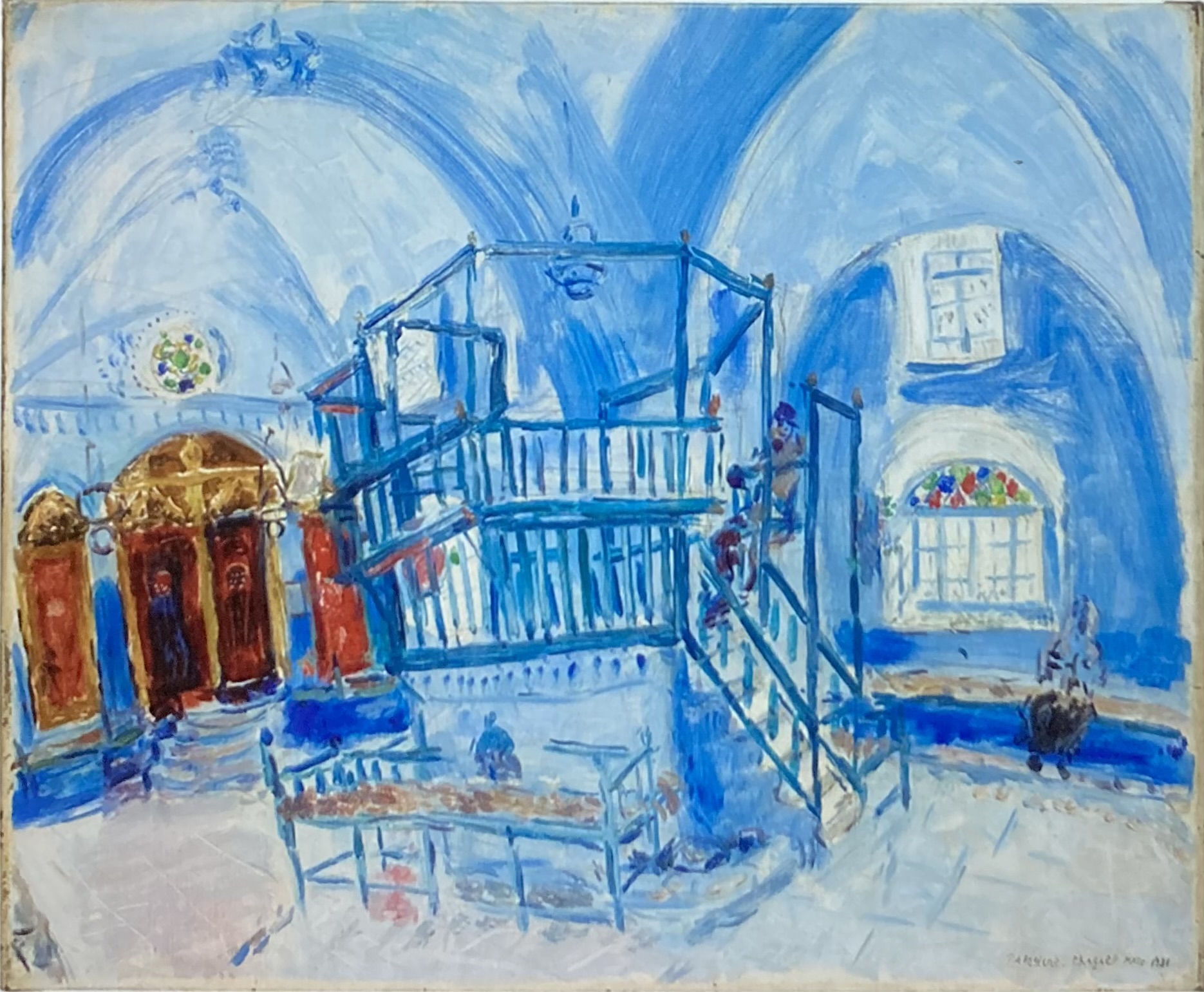
Marc Chagall. Interior of the Synagogue in Safed, 1931. Oil on canvas. 81 x 64,8. Israel Museum, Jerusalem.
This outstanding work has an uneasy destiny too. From 1945, following the turmoil of WWII, and the extraordinary effort of Chagall’s daughter Ida to save and relocate as many as possible of her father’s works, the painting was held by the Gallery of Jewish Art in New York, from where it was acquired by a notable collector Max Cottin, and it stayed in their family for several decades.
In an unusual development, Chagall, who did care about this particular painting a lot, personally appealed to the Cottin family with a request to re-sale the work back to him. My understanding of it is that the painting had a special meaning to Chagall as it was a highlight of his very first trip to the Holy Land with Bella, and it seemingly had had a special emotional personal value for the artist. It, however, never happened, sadly.
When the Cottin family decided to part with the extraordinarily beautiful work decades later, a specially composed consortium of wealthy donors did buy the work from Sotheby's, specifically for the Israel Museum in Jerusalem. Since 2011, one of the most atmospheric and particularly beautiful works of great Marc Chagall has become the jewel of the Israel Museum’s outstanding collection. The painting is also regarded as quite valuable and significant, being one of just six works of Chagall of the kind.
More than 40 years later after the creation of the magnificent blue canvas filled with love depicting the Ari Synagogue in Safed, Marc Chagall who never stopped to visualise the houses of Jewish prayer, both real and imaginative ones, created another miracle.
In 1973, the 86-year old master created some outstanding large-size lithographs, being emotionally driven by a very important mile-stone, the inauguration of the Marc Chagall National Museum in Nice, one of the most special, memorable, important and beautiful art museums in the world.
Among the series of lithographs in a small limited edition of 50, one work stays apart, to me, The Temple.
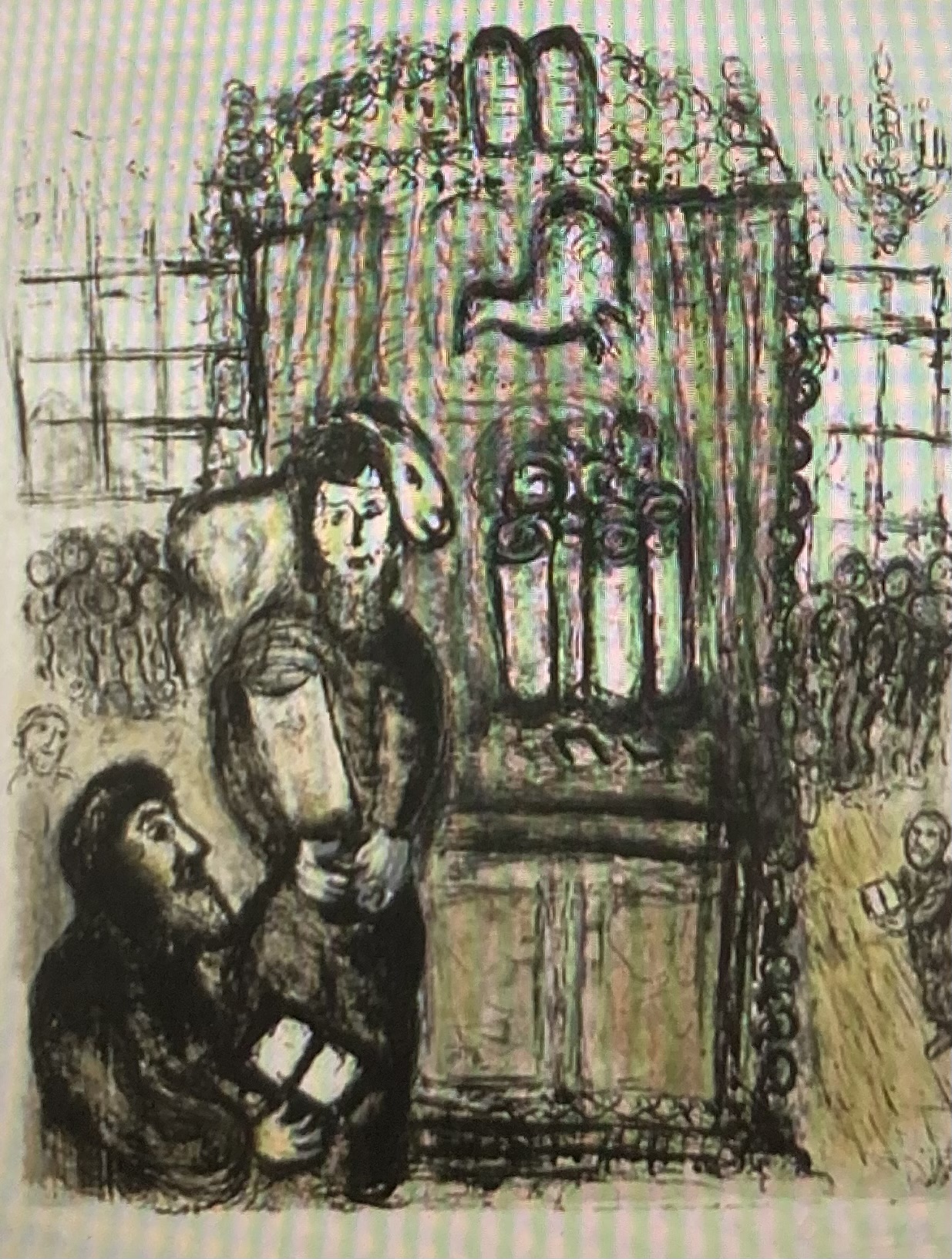
Marc Chagall. The Temple. 98 x 73 cm, image: 81 x 65 cm. Lithograph, hand-signed by the artist. 1973.
There is everything in this work by an 86-year old master that he felt and knew and loved when he was a 13-year boy in the heder in Vitebsk. I interpret The Temple as Chagall’s return to his childhood and early youth, to the beginning of his life and to his and his family’s very roots. The essence of Jewishness is also there, in this loving sketch of a flying soul.
Happy over the opening of a large and important museum dedicated to and hosting his art created during his entire life, Marc Chagall, at that advanced age, was creating as if he was an inspired youth full of strength and vigor. And also with gentleness and love.
If I were asked to name just one work of Chagall, of which I love myriads, I would opt for The Temple because of the emanation of love that this lithograph radiates. And I feel very grateful to the great Jewish master for sharing this love with all of us and bringing it into being.
Ongoing Soul Song in Jewish Art : Michael Rogatchi, Finland
In Michael Rogatchi's art, Jewish themes are one of the central ones, expanding from a contemporary interpretation of the Biblical themes and personages to the memories dedicated to the vanished Yiddish world. It also includes numerous homages to Israel and our perception of it, both in historical and modern perspectives, eternal Jewish music and fantastic Jewish musicians, family life reminiscences in various periods, love stories and poetic metaphors.
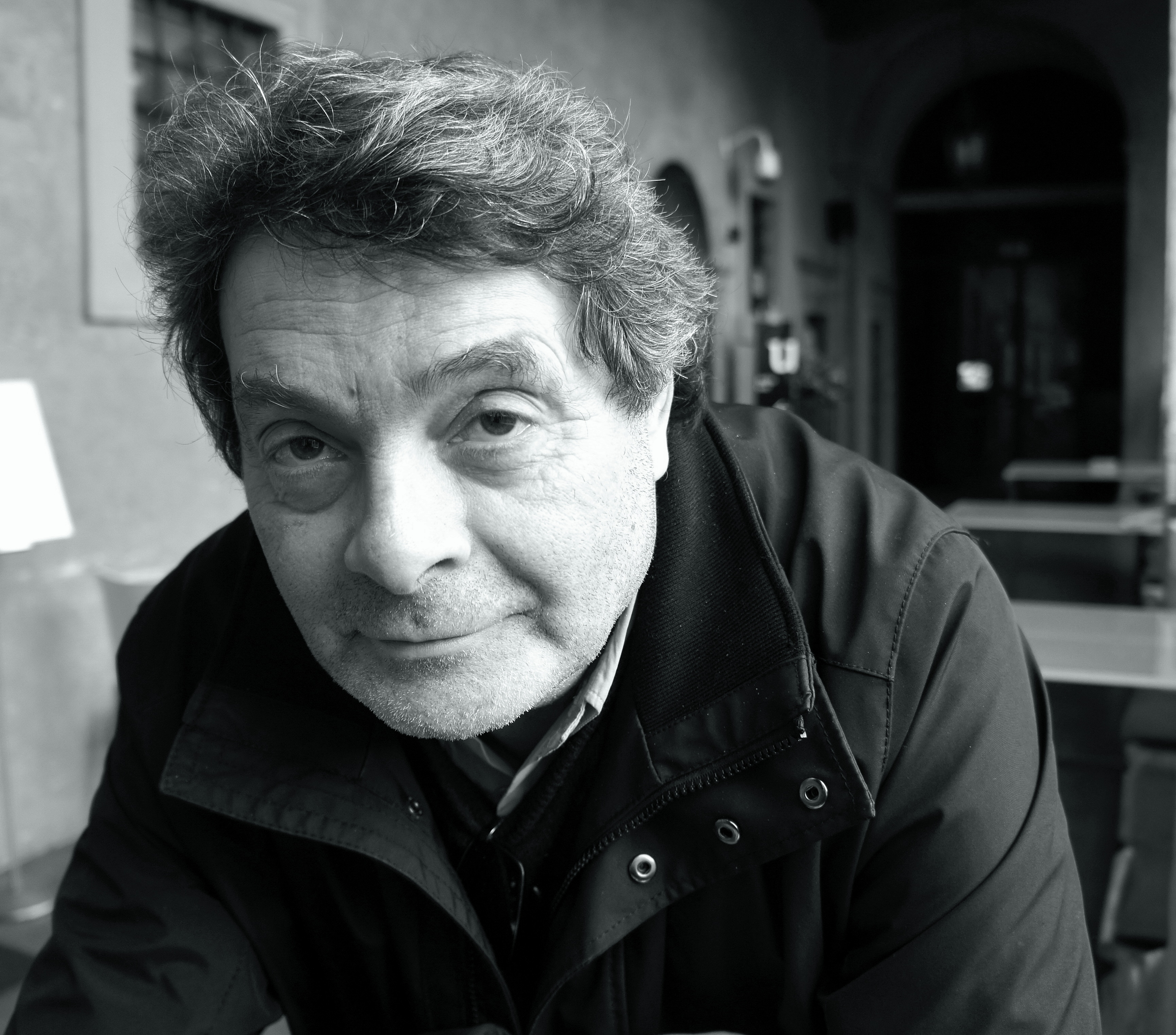
Michael Rogatchi. Photo © Inna Rogatchi. The Rogatchi Archive
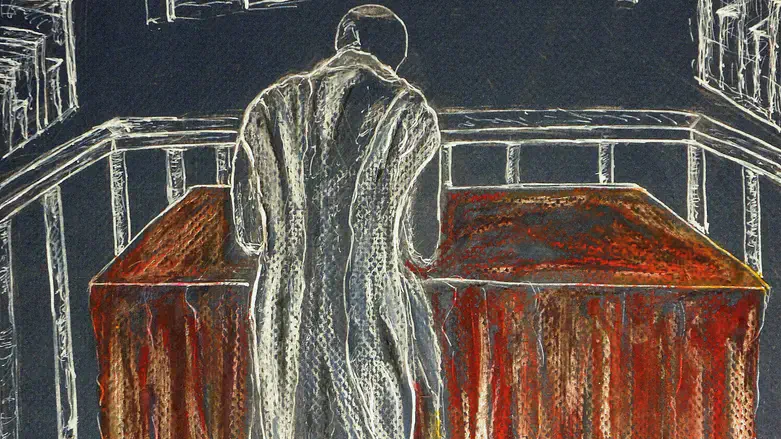
Among many of those various works on Jewish heritage, one of them stands out in the way of reflection and thoughtfulness and the way of portraying a process of praying. It also conveys warmth towards a synagogue not as a place but as a home for prayer.
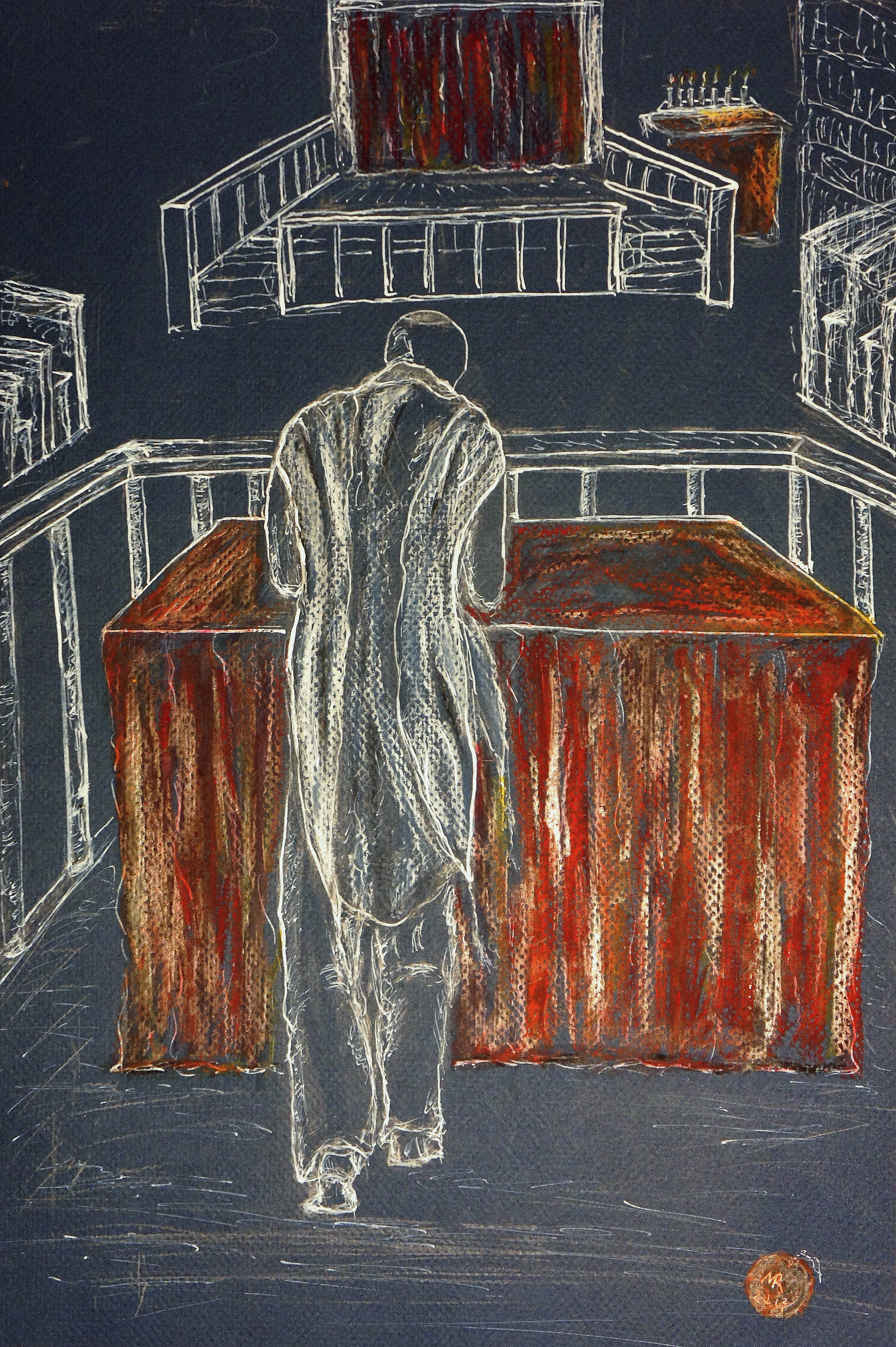
Michael Rogatchi ©. My Schul. Indian ink, oil pastel on dark-blue hand-made Italian cotton paper. 50 x 35 cm. 2013. Daily Miracles Collection. The Rogatchi Art Collection.
Michael Rogatchi’s My Schul ( 2013) is executed in the artist’s special technique that he invented for his original drawings. That technique combines two quite different mediums: Indian ink that provides a finesse of lines, and oil pastels mixed by the artist specifically for every work in this style. The oil pastel mixture provides volume in the works. Importantly, the Rogatchi’s original drawings created with this technique, have been all made on a very special hand-made fine art cotton paper that used to be produced in a specific place in southern Italy. The volumised, richly textured paper in different colours provides the works with an exceptional depth.
My Schul, with its palpable inner dynamic, both in the man’s figure and in the inner synagogue surrounding space is as if singing a quiet melody. The melody of love and devotion which is even more tangible when it is not declared loudly, but when it is conveyed in this subdued way.
Michael Rogatchi has his firm attitude regarding the balance of emotions in his art: the more dramatic or personal a subject, the more laconic his visual expression of it gets, thus conveying the artist’s message not declaratively, but calmly, with inner thoughts and messages, in a well-thought and elaborately selected images. Michael Rogatchi shows this approach in his dramatic and deep works on the Shoah, In the Mirror of the Shoah collection, and also in the works in which the artist deals with inner feelings and thoughts, such as My Schul.
"In this way, the message is more convincing, the tone is more appropriate, and the effect that a laconic artwork creates is long-lasting, I believe", - according to the artist.
This work, precisely because it is regarded by the artist as a personal one, has not been exhibited or reproduced often. It was featured in the main article of the Shtetl Songs & Memories art catalogue ( 2024-2025) of Michael and Inna Rogatchi special art collection in Lithuania, with several exhibitions in Lithuania in 2024-2026.
The Sense of Place and Time: Inna Rogatchi, Finland
In my own oeuvre, Jewish themes are examined in their variety, from the visualisation of Jewish mysticism, artistic parallels for certain themes in the Torah and Biblical texts, to the commemoration of the ongoing echo of the Holocaust as part of our lives and world, and the different aspects of Jewish history re-created artistically today, from a current-day view and perspective.
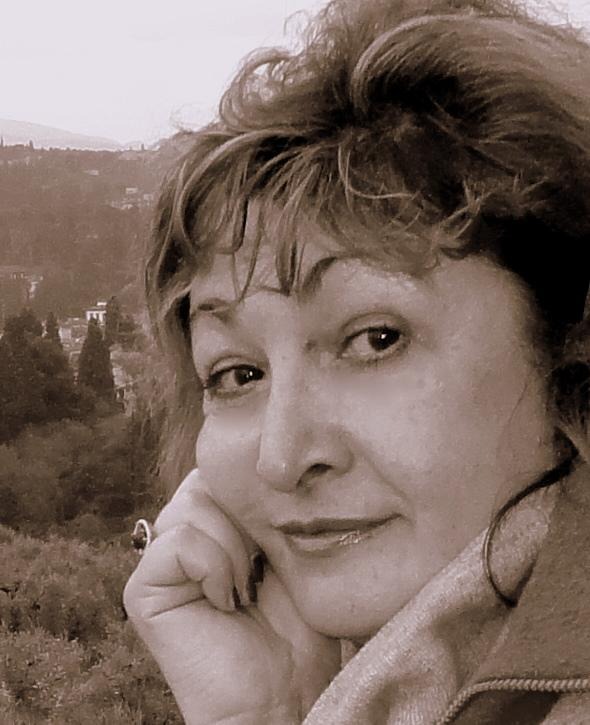 Inna Rogatchi. Photo: Michael Rogatchi. © The Rogatchi Archive.
Back in 2017, working in cooperation with the representatives of the Helsinki Jewish community, I came across original beautiful and authentic drawings for an architectural design of the facade for the Helsinki Synagogue. The drawings were authored by the Synagogue architect Johan Jacob Ahrenberg who was also a very able artist.
Those three original drawings by Ahrenberg with his ideas for the Helsinki Synagogue’s facade, dated 1905, that I saw personally, made a special impression on me. First and foremost, by their authenticity. To me, authentic works and artefacts always possess the energy of their creators and their time.
These original drawings were, in my perception, the real connection between the time when the Synagogue was conceived back in the beginning of the XX century, and now. Looking at that beautiful fine drawing that was created by an able architect and artist over a hundred years ago, it was as if I was reading his thoughts and ideas for the building which would become central for the Jewish community - not only of Helsinki, but of the whole of Finland, and for anyone who visits it.
The idea was to create some special unique image of the historical Helsinki Synagogue, the image that would become original and memorable. I remembered one of my works from Jerusalem, with its beloved and unique olive trees which are more than trees in the place like that. It is the symbol of eternity in its most vital way. A living olive, the tree which is not without reason has its footprint in the Torah and in the Biblical Jewish narrative, as the symbol of peace, durability, productivity, fertility, as the expression of a life-force in a focused and beautiful way.
The work in which I have synthesised an original footprint of the past and thriving natural moment of today also manifests a fruitful meeting of things polarly different: old time and current day, early XX century and the second part of the 2020s, the Nordic dimension of Finland and southern dimension of Israel, the crisp air of Helsinki and hot breath of air in Jerusalem, stones of the facade and live greenery of olive trees, building and air, objectivity of a standing building and subjectivity of the perception of its symbolism. It also combines the things which are synchronised in Jewish perception: the synagogue and one of the most prolific symbols in the Torah, olive trees and leaves. Coming together in one picture, making a new, original and wholesome image, all these opposites and similarly oriented symbols in a surprising and joyful way have created a calm and aesthetically new image in which a synagogue is portrayed with love, care, and thought of in the context of time and place.
These were my thoughts behind the creation of a fine art collage combining the image of the architectural idea for the Helsinki synagogue by its architect drawn over a century ago, with my image of the olive dimension of Jerusalem nowadays. Working in my own mixed technique, I finished the work with an original drawing and enhanced it over an original authored print of the collage in various mediums.
This work, Olive Skies in Helsinki, has become my personal and The Rogatchi Foundation's gift to the Helsinki Jewish community in commemoration of the 120th anniversary of the Helsinki historical synagogue.
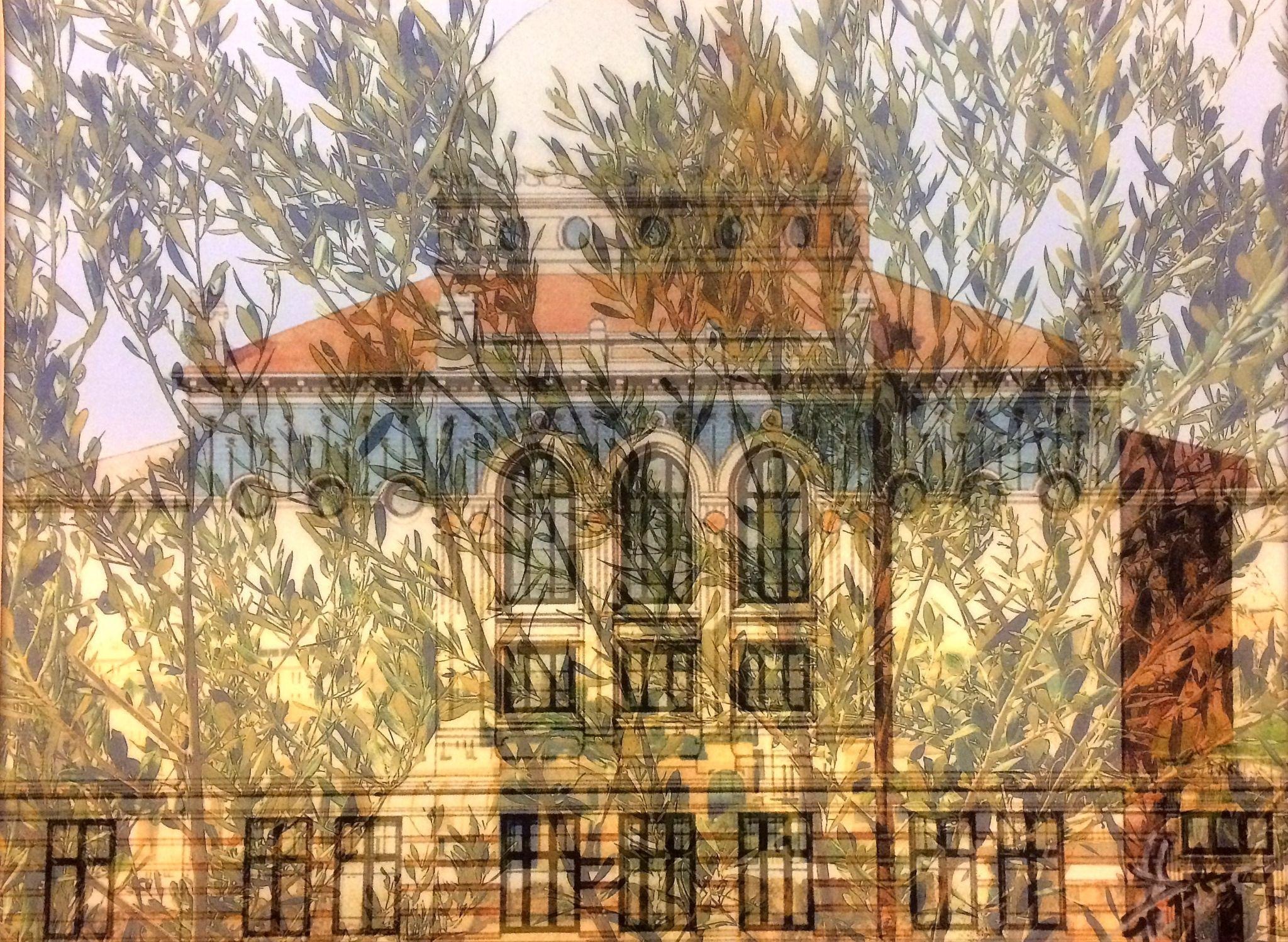
Inna Rogatchi. Olive Skies in Helsinki. Original drawing in watercolour, oil pastel, wax pastel, lapice pastel, pigments , Luminance Caran d’Ache on fine art collage on cotton paper. 2017 - 2024. Version 2026. 60 x 80 cm. Helsinki Jewish community. Donated by the artist in commemoration of the 120th anniversary of the Helsinki historical synagogue. June - July 2026, Finland © Inna Rogatchi
Inna Rogatchi is an art historian, writer, curator, and artist. She is the author of many essays on art history and numerous art reviews. As an art historian, she specialises in various topics of the history of arts, including Rembrandt and his circle, van Gogh, Magritte, the Jewish art of various periods, Chagall, the School of Paris, Litvak artists and the others. In Inna’s oeuvre, there are many collections dedicated to various aspects of Jewish heritage. She is co-founder and the President of The Rogatchi Foundation.