

The Zionist Organization of America (ZOA) on Wednesday urged Congress to reject the proposed US-Saudi civilian nuclear agreement, warning that the arrangement could fuel nuclear proliferation across the Middle East and threaten Israel's security.
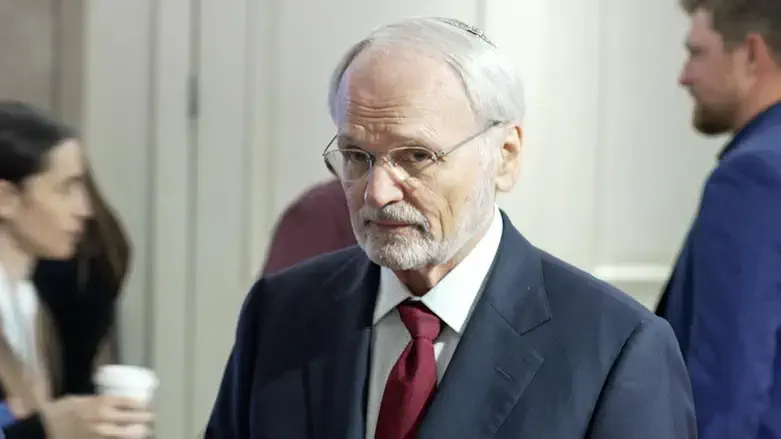
In a statement, ZOA National President Morton A. Klein described the proposed agreement as "a serious, dangerous mistake," arguing that it "seems likely to lead to widespread nuclear proliferation throughout the Middle East and redouble Iran’s determination to rapidly obtain nuclear weapons at all costs."
Klein criticized the reported two-year US-Saudi study on whether Saudi Arabia should be permitted to enrich uranium domestically, saying it appears to focus only on the economic viability of enrichment while overlooking broader security concerns.
"The study apparently fails to take into account the critical factors of the dangers of proliferation and an unstable Middle Eastern nation potentially obtaining nuclear weapons," he said.
The ZOA also expressed concern over Saudi Arabia's reported refusal to adopt the International Atomic Energy Agency's Additional Protocol, which provides for expanded monitoring and inspections.
"Further, the Saudis’ rejection of the 'Additional Protocol,' for more rigorous monitoring and inspections by the International Atomic Energy Agency means that monitoring will be inadequate," Klein stated, noting that "even Iran signed the Additional Protocol (although Iran then failed to ratify and abide by it)."
Klein further argued that the previous US administration had linked nuclear cooperation with Saudi Arabia to normalization with Israel, calling it "deeply dismaying" that President Trump was "giving away this leverage for bringing about a more peaceful Middle East."
He warned that a Saudi nuclear program could undermine the US commitment to preserving Israel's qualitative military edge.
The statement also raised concerns over the long-term reliability of Saudi Arabia as a US partner.
"Saudi Arabia’s current relatively amicable relations with the U.S. are far from guaranteed, and can turn into enmity in an instant," Klein said, pointing to Iran's nuclear program, which began under the US "Atoms for Peace" initiative in 1957 before relations between Washington and Tehran deteriorated.
Klein also noted that "15 of the 19 hijackers on 9/11 were Saudi nationals."
The ZOA warned that Saudi Arabia could once again strengthen ties with Iran, citing the restoration of diplomatic and trade relations between the two countries in 2023 and describing another rapprochement after the current conflict as likely.
The statement also cited Saudi Arabia's strategic partnership with China, including joint military exercises, as an additional source of concern for the United States.
Concluding the statement, the ZOA called on lawmakers to reject the proposed agreement.
"ZOA accordingly urges Congress to disapprove of this harmful, exceedingly dangerous U.S.-Saudi nuclear deal," Klein said.