
New York City Mayor Zohran Mamdani has once again shown the world what he prioritizes. In recent comments, including a New York Times interview, he labeled Israeli Prime Minister Benjamin Netanyahu a “war criminal," cited the International Criminal Court’s warrant (which the United States does not recognize), and said he is consulting lawyers about New York’s supposed authority to act if Netanyahu visits for the UN General Assembly. Then in a video clip, he admitted he has no legal way to arrest Israel's head of state, and after a long anti-Israel diatribe filled with lies about the Gaza War, told Netanyahu that he is not welcome in New York, the city with the world's largest Jewish population.
This is not governance. It is political theater designed to harass the leader of America’s closest democratic ally in the Middle East while New Yorkers face crime, housing costs, and rising antisemitism on the streets of the city he is sworn to lead.
Where does this obsession come from? It was not invented in Albany or on the campaign trail. It was cultivated at home.
Mamdani’s father, Mahmood Mamdani, is a Columbia University professor and one of the leading voices of postcolonial theory. In his 2025 book "Slow Poison: Idi Amin, Yoweri Museveni, and the Making of the Ugandan State", published by Harvard University Press, he urges readers to discard “media-driven preconceptions" about Idi Amin-the Ugandan dictator who oversaw the deaths of hundreds of thousands of his own people through murder, torture, and mass killings.
Amin expelled tens of thousands of Asians, including Mamdani’s own community. Yet the book soft-pedals that expulsion, frames Amin as an anti-colonial modernizer who “made Black rule meaningful," and treats his grotesque theatrics as a form of radical performance. Critics, including in The Guardian, have openly asked whether Mamdani is attempting to rehabilitate one of the 20th century’s most brutal tyrants. The answer, in the book’s own framing, leans toward a partial yes: that is, estern narratives are the real problem; Amin retained popular support; the true villains are colonial legacies and later leaders.
This is the intellectual atmosphere in which Zohran was raised. A father who looks at a mass murderer responsible for an estimated 300,000 deaths and primarily sees a misunderstood anti-imperialist is a father who seems to have already decided that certain kinds of violence, when directed against the “right" targets or explained by the “right" historical grievances, deserve nuance rather than condemnation.
Mahmood Mamdani’s broader body of work reinforces the pattern. In Neither Settler nor Native and related writings, he treats the creation of Israel as part of a larger story of violent nation-state formation, questions the legitimacy of a Jewish state, expresses sympathy for BDS-style pressure, and argues that Jews do not need a sovereign Jewish state to be secure-pointing to New York City itself as evidence. The moral hierarchy is clear: Western and Israeli power is the problem; the structural violence of certain postcolonial regimes can be contextualized.
Mamdani’s mother, the filmmaker Mira Nair, has spent decades crafting narratives that highlight the frictions, humiliations, and moral failings of American society as experienced by immigrants and minorities-particularly after 9/11. In essence, she took a fortune from the American taxpayer through agencies like USAID and made movies torching America. Her segment in the 2002 anthology "11’09"01 September 11" and films such as "The Reluctant Fundamentalist" focus on suspicion, surveillance, and the American response to Muslims.
Her work is artistically sophisticated, but it belongs to a cultural milieu that treats American power with persistent skepticism and frames the United States as a place that needs constant moral correction from those who arrive carrying older grievances. In short, she is a sophisticated America hater, just like her son.
Zohran Mamdani was born in Kampala, spent early years in Uganda and South Africa, and moved to New York as a young child. He grew up in an elite academic and artistic household steeped in postcolonial theory, anti-Zionism, and a default posture of critique toward America and its allies.
That is not a neutral upbringing. It is a cauldron. When the son of such parents becomes mayor of New York and spends political capital exploring the arrest of the Israeli prime minister on the basis of a biased international court that the United States rejects, the continuity is not mysterious. It seems the predictable result of an education in selective outrage.
The same intellectual habits that allow a scholar to nuance Idi Amin’s body count make it easier to treat Israel’s defensive wars as uniquely criminal while soft-pedaling the October 7 massacre, the explicit genocidal charter of Hamas, and the deliberate use of human shields. The same cultural reflex that sees America primarily through the lens of its failures makes it natural to treat an American city’s alliance with Israel as a moral stain rather than a strategic and civilizational interest.
New Yorkers did not elect a mayor to perform radical campus politics on the world stage. They elected someone to keep the subways safe, the streets clean, the potholes fixed, and the city functioning. Instead they have a mayor whose first instincts, when confronted with the democratically elected leader of the Jewish state, are to reach for the language of international criminalization and symbolic arrest.
Hate is taught. It is modeled. It is refined in seminars and dinner-table conversations long before it appears in mayoral interviews. Zohran Mamdani did not invent the worldview that produces this behavior. He inherited it, polished it, smiled about it, and is now imposing it on the largest Jewish city in the diaspora. That is not progress. It is the predictable harvest of a childhood spent in a household that learned to explain away dictators and pathologize the Jewish state.
Mamdani is an Israel-hater, a Jew-hater, an America-hater, and a radical Islamist. But New Yorkers still may forgive him if he fixes the potholes.
Yes. When hell freezes over.
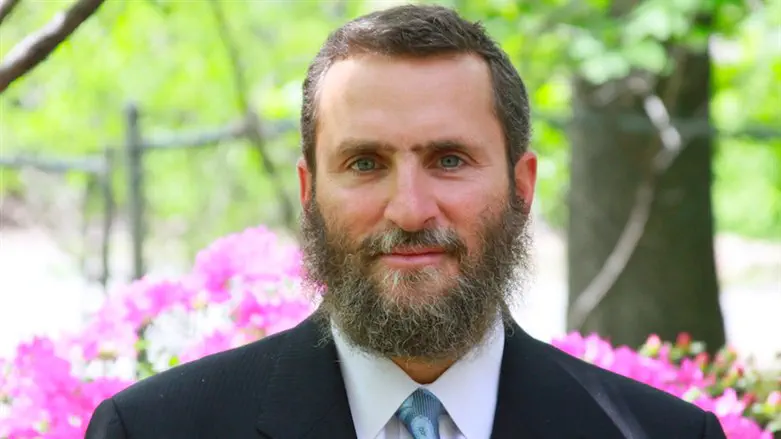
Rabbi Shmuley Boteach is the international bestselling author of thirty-eight books, translated into more than twenty languages. He has been hailed as “the most famous rabbi in America" (The Washington Post, Newsweek), “arguably the most famous Orthodox Jew on earth" (The New York Observer), and named one of the fifty most influential Jews in the world (The Jerusalem Post).
A fearless public intellectual and one of Israel and Jewry’s most eloquent defenders, Rabbi Boteach has appeared on virtually every major television network and media platform across the globe. For eleven years, he served as Rabbi at Oxford University, where he founded the L’Chaim Society and built it into one of the largest student organizations in the university’s history. Rabbi Boteach is the only rabbi ever to receive the London Times Preacher of the Year Award, and remains the competition’s record-holder.
Reader Jean Vercors, sent the following: