
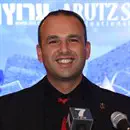
As Israel's political parties begin preparing for the 2026 election, the 50-50 Initiative is calling for every party to commit to equal representation of women and men on its Knesset candidate list.
Speaking to Arutz Sheva-Israel National News, the initiative's CEO, Yael Yechieli, said that while some parties already reserve positions for women, true equality remains a distant goal. She said the organization wants women to make up half of the candidates on every party list, regardless of political or religious affiliation.
"My expectation is that this will happen in all parties, both in the haredi community and among Arab society," Yechieli said.
Responding to the argument that candidates should be chosen solely based on merit rather than gender, Yechieli agreed that the most qualified individuals should be elected but argued that longstanding biases have prevented women from competing on equal footing.
"I also want only the most capable people to be chosen. I also want the men to be the most capable, but somehow throughout history, men who were not so capable still managed to enter politics," she said. "There is bias toward choosing men. Both men and women are accustomed to seeing politicians as men because that has been the reality throughout history. When there is no definitive commitment to a fifty-fifty split, fewer women run. Every party that announces fifty-fifty will see more women running.
Reflecting on her own experience, Yechieli recalled efforts to increase women's representation within the former National Religious Party, saying that after years of limited female participation, the party gradually saw more women elected to leadership positions.
She argued that increasing the number of women in politics has a direct impact on the issues debated in the Knesset. As examples, she pointed to MK Limor Son Har-Melech's (Otzma Yehudit) work on behalf of victims of sexual assault and MK Michal Woldiger's (Religious Zionist Party) advocacy for mental health.
"It is possible to show what people actually lose without this representation," Yechieli said. "When a woman sits at the table, issues that would otherwise have stayed out of the picture enter the agenda. This is true regardless of the party and regardless of the political position."