

The US Department of Health and Human Services (HHS) has appointed Duvi Honig, Founder and CEO of the Orthodox Jewish Chamber of Commerce and a longtime advocate for patients with Lyme disease and other chronic conditions, to serve as an Evaluation Panelist for the TOPx HHS Tech Sprint for AI and Invisible Illness.
The national competition, which offers up to $2 million in prizes, seeks to identify innovative artificial intelligence solutions that can help improve the detection, understanding and treatment of difficult-to-diagnose illnesses.
With submissions now closed, the initiative has entered its evaluation phase. As a member of the review panel, Honig will help assess emerging technologies and identify solutions with potential to support patients, healthcare providers and medical researchers.
The Tech Sprint focuses on Lyme disease, Long COVID, Alpha-gal syndrome and other “invisible illnesses" - conditions that can significantly impact patients’ lives while often presenting diagnostic challenges. Many individuals with these conditions experience lengthy searches for answers, involving multiple specialists, complex medical records and significant personal costs.
Honig will join other experts in reviewing submissions based on scientific merit, practical application and potential impact on patient care. Proposed technologies may include tools designed to analyze health data, recognize patterns, support earlier identification of conditions and improve coordination among healthcare providers.
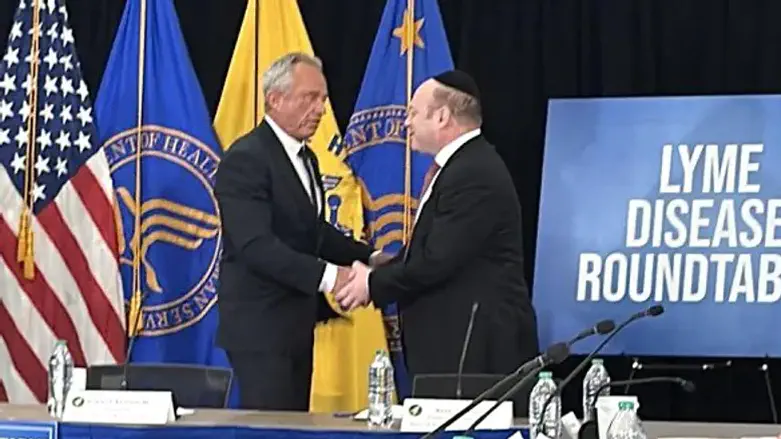
The appointment follows Honig’s participation in the HHS Lyme Disease Roundtable, where he met with Secretary Kennedy and senior federal health officials to discuss challenges facing patients and opportunities to advance research, diagnosis and treatment.
“This appointment is an honor and an opportunity to support efforts to use artificial intelligence in ways that can benefit patients," Honig said. “Innovation can help improve how complex illnesses are understood and treated, while ensuring that patients remain at the center of healthcare decisions. Bringing together government, medical professionals and technology leaders can help create meaningful progress for families seeking answers."
The Tech Sprint is part of a broader HHS effort under Secretary Kennedy to address chronic disease and advance new approaches to healthcare innovation.
“For decades, Americans suffering from Lyme disease have been denied the accurate diagnostics and meaningful care they deserve," Kennedy said when announcing federal Lyme disease initiatives. “Today’s actions push us decisively toward reliable testing and treatment grounded in the real-world experiences of patients."
Dr. Mehmet Oz, Administrator of the Centers for Medicare & Medicaid Services, previously highlighted the importance of federal attention to Lyme disease efforts, crediting Secretary Kennedy’s leadership in bringing together government officials, researchers and patient advocates.
The Centers for Disease Control and Prevention estimate that hundreds of thousands of Americans are diagnosed and treated for Lyme disease each year, while millions more continue to face Long COVID and other chronic conditions involving complex and overlapping symptoms.
Through his advocacy work, Honig has focused on improving patient access, physician education, research collaboration and coordination between government agencies, healthcare providers and patient communities.
While artificial intelligence is not a replacement for medical expertise, supporters of the initiative say it can help organize complex information, identify patterns across health records and provide clinicians with additional tools to better understand individual patient needs.
The evaluation phase of the HHS Tech Sprint marks the next step in exploring how emerging technologies may contribute to the future of chronic disease care and healthcare delivery.