
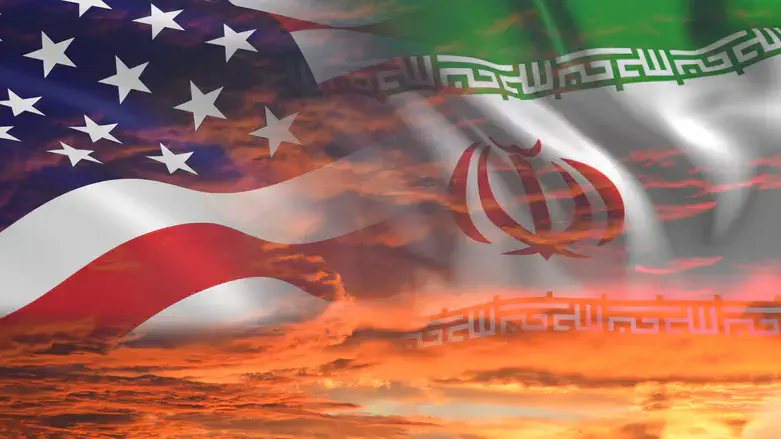
The renewed American bombing of southern Iran and Tehran’s expanding attacks on the Arab states of the Persian Gulf are widely described as another failure of diplomacy. That interpretation misses the larger transformation underway. The latest escalation is not the collapse of the postwar order: it is the postwar order itself.
The ceasefires and negotiations that followed the Iran war did not restore the old regional equilibrium. Instead, they ushered in a strategic environment in which war and diplomacy reinforce rather than replace one another. Military operations interrupt negotiations, negotiations temporarily restrain military operations, and both are used to shape the next phase of the conflict. The recent cycle of American strikes inside Iran and Iranian attacks on Gulf infrastructure illustrates this new reality.
Most analyses of the war focus on measurable losses: missiles destroyed, commanders killed, nuclear facilities damaged, and military infrastructure degraded. Those questions matter, but they overlook the war’s most important consequence. Wars transform not only military balances but also the way governments perceive themselves, their enemies, and the risks they are willing to accept.
The Islamic Republic appears to have drawn one overriding lesson from the conflict: it survived a direct, large-scale war against it by the United States and Israel without collapsing. Whether Iran objectively “won" the war is beside the point. Its military suffered heavy losses, its economy was battered, and its leadership paid a significant price. Yet the regime endured, retained enough capability to retaliate, and denied Washington and Jerusalem the decisive political outcome they sought. To Tehran, survival has therefore acquired the meaning of victory.
That perception has altered the regime’s strategic psychology. Before the war, preserving the Islamic Republic was its overriding objective. Today, survival remains essential, but it is no longer sufficient. Having absorbed extraordinary punishment while remaining in power, the leadership appears increasingly convinced that it can pursue a more ambitious regional strategy.
This helps explain why the regime has become more radical. The change is not simply that ultra-hardliners replaced moderates; that process was already well underway before the war. The deeper shift is that the surviving leadership now believes it has passed the ultimate test. That experience has made it both more confident and more willing to take risks.
Iran does not necessarily seek an unlimited regional war. Rather, it appears to believe that war has become manageable. Its theory of victory does not depend on conventional military superiority but on demonstrating that it cannot be compelled at an acceptable cost. If Tehran can endure repeated military campaigns while continuing to retaliate, it can portray resilience itself as strategic success.
This logic also explains why military escalation and diplomacy are not contradictory in Iranian strategy. They are complementary instruments. Tehran negotiates when talks preserve its power or improve its position, and it escalates when force can increase the political, military, or economic costs borne by its adversaries. Its attacks on Persian Gulf infrastructure fit this pattern. By threatening oil production, shipping, electricity, water desalination, and the Strait of Hormuz, Iran signals that no regional state can remain insulated from the consequences of conflict.
For Israel, the challenge is therefore larger than Iran’s remaining arsenal. Missile launchers, production facilities, and senior commanders can be destroyed repeatedly. Harder to defeat is an adversary whose strategy rests on endurance rather than battlefield superiority. Iran appears to believe that if it can survive successive rounds of punishment while continuing to impose costs, it can gradually weaken Israeli deterrence, strain regional partnerships, and convince its opponents that permanent confrontation is unsustainable.
This conflict has also become part of a broader geopolitical competition. Russia, China, and North Korea have different interests and different levels of involvement, but all have incentives to prevent a decisive American success. A prolonged U.S. military commitment in the Middle East consumes resources, political attention, and strategic bandwidth that might otherwise be directed elsewhere. None of these powers necessarily benefits from uncontrolled regional war, but all gain from a conflict that prevents Washington from reshaping the region on its own terms.
China illustrates this changing calculus. Beijing still depends on Middle Eastern energy and has no interest in a collapse of Gulf commerce. At the same time, intensifying strategic competition with the United States has increased the value of an Iran that remains resilient and capable of tying down American resources. An eventual regional settlement that left Iran as an indispensable power in Gulf security-while keeping energy flows broadly intact-would constrain U.S. freedom of action and strengthen Beijing’s strategic position.
The United States, meanwhile, has crossed an important threshold of its own. Washington once sought to contain Iran while avoiding sustained direct war. It is now repeatedly striking targets inside Iranian territory, while Iran openly attacks American forces and regional partners. The old rules of confrontation have broken down. Both sides appear convinced that additional military pressure can improve their political position, yet neither has so far demonstrated a credible path to decisive victory at an acceptable cost.
The Middle East is therefore not returning to its previous pattern of proxy warfare interrupted by occasional crises. It is entering an era of recurring direct confrontation, punctuated by negotiated pauses that manage rather than resolve the conflict.
The Iran war did more than alter deterrence calculations. It changed how the Islamic Republic perceives its own resilience, how the United States is prepared to employ force, and how the wider strategic competition among major powers increasingly shapes the Middle East.
As such, the region is no longer waiting for the next war. It has entered an era in which war and diplomacy coexist, and in which open conflict-in different forms and at varying levels of intensity-is becoming the norm rather than the exception.
Dr. Reza Parchizadeh is a political scientist and strategic affairs analyst specializing in Middle Eastern geopolitics, regional security, and great-power competition. His research examines the interaction of ideology, military power, and grand strategy in the modern Middle East.