

Dr. Avi Perry is a former professor at Northwestern University, telecommunications executive, and technology innovator with a Ph.D. in Operations Research and Statistics. He worked at Bell Labs and later served as Vice President at NMS Communications. He created the Perry Conjugate Gradient optimization algorithm, used in optimization, engineering, machine learning, artificial intelligence, MRI systems, financial modeling, and large-scale scientific computing applications worldwide. He also contributed key algorithms to advanced defense and communications systems, including technologiess such as Iron Dome, used by the IDF. Dr. Perry is the author of several books and has published hundreds of articles on international affairs, technology, and society. www.aviperry.org.
At his recent speech at Tel Aviv University, Rahm Emanuel-former White House Chief of Staff to President Barack Obama and a senior adviser in the Clinton White House-criticized Prime Minister Benjamin Netanyahu for refusing to place his faith in yet another negotiated agreement.
To make his point, he quoted a familiar proverb:
"Fool me once, shame on you. Fool me twice, shame on me."
He chose exactly the right words.
Then he reached precisely.the opposite conclusion.
The proverb warns against repeating the same mistake after experience has already taught its lesson. Yet Emanuel used it to argue that Israel should once again trust those who have repeatedly deceived it. In effect, he was asking Israel to allow itself to be fooled a third time.
And if that trust proves misplaced again, who bears the blame?
The diplomats who recommended another agreement?
The "experts" who assured Israel that this time would be different?
The foreign governments safely removed from the consequences?
Or Israel, for following their advice?
That question lies at the heart of the entire debate.
And who pays the price when the "experts" are wrong?
That question is never asked.
Many of Israel's critics are intelligent, experienced and genuinely committed to peace. They sincerely believe that negotiations, territorial compromise and diplomatic engagement offer the safest path toward stability in the Middle East.
Perhaps they are right.
But what if they are wrong?
Judging from history, that is the more likely conclusion.
For the United States, another failed diplomatic initiative would represent a foreign-policy setback. Administrations change. Policies are revised. Elections come and go.
For Israel, a failed security assessment could mean thousands of deaths, the loss of strategic deterrence, or, in the worst case, a threat to the nation's very survival.
That difference changes everything.
The risks are not shared equally.
Israel bears almost all of them.
Experience Matters
Israel has repeatedly been encouraged to take major risks in exchange for promises-or naive hopes-of peace.
-The Oslo Accords were expected to transform the conflict. Instead, they were followed by waves of terrorism and suicide bombings that killed hundreds of Israelis.
-In 2000, Prime Minister Ehud Barak offered Yasser Arafat a far-reaching peace agreement at Camp David, including extensive territorial concessions and the creation of a Palestinian state. President Bill Clinton later concluded that Arafat had rejected a historic opportunity. Soon afterward, the Second Intifada erupted, bringing years of suicide bombings, shootings and bloodshed.
-That same year, Israel withdrew completely from southern Lebanon in the hope of ending the conflict on its northern border. Hezbollah filled the vacuum, expanded its missile arsenal and launched another war six years later.
-In 2005, Israel unilaterally withdrew from Gaza, dismantling every settlement and removing every soldier. The expectation was that withdrawal would reduce hostility and create an opportunity for coexistence. Instead, Hamas seized control, thousands of rockets followed, and Israel fought repeated wars.
-Later, Prime Minister Ehud Olmert presented Mahmoud Abbas with another extraordinarily generous proposal, offering the Palestinian Arabs a state on nearly all the territory they claimed, together with land swaps and far-reaching concessions on Jerusalem. Abbas did not accept it. Terror attacks continued.
Even after all this, many Israeli leaders gradually came to believe that Hamas had become more interested in governing Gaza than in launching another major war. Israel expanded the number of work permits for Gazans, allowed large sums of Qatari money to enter Gaza with its approval, and adopted policies intended to improve economic conditions in the hope that greater prosperity would reduce the incentive for conflict.
The result? October 7.
The assumption proved catastrophically wrong.
These were not symbolic gestures. They were serious attempts to reduce conflict or achieve peace, supported by respected diplomats, experienced analysts and, at times, by Israeli governments themselves.
When those assumptions proved wrong, who paid the price? Whose sons put their lives on the line?
Not Washington.
Not Brussels.
Not the "experts."
Israel did.
Yet after every failure, the explanation remained remarkably consistent.
The concessions had not gone far enough.
The implementation had been flawed.
The timing had been wrong.
The wrong leaders had been in office.
The theory itself remained untouched.
Imagine applying that standard elsewhere.
-If an engineer repeatedly designed bridges that collapsed, no one would conclude that the next bridge would surely stand.
-If an investment adviser repeatedly destroyed clients' savings, investors would eventually seek different advice.
Yet in Middle East diplomacy, repeated failure rarely disqualifies the underlying assumptions.
Instead, the same recommendations return under different names.
The question remains:
Who pays the price when the "experts" are wrong?
Diplomacy Depends on the Adversary
Negotiations cannot be evaluated independently of the party sitting across the table.
An agreement with Iran cannot be analyzed as though it were an agreement with Britain, Canada or another democracy that broadly shares Western diplomatic norms.
Since the Islamic Revolution of 1979, the Iranian regime has brutally repressed its own citizens, executed political opponents, sponsored terrorist organizations throughout the Middle East and repeatedly called for Israel's destruction.
Although the wording of an agreement matters, the identity and character of the party signing it matters even more.
When dealing with a regime that has consistently cheated, exploited weakness, ambiguity and hesitation, every loophole matters. Every temporary restriction creates a future opportunity. Every omission leaves room for expansion.
That was the fundamental weakness of the Joint Comprehensive Plan of Action.
Emanuel’s Second Mistake: Distorting the Meaning of the JCPOA
There are those who continue to argue that President Trump's withdrawal from the Obama period's Iranian nuclear agreement was a historic mistake.
I disagree.
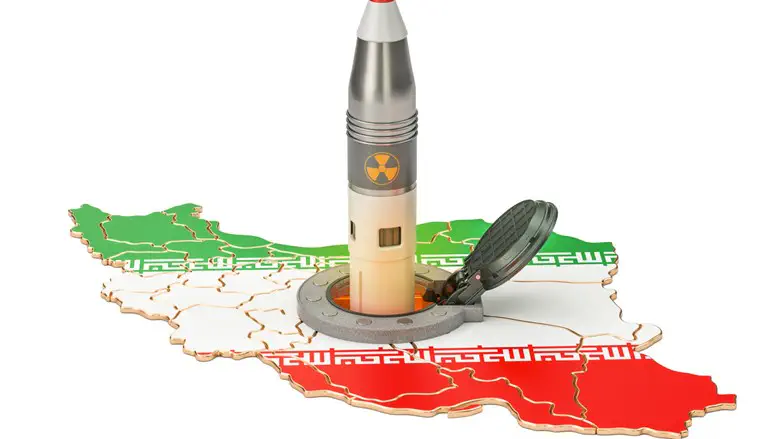
The JCPOA did not merely delay Iran's path to a nuclear weapon.
It paved the way.
By making critical restrictions temporary, granting Iran substantial economic relief, and placing its continued nuclear development within an internationally accepted framework, the agreement gave Iran time, resources, and reason to believe that patience would eventually leave it with fewer obstacles.
Supporters described the agreement as buying time.
The agreement was also giving time to Iran.
In other words, it did not simply postpone the danger. It made Iran's eventual path to a nuclear weapon shorter, easier, and more legitimate in the eyes of the international community.
The difference between "not now" and "never" is fundamental.
One postpones the danger. The other seeks to eliminate it.
The JCPOA pursued the former while presenting it as though it had achieved the latter.
Iran remained legally prohibited from building a nuclear weapon under the Nuclear Non-Proliferation Treaty. But as key JCPOA restrictions expired, Iran could eventually operate a far larger and more sophisticated nuclear program while retaining the knowledge, infrastructure and financial resources accumulated during the agreement's lifetime.
Ten or fifteen years may seem like a long time to politicians thinking in electoral cycles.
In the life of a nation, it is very little. It is a tiny dot.
It is certainly not fifty years.
It is not forever.
That is why I believe President Trump was correct to reject the underlying premise of the agreement.
His objective was not merely to postpone Iran's nuclear ambitions.
It was to ensure that Iran would never acquire a nuclear weapon.
One may debate how his policy was implemented, but the objective itself was the right one.
For countries separated from Iran by oceans, the danger may seem more distant and therefore easier to postpone.
But distance is not safety. A nuclear weapon detonated over New York, Washington, or Los Angeles would be a national catastrophe.
For Israel, the stakes are even higher.
A single nuclear weapon could destroy a city in the United States.
It could destroy a country the size of Israel.
That is why Israel cannot afford to confuse postponing the danger with eliminating it.
A Double Standard?
When confronting al-Qaeda or ISIS, the United States did not advocate greater economic incentives, additional concessions, or a negotiated political settlement in the hope that these organizations would abandon their ideological goals.
Instead, it concluded that movements driven by uncompromising ideology had to be confronted and defeated.
Yet when Israel confronts adversaries that Israelis view correctly as motivated by the same kind of ideological absolutism, it is frequently urged to adopt precisely the strategy the United States rejected for itself.
Israel is encouraged to negotiate.
To make concessions.
To offer economic incentives.
To trust that moderation will eventually prevail.
Why should Israel be expected to rely on a strategy that the United States itself did not consider appropriate when confronting enemies similarly driven by ideology?
That is not simply a disagreement over policy. It is a different standard.
Is Israel Really Becoming Isolated?
Rahm Emanuel argues that Israel's current policies are leaving it increasingly isolated.
There is no question that Israel has faced growing international criticism since October 7.
But it is worth remembering when much of that criticism began.
In many countries, large demonstrations condemning Israel took place on October 7-8, before Israel had launched its major military campaign in Gaza. At that moment, Israel was still burying its dead, treating thousands of wounded and desperately searching for the hostages taken during the worst massacre of Jews since the Holocaust.
Israel had not yet mounted its military response, so that first wave of condemnation could not have been a reaction to that response. We now know that it was planned and coordinated in advance.
It was directed at Israel while Israel was still the victim of an unprecedented terrorist attack.
That chronology should give pause to anyone who assumes that international criticism is always driven primarily by Israel's actions.
Moreover, criticism is not the same as isolation.
Israel's strategic partnership with the United States remains one of the strongest alliances in the world.
The Abraham Accords transformed Israel's relations with several Arab states.
Security cooperation with Egypt and Jordan continues despite political disagreements.
Israel has also strengthened strategic, technological and intelligence cooperation with countries including India, Greece, Cyprus, Morocco, and Azerbaijan, while expanding important partnerships in other parts of the world.
More importantly, even if Israel were more isolated than in the past, that fact alone would not determine whether its security assessment was wrong.
History contains many examples of nations that stood largely alone before events ultimately proved them right.
Truth is not determined by majority vote.
Would Replacing Netanyahu Solve the Problem?
Some critics believe that replacing Benjamin Netanyahu would dramatically improve Israel's standing in the world.
But would it change Iran's ambitions?
Would it change Hamas?
Would it change Hezbollah?
Would it change those who openly deny Israel's right to exist?
Israel has pursued very different policies under Rabin, Barak, Sharon, Olmert, Bennett, Lapid and Netanyahu.
Some offered sweeping concessions. Others adopted a more cautious approach.
Yet the fundamental threats remained.
The central issue has never been the identity of Israel's prime minister.
It has always been the identity of Israel's adversaries.
Emanuel's Proposal Transfers the Risk to Israel
Rahm Emanuel is entitled to his opinion.
But the fact that many distinguished diplomats, commentators and former officials agree with him does not make him right.
History is filled with ideas that enjoyed overwhelming support until reality proved otherwise.
Advice is easy to give when someone else bears the consequences.
If Emanuel's assessment proves correct, everyone benefits.
If it proves wrong, Israel pays the price.
That asymmetry is the missing element in much of today's debate.
The Takeaway: Israel Must Change the Way It Explains Risk
Israel's response should not simply be to dismiss Emanuel, attack his motives, or complain that the world is unfair.
That may be emotionally satisfying, but it is not persuasive.
Instead, Israel should change the conversation.
Rather than debating personalities or the details of one agreement after another, it should ask a far more fundamental question.
What happens if your recommendation fails?
What happens if another withdrawal creates another Gaza?
What happens if another peace agreement produces another October 7?
What happens if another temporary nuclear agreement eventually leaves Iran closer to a bomb rather than farther from one?
What happens if your assumptions prove wrong?
Israel should invite American legislators, journalists, military officers, academics and opinion leaders to examine those questions through Israel's eyes.
Let them study Israel's geography.
Its lack of strategic depth.
The proximity of its population centers.
The consequences of a failed agreement.
The purpose is not to demand that they agree with every Israeli policy. It is to ensure that they understand the magnitude of the risks Israel is asked to accept.
Rahm Emanuel is right about one thing.
The relationship between the United States and Israel is too important to neglect.
But true friendship requires more than offering advice. It requires understanding the consequences if that advice proves mistaken.
Until Israel succeeds in changing that conversation, discussions about peace will continue to focus almost exclusively on the hoped-for benefits of taking risks while paying far too little attention to the potentially catastrophic consequences of failure.
That, ultimately, is the difference between theory and reality.
And that is the price of being wrong.